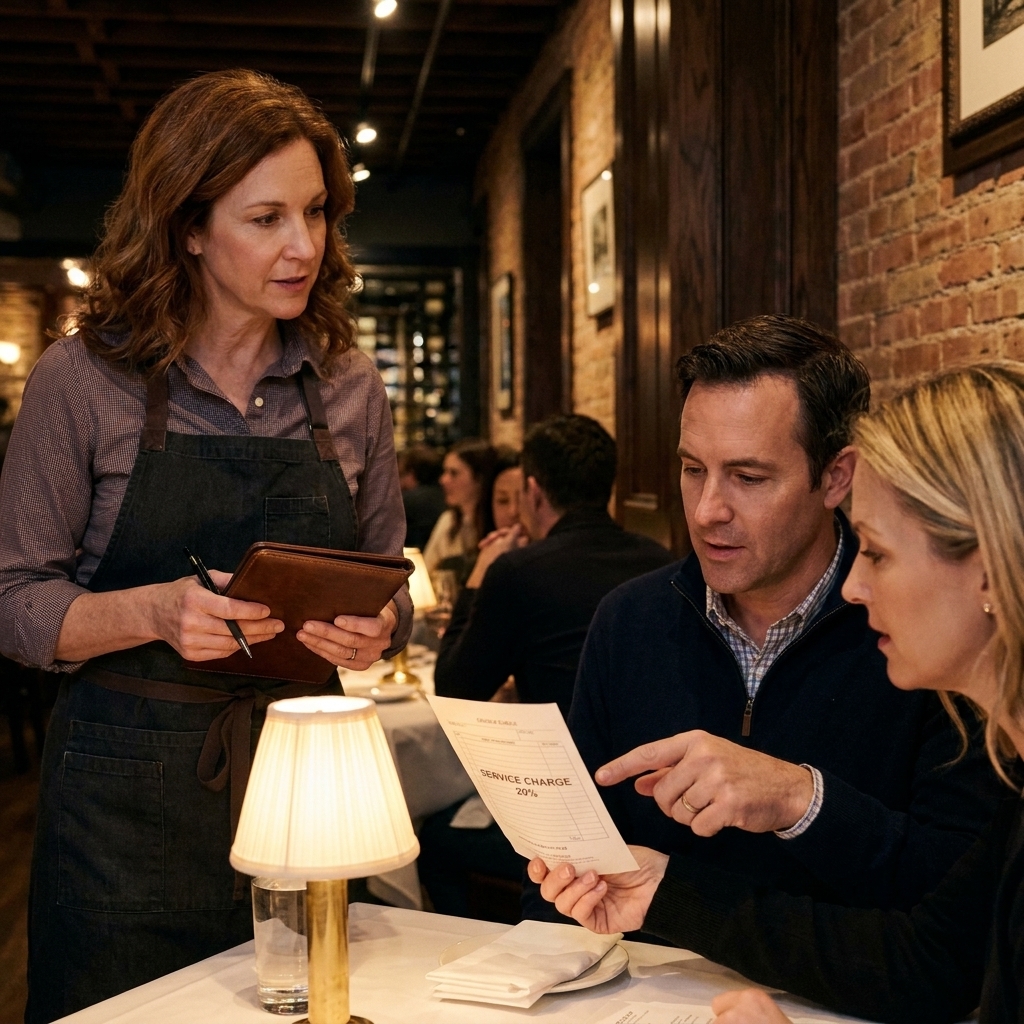
Every few months, it feels like diners get hit with a new receipt surprise. A 20 percent “service charge.” A “hospitality fee.” A line that says “no tipping” next to a higher-priced burger. If you have ever stared at a check like it is a logic puzzle, you are not alone.
I came up in restaurants where tipping was treated like weather. You can’t control it, but you build your whole day around it. As a former beverage director, I have also watched owners try to fix the cracks with every model under the sun, sometimes thoughtfully, sometimes sloppily, often under real financial pressure. The truth is: there is no single perfect system. There are tradeoffs, and they land differently for servers, cooks, and guests.
Below is a clear breakdown of the major compensation models, how they work in practice, what they tend to change on the menu, and what to watch for so you can tip or not tip with confidence.
First, quick definitions
Restaurants use similar-sounding language for very different setups. Here is the plain-English cheat sheet.
Quick note on location: This is written primarily with U.S. norms in mind. Outside the U.S., tipping, VAT, and service-included pricing can work very differently, and the same words on a check may mean something else.
- Traditional tipping: Menu prices are listed normally. Guests choose a tip, typically a percentage of the total, and that tip goes to tipped workers (sometimes with a tip pool or tip-out).
- Automatic gratuity: A preset amount, often 18 to 22 percent, added to the bill. Sometimes used for large parties, sometimes for everyone.
- Service charge: A mandatory fee added to the bill, often 3 to 25 percent. In many U.S. cases, it is treated as the restaurant’s revenue first, then distributed according to the restaurant’s policy and local rules.
- Hospitality or wellness fee: A type of service charge, often smaller (3 to 5 percent), framed as support for benefits, paid time off, or healthcare.
- No-tipping with higher prices: No additional percentage added at the end. Menu prices rise to fund higher wages and benefits, and staff are paid through payroll like most other jobs.
That distinction matters because a “service charge” is often not legally the same thing as a tip. In the U.S., for example, the IRS generally treats mandatory service charges as restaurant revenue (and wages when paid out), not tips. But outcomes can vary by state, city, and how the charge is structured and disclosed, and they are also subject to truthful disclosure and consumer protection rules.
One more definition that drives confusion: “Gratuity” on a check can mean either a true tip or a mandatory charge, depending on how it is set up and disclosed. Do not assume the word alone tells you where the money goes.
Also worth knowing: Tip credit rules, tip pooling rules, and who can participate in a pool vary by jurisdiction. What is normal in one state may be illegal in another. If a restaurant operates in multiple locations, this is one reason policies can look inconsistent from city to city.
Model 1: Traditional tipping
In one line: Guests choose the tip, servers keep the upside, and the night can swing wildly.
How it affects pay
Tipping is still the biggest earning potential for front-of-house, especially in busy, higher-check restaurants. A strong server on a great night can make excellent money, and many do. The flip side is volatility. Weather, slow seasons, a bad section, a table that “doesn’t believe in tipping,” or a manager scheduling too many bodies can all hit your rent money.
It also keeps income tied to guest bias. Research suggests tipping is influenced by factors beyond service quality, including customer demographics and perceptions. In other words, even good servers can get paid unevenly for reasons that have nothing to do with their work. (Two commonly cited starting points: Michael Lynn’s research summaries through Cornell’s School of Hotel Administration, and the review literature discussed in the academic book The Psychology of Tipping by Lynn and colleagues.)
How it affects prices
Menu prices can look lower than they truly are because labor is partially “off the menu” and pushed to the end of the meal. That can reduce sticker shock, but it also makes dining out feel like it comes with a math test.
On what to tip on: many people tip on the pre-tax subtotal, others tip on the post-tax total. Norms vary by region and habit. If you want the cleanest standard, pre-tax is a common baseline, then adjust for service and your local norms.
How it feels as a guest
Many guests like the sense of control: reward great service, tip less for bad service. But it also creates anxiety, especially for travelers, younger diners, and anyone who has ever asked, “Wait, do I tip on the service charge too?”
- Look for: A clear tip line with no other fees.
- Ask: Whether the house uses a tip pool or tip-out, if you are trying to understand who your tip supports.
- Default move: Tip as you normally would, unless the menu says otherwise.
Best for: High-volume restaurants with skilled servers who prefer earning upside and are comfortable with variability.
Model 2: Automatic gratuity
In one line: Tipping with guardrails.
How it affects pay
Auto-grat reduces the risk of getting stiffed and can stabilize nightly earnings, especially for large parties, private dining, and tasting menus where the labor is intense and the pacing is controlled.
However, not all auto-grats function the same way. Some restaurants treat it like a traditional tip and pass it through to staff. Others categorize it as a service charge for payroll and tax purposes. The only way to know is the disclosure on the menu and the check.
How it affects prices
Menu prices may not change much. The “true cost” appears at the end through the automatic percentage.
How it feels as a guest
For guests, it can be a relief: no decision, no awkwardness. For others, it can feel punitive if service misses the mark. The key is transparency. If it is clearly stated upfront, most diners adjust quickly.
- Look for: “An automatic gratuity of X% will be added…” on the menu or reservation confirmation.
- Check: Whether there is still an extra tip line, and whether it says “additional gratuity optional.”
- Default move: Treat the auto-grat as the tip unless the restaurant explicitly says it is not distributed like one.
Best for: Restaurants with large parties, prix fixe formats, or high-touch dining where the labor cost is predictable and substantial.
Model 3: Service charges
In one line: A mandatory fee that can fund wages and benefits, or confuse everyone, depending on transparency.
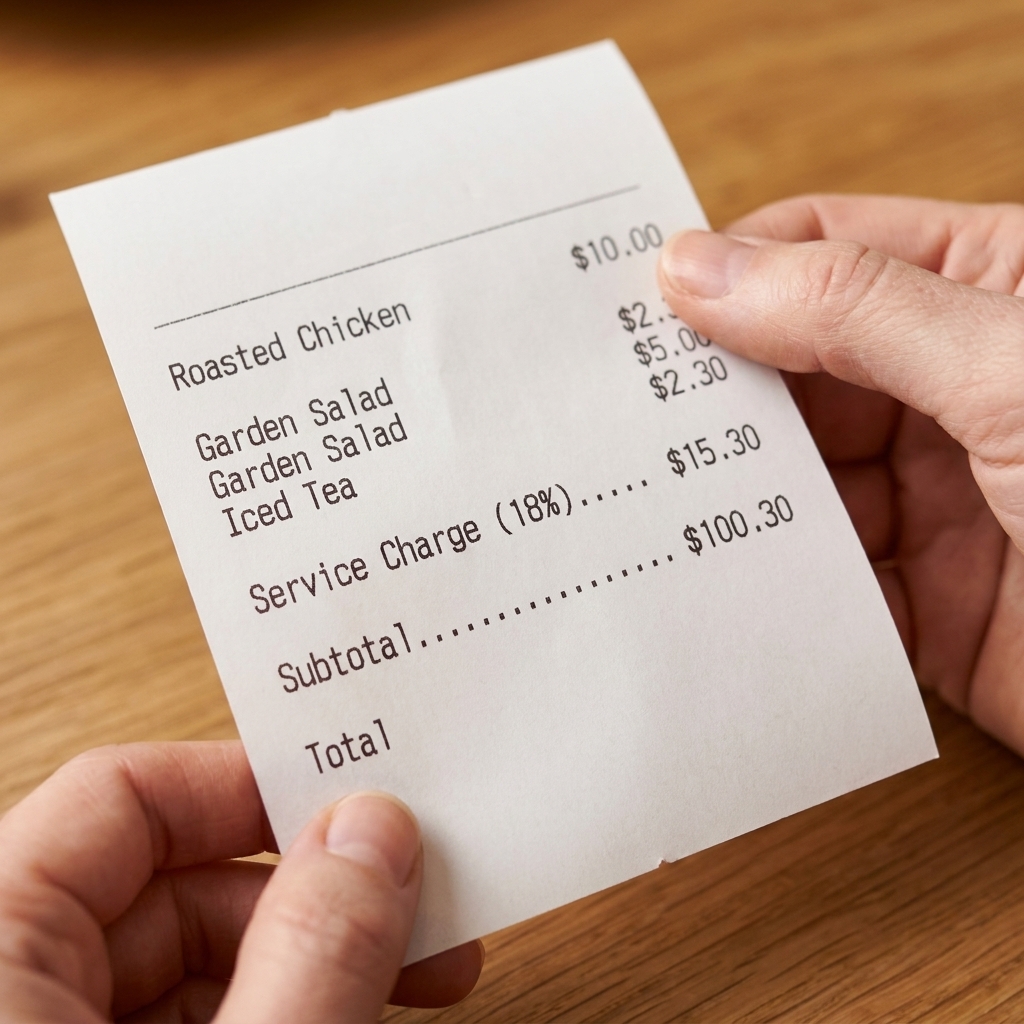
This is the model causing the most confusion, and honestly, it is because it is used to mean too many things at once.
How it affects pay
A service charge can be a genuine attempt to pay more equitably across the building. It can also be a mess. The impact depends on where the money goes and how predictable the distribution is.
- Potential upside: If a service charge is used to raise hourly wages, fund benefits, and share revenue with back-of-house, it can reduce the traditional pay gap between the dining room and the kitchen. It can also stabilize income for staff who get crushed on a busy night but would otherwise rely on the generosity of strangers.
- Potential downside: If the policy is vague or the charge is used to cover general operating costs, staff may not see a meaningful bump. Worse, guests may tip less because they assume “the fee is the tip,” and the server takes the hit.
Service charges also shift power. Under tipping, income comes directly from guests. Under service charges, income is mediated by management policy. In a healthy workplace, that can be stabilizing. In a toxic one, it can be another lever.
How it affects prices
Menu prices may look similar, but the final check is higher due to the added percentage. From an operator perspective, service charges can help keep posted prices competitive while building labor costs into a predictable stream.
How it feels as a guest
Guests usually ask two questions:
- Is this mandatory? Typically yes, but not always. Some places will remove certain fees upon request, and some “fees” are optional add-ons. If it is not clearly labeled, ask before you order.
- Do I still tip? It depends on the restaurant’s instructions and your intent. Some places say “no additional gratuity expected.” Others say “gratuity not included,” which is a not-so-subtle nudge.
When restaurants communicate clearly, service charges can feel clean and modern. When they do not, they feel like a gotcha. And nothing ruins dessert faster than feeling tricked.
- Look for: A sentence that says where the service charge goes, even in broad terms.
- Ask: “Does this replace tipping, or is tipping still expected?”
- Default move: Follow the restaurant’s written guidance. If there is no guidance, tip based on what you learn when you ask.
Best for: Restaurants that want to share compensation more evenly between front and back-of-house and can commit to clear disclosure and consistent distribution.
Model 4: No tipping
In one line: Higher menu prices, payroll wages, and fewer surprises at the end.
How it affects pay
This is the most straightforward for guests and, on paper, the most stable for staff: higher hourly wages, sometimes with benefits, sometimes with performance bonuses, all paid through payroll. It can be a real quality-of-life upgrade, especially for people who cannot or do not want to live by the roller coaster of nightly tips.
The risk is that the “earning ceiling” can drop for experienced servers used to prime weekend shifts in expensive rooms. Some of the best people in the industry like the merit-based upside of tips. Take that away without replacing it with a competitive wage, and you may lose talent fast.
How it affects prices
Prices go up, visibly. This is the point. Labor is moved from the end of the meal into the listed price, more like retail.
Sticker shock is real, especially in cities where diners have been trained to compare menu prices without mentally adding 20 percent. But if you compare the final totals, the gap is often smaller than it looks.
How it feels as a guest
For many guests, it is a relief: pay the bill, leave happy, no mental math, no guilt spiral. For others, it removes a sense of agency. If service is rough, there is no easy way to “vote” in the moment except speaking up.
- Look for: “Hospitality included” or “No tipping” on the menu and no tip line on the receipt.
- Check: Whether there are still added fees (some no-tipping restaurants still add a small service or benefits fee).
- Default move: Do not tip unless the restaurant explicitly invites it.
Best for: Restaurants committed to payroll stability and a long-term staffing strategy, and diners who want a single, honest price.
What diners do not see
The most important differences are often operational, not philosophical.
1) Tip pools and equity
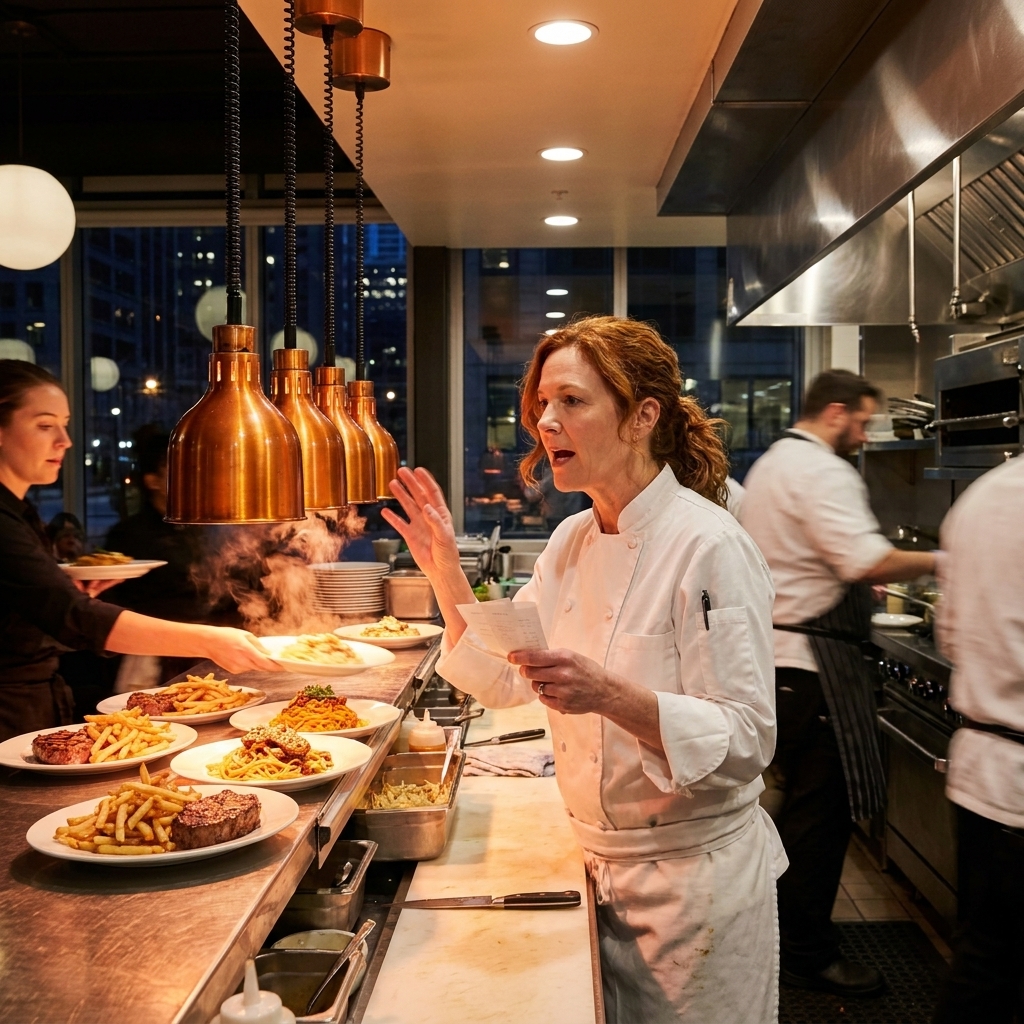
Traditional tipping can create huge gaps between front-of-house and back-of-house pay, even when the kitchen is doing the heaviest lifting. Service charges and no-tipping models are often attempts to close that gap. When done well, that can lower turnover and improve consistency. When done poorly, it just shifts resentment from one department to another.
Also, not all pooling is allowed everywhere. In the U.S., for example, who can be included in a tip pool can depend on whether the restaurant takes a tip credit and what local rules say.
2) Scheduling incentives
With tip-based pay, restaurants can face different incentives around staffing because a significant portion of front-of-house compensation is coming from guests, not the restaurant’s payroll line. That does not automatically mean overscheduling, but it can make overstaffing feel less immediately expensive. In payroll-based models, labor is a direct expense, so forecasting has to get smarter, and staffing levels can tighten.
3) Compliance and plain-language rules
Restaurants have to navigate federal, state, and local rules on tipped minimum wage, tip credit, and how mandatory charges are described and disclosed. The cleanest systems are the ones that spell it out in plain language on the menu and the check, and train staff to explain it without getting defensive.
4) Taxes and processing fees
This is where the fine print starts to matter, and where “it depends” is often the only honest answer.
- Sales tax: In many jurisdictions, voluntary tips are not subject to sales tax, but mandatory service charges may be taxed like other charges. Rules vary by location.
- Credit card processing: In the U.S., employers can often deduct a proportional credit card processing fee from charged tips under certain conditions, but some states prohibit or restrict the practice. Service charges, because they are commonly treated as restaurant revenue first, may be handled differently.
5) Guest trust
In hospitality, trust is currency. If a restaurant adds fees that feel hidden or inconsistent, guests do not just get annoyed. They stop coming back. And then nobody wins, especially the staff.
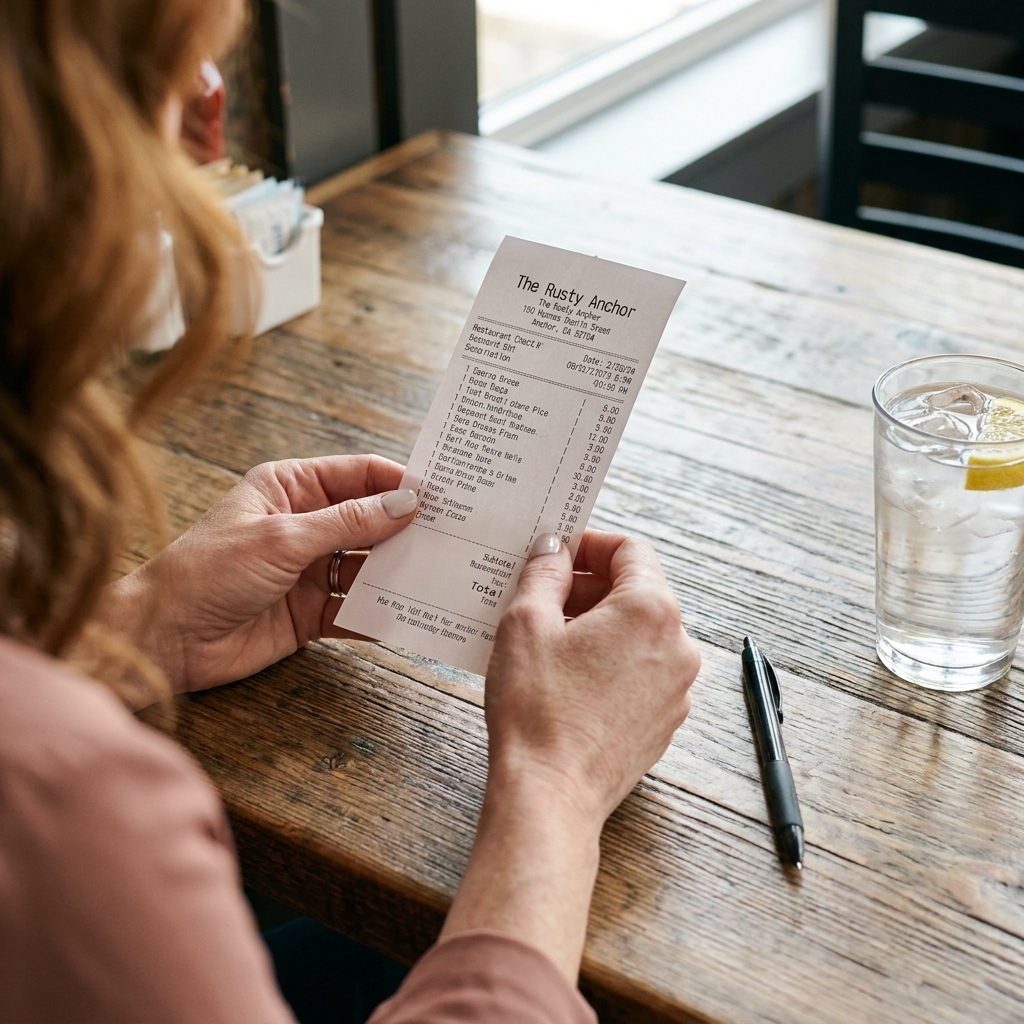
How to read the check
If you only take one thing from this: look for the restaurant’s instruction line. The language tells you what they expect, even if it is imperfect.
- If the check says “service charge” and also says “no additional gratuity expected”: You can usually treat that as the restaurant’s replacement for tipping. If you want to recognize someone who truly went above and beyond, you can add extra, but you are not obligated.
- If the check says “service charge” and does not explain where it goes: Ask politely. A well-run restaurant will have a clear answer. If the staff sounds unsure, that is a sign the policy is not being communicated internally either.
- If the check says “gratuity included”: In guest intent, that often means “your tip is covered.” In practice, it may still be processed as a service charge depending on the restaurant’s policy and local rules. Either way, additional tipping is typically optional unless the restaurant explicitly asks for it.
- If there is a small “wellness fee” and a tip line: That often means the fee is not the tip. Tip as you normally would unless the restaurant states otherwise.
And yes, it is okay to ask before you order. You are not being difficult. You are trying to pay correctly.
Is tipping ending?
Not exactly. What is ending is the illusion that the current system is the only system. Restaurants are experimenting because labor is expensive, margins are tight, and workers are tired of building a life on unpredictability.
If you want an “objective” takeaway, here it is: traditional tipping tends to maximize earning upside for some front-of-house workers, while service charges and no-tipping models tend to prioritize stability and wage equity, especially across the whole team. The best model is the one that is transparent, legally compliant in its location, and designed with staff at the center, not just optics.
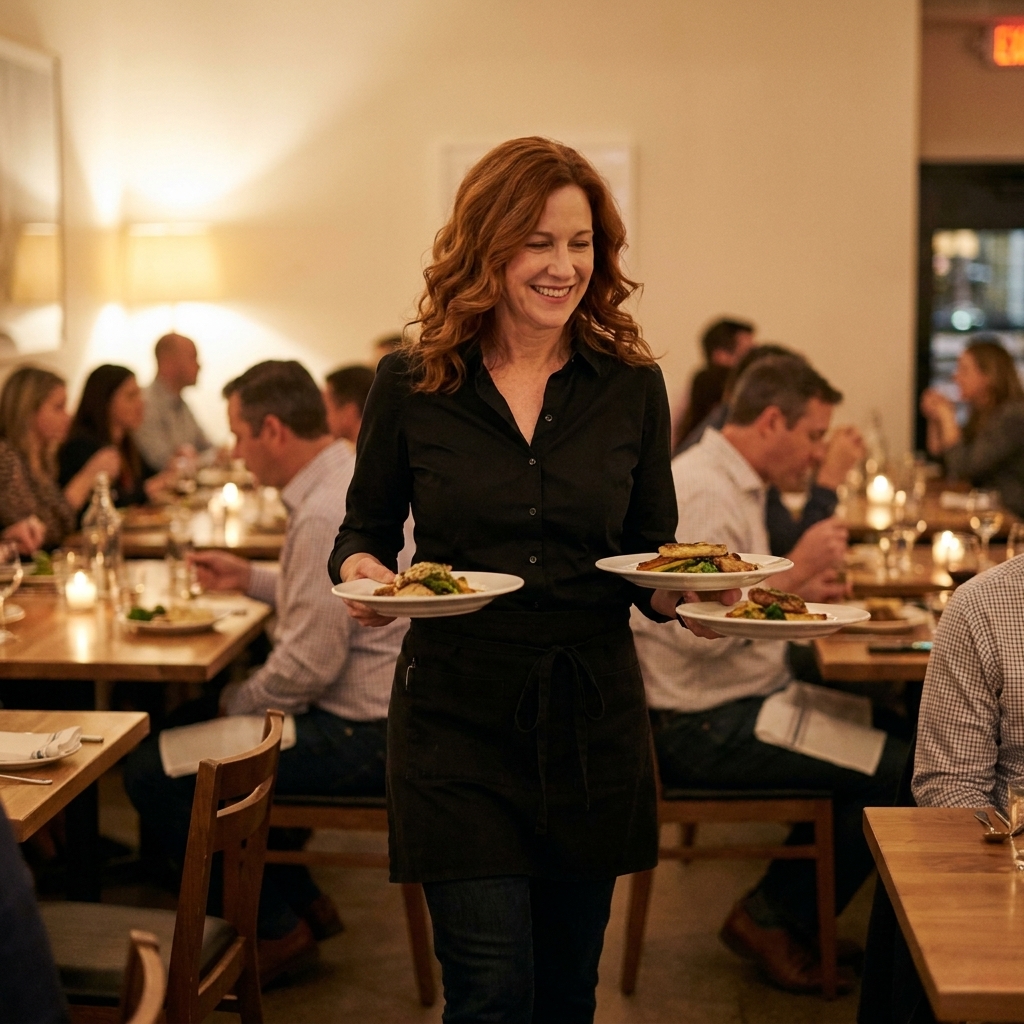
Hospitality is not just the way a plate lands on the table. It is the way a workplace treats the people carrying it.
FAQ
Is a service charge the same as a tip?
Not necessarily. A tip is generally money left by the guest for service staff. A service charge is typically a mandatory fee that the restaurant may distribute to staff, but it can also be used for other costs depending on the policy and local rules. In the U.S., the IRS generally treats mandatory service charges as restaurant revenue, not tips. The deciding factor for you is the restaurant’s disclosure.
Do servers prefer tipping or service charges?
It depends on the restaurant and the person. Some servers prefer tipping for higher earning potential on busy shifts. Others prefer service charges or no-tipping wages for stability, benefits, and less dependence on guest mood and bias.
Why are menu prices higher at no-tipping restaurants?
Because labor costs are built into the listed price instead of being added later through tipping. The final cost of the meal may be similar once you account for what you would have tipped elsewhere.
If there is a service charge, should I still tip?
Follow the restaurant’s stated guidance. If it says no additional gratuity expected, you can usually stop there. If it says gratuity not included, tip as you normally would. If it is unclear, ask.
Is a service charge taxed?
Sometimes. Many jurisdictions do not apply sales tax to voluntary tips, but may apply sales tax to mandatory service charges. The details vary by location.
Is a service charge good for back-of-house workers?
It can be. Service charges are one of the ways restaurants try to share revenue with kitchen staff who do not traditionally receive tips. The benefit depends on whether the restaurant actually allocates the funds to wages and how consistently it does so.