Eating out with food allergies can feel like doing mental math in a moving car. You want to relax, be social, and enjoy your meal, but you are also scanning every ingredient, every garnish, and every “we can totally do that” with a little voice in your head that asks, Can you though?
I have worked front-of-house and as a beverage director, and I now live with a severe gluten intolerance, so I have been on both sides of the pass: the guest trying to stay safe and the staff trying to keep service smooth without missing something serious. The good news is that most restaurants truly want to get this right. Your job is to give them clear information and ask the kind of questions that help the kitchen answer honestly.
Quick note: This is general guidance, not medical advice. Your allergist and your personal emergency plan outrank any restaurant checklist.
First question: Can this place handle it?
Not every restaurant is set up for every allergy, and that is not a moral failing. It is logistics. A tiny kitchen with one fryer and one flat-top can be delicious and still be a nightmare for cross-contact.
Good signs
- The host or server takes you seriously right away. No eye rolls, no minimizing, no “so like, preference?”
- They ask follow-up questions such as “Is this an allergy or intolerance?” and “How sensitive is the reaction?”
- They offer to involve a manager or chef. This is a green flag, not a fuss.
- The menu is specific about ingredients and preparation, not just vague icons.
Signs to leave
- They brush it off or tell you to “just pick it off.”
- They cannot answer basic ingredient questions and do not offer to check.
- They promise “we can make anything allergy-free” without asking which allergen or discussing prep.
- They are slammed and understaffed to the point where communication is breaking down. You deserve a meal that does not depend on luck.
Tell them early
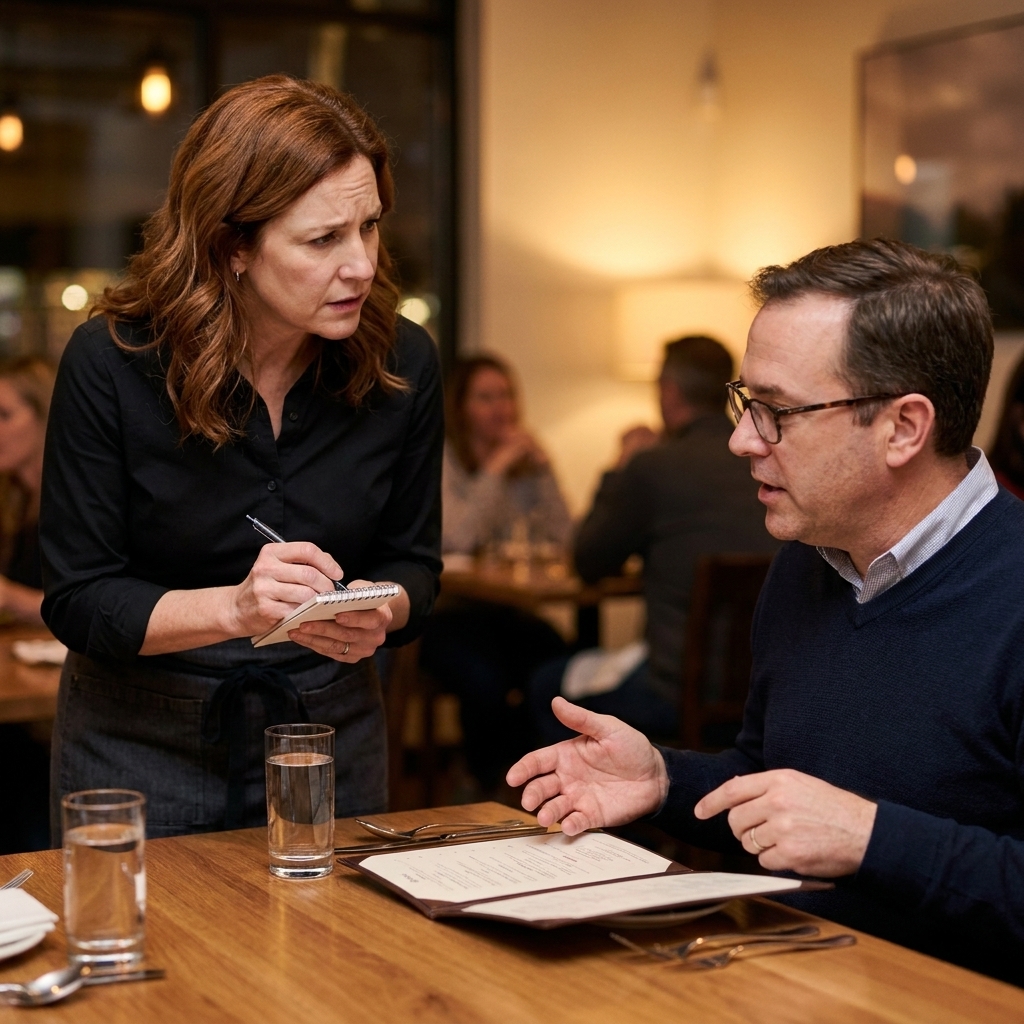
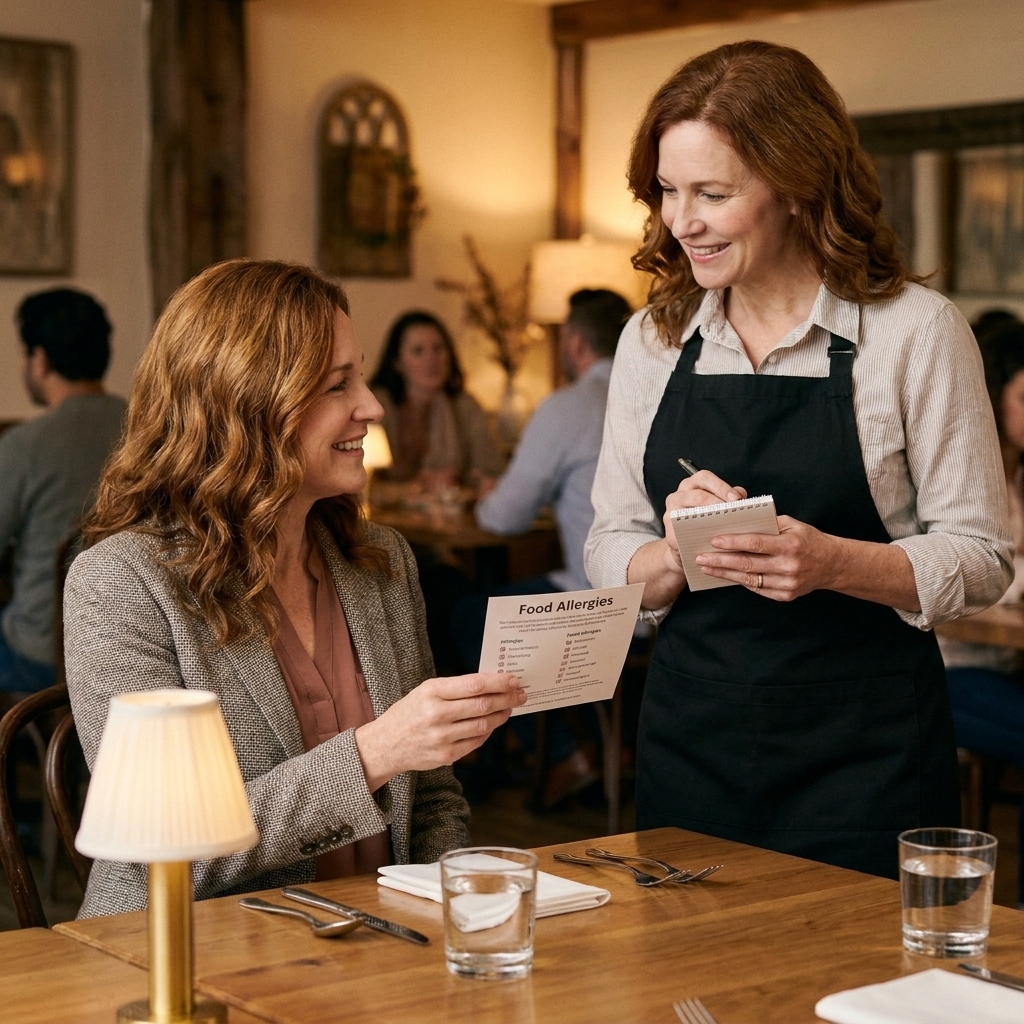
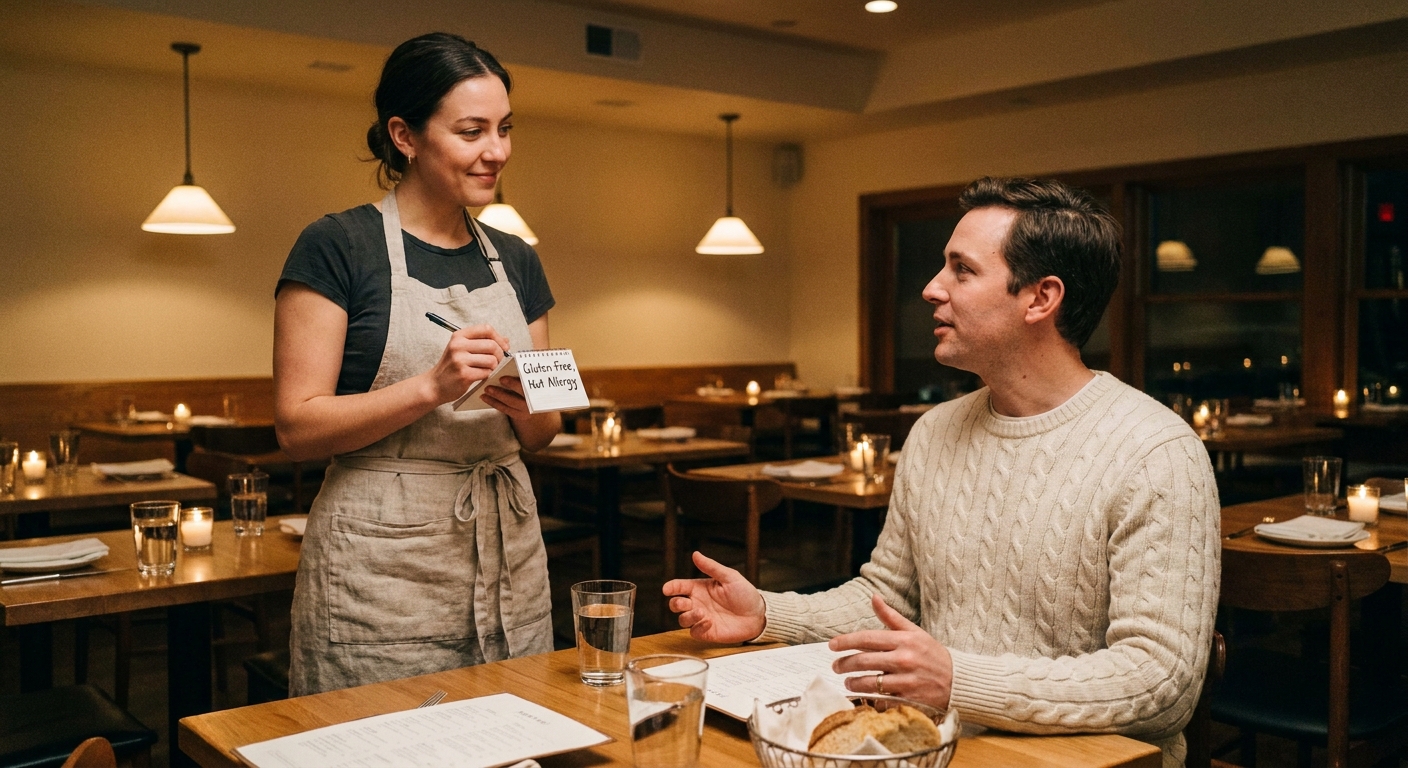
The best time to disclose an allergy is before you order, ideally at the first interaction with your server. If you can mention it to the host when you are seated, even better, especially for severe allergies.
Scripts you can use
Keep it short, clear, and specific. Here are a few options you can copy and paste into real life:
- Simple and direct: “Hi, quick heads-up: I have a serious allergy to peanuts. Can you help me choose something that can be made safely?”
- When cross-contact matters: “I have celiac disease, so I cannot have gluten or cross-contact. Are there items you can do with clean prep and separate utensils?”
- When multiple allergens are involved: “I am allergic to shellfish and sesame. I can eat other fish. Could we talk through what is safest on the menu?”
Be clear about allergy vs intolerance
Restaurants handle this best when they understand the stakes. If your reaction is anaphylaxis-level, say so. If you are highly sensitive to trace amounts, say so. If it is an intolerance and you can tolerate small cross-contact, it is okay to say that too. The kitchen needs the truth, not the bravest version of you.
Also, quick terminology clarity: celiac disease is autoimmune and cross-contact is a real medical concern. Gluten intolerance varies, and different people have different thresholds. Use the label that matches your reality and order accordingly.
If you only say “no dairy” but you really mean “no dairy, including butter on the grill and parmesan on the salad station,” you are forcing staff to guess. Guessing increases the chance of a mistake.
Questions that get real answers
Some allergy questions sound responsible but do not produce actionable information. The goal is to learn how the food is made, not just what it is called on the menu.
Ask about ingredients and prep
- “What is this sauce thickened with? Flour, cornstarch, roux, something else?”
- “Is the dressing made in-house? If not, can we see the label or ingredient list?”
- “Does this come pre-marinated or pre-seasoned? What is in the mix?”
- “Is there a shared fryer? What else goes in it?”
- “Can the kitchen use clean gloves and clean utensils? And a clean pan if needed?”
Ask how they manage cross-contact
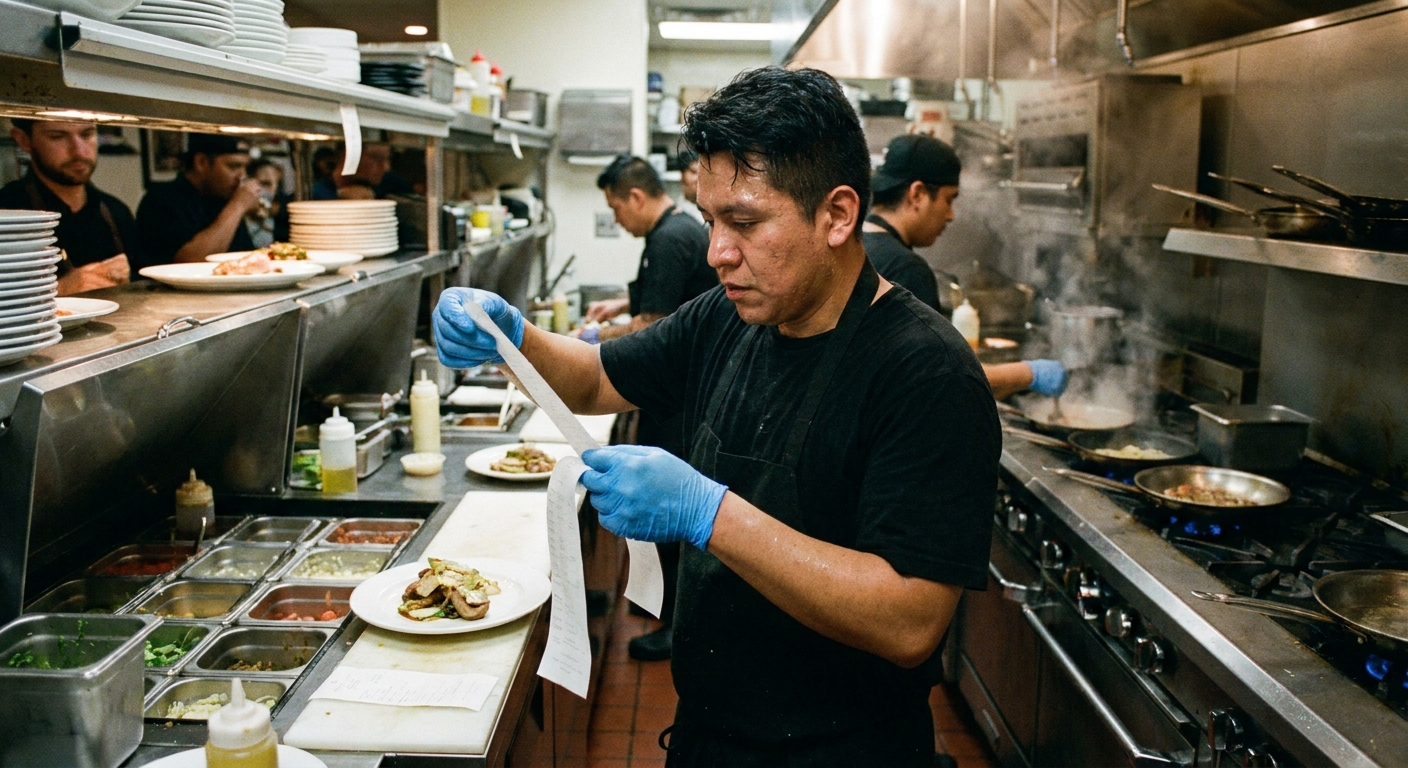
- “Do you have an allergy protocol when a ticket comes in?”
- “Is there a separate prep area for allergen-free orders, or would it be on the main line?”
- “Do you have a dedicated toaster / pasta water / fryer for gluten-free items?”
Ask one honesty question
This is my favorite because it invites a real answer: “If this were your allergy, what would you order?” A good server will either guide you to the safest option or tell you, kindly, that tonight is not the night.
Lower-risk orders
There is no universal “safe order,” but certain categories are generally easier for kitchens to execute safely because the ingredients are simpler and the prep is more controllable.
Often lower risk
- Simply grilled or roasted proteins with a side of steamed vegetables or plain rice or potato, with sauces on the side.
- Salads with oil and vinegar instead of a creamy dressing, plus a protein you can confirm is unbreaded and un-marinated.
- Brothy soups only if the base ingredients can be confirmed. (Many “simple” soups hide butter, flour, sesame, or shellfish stock.)
- Build-your-own bowls where you can keep the ingredient list short and avoid crunchy toppings or mystery sauces.
- Sushi and sashimi can be workable for some allergies, but only with explicit confirmation about soy sauce, imitation crab, tempura, sesame, and shared prep surfaces.
Higher risk
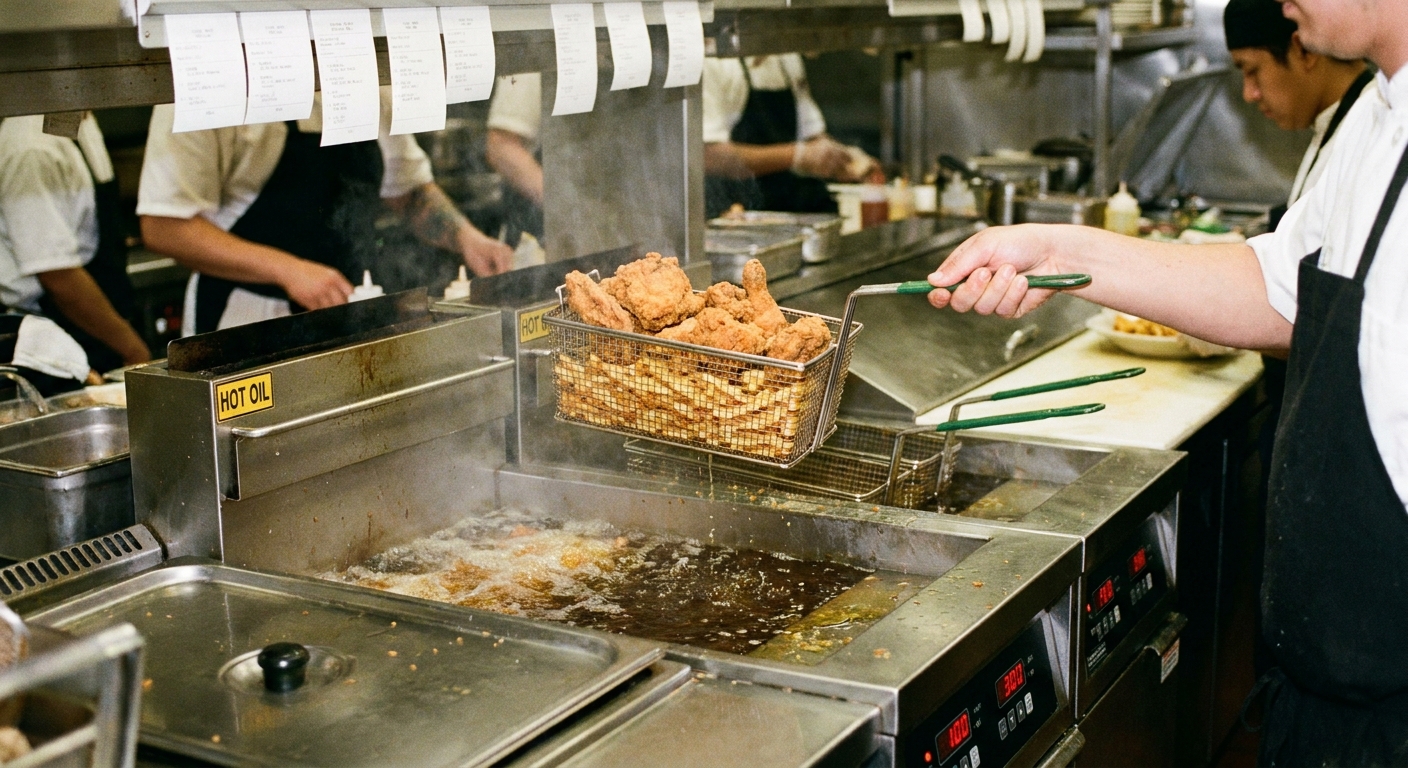
- Fried foods (shared fryer is the classic cross-contact trap).
- Anything battered, breaded, or “crispy” (wheat, egg, dairy, and shared oil show up fast here).
- Sauces, gravies, and “secret” dressings (common hiding spots for nuts, dairy, gluten, sesame, and fish sauce).
- Desserts (nuts, wheat flour dust, shared scoops, and cross-contact are rampant).
- Family-style and tapas (shared serving utensils and plates make accidental exposure more likely).
Before-you-order checklist
If you only take one thing from this article, make it this: you should not have to improvise an allergy plan while everyone is staring at the menu.
- Name your allergen(s) clearly. Avoid vague phrasing like “I am sensitive.”
- Say how serious it is. “Anaphylaxis risk,” “carries an EpiPen,” “celiac,” or “intolerance but cross-contact is okay for me.”
- Ask about shared fryers and shared grills.
- Confirm hidden ingredients. Especially sauces, dressings, stocks, spice blends, and marinades.
- Request clean prep. Clean gloves, clean utensils, clean pan, and a wiped surface as needed.
- Keep the order simple. Fewer ingredients means fewer chances for mistakes.
- Repeat the allergy when you order. “I will do the salmon, but please note the sesame allergy.”
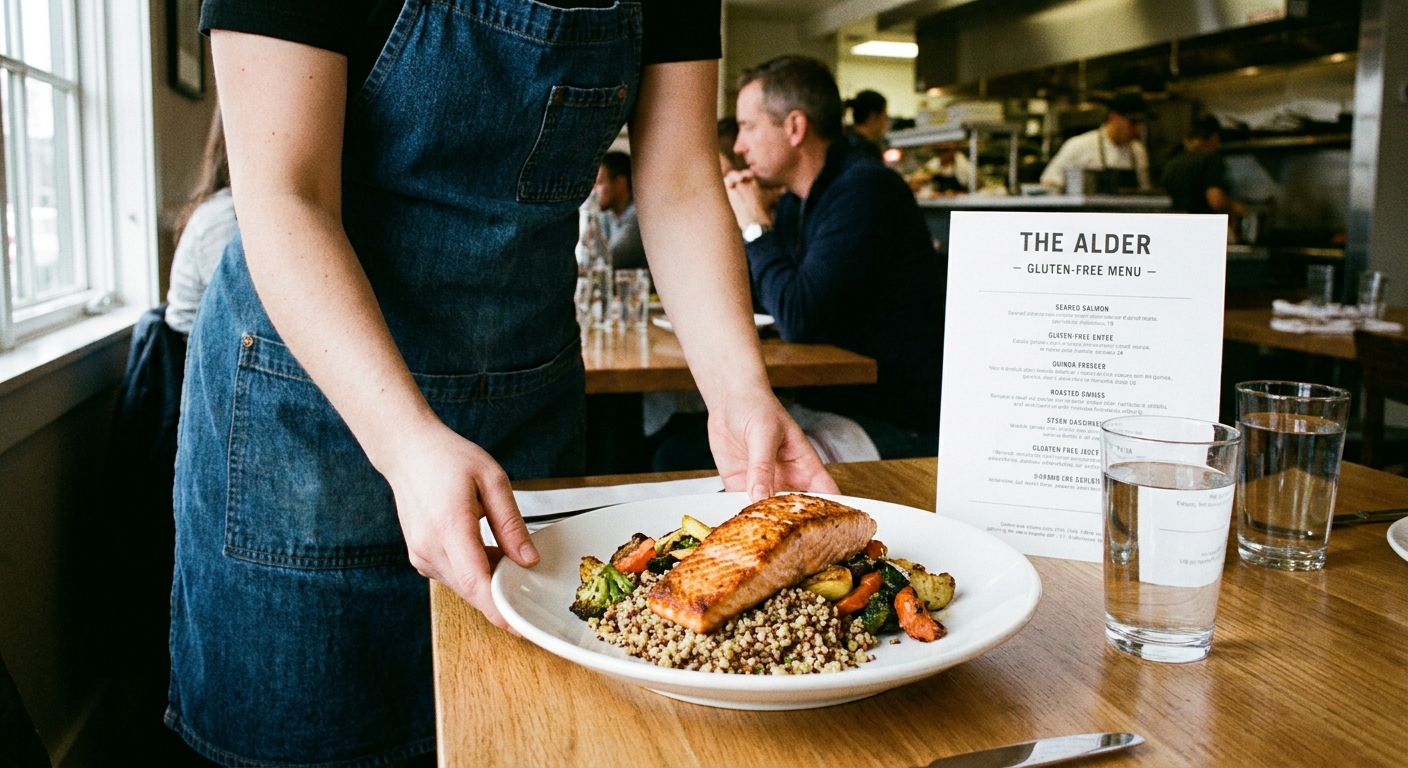
- When the food arrives, do a quick check. If something looks off, stop and ask before you take a bite.
Pro tip from the service side: if you are comfortable, ask the server to mark it as an allergy on the ticket. Many POS systems include allergy modifiers or notes, but a modifier by itself does not guarantee a protocol. What you want is clear communication plus a kitchen that actually has a system.
Cross-contact red flags
Cross-contact is when an allergen accidentally transfers to your food, often through shared surfaces, oil, water, or utensils. This is where a lot of well-meaning restaurants stumble, especially during a rush.
Common red flags
- Shared fryer oil. Fries can be ingredient-wise gluten-free, but they are usually not safe for celiac or strict gluten avoidance if they share oil with breaded items. Same idea for shellfish in a fryer.
- Flat-top grills and griddles. Butter, bread, and allergen marinades spread fast on a busy plancha.
- Pasta water and noodle baskets. A “gluten-free pasta” is only gluten-free if it is cooked separately.
- Toasters and panini presses. Crumbs are basically glitter: easy to spread, hard to eliminate completely during service.
- Salad stations. Croutons, nuts, and cheese get scooped and sprinkled over everything, and tongs travel.
- Garnish habits. Sesame seeds, chopped nuts, parmesan snow, and spice dust can land on a plate out of muscle memory.
- “We can just remove it.” If the allergen touched the dish, removal does not reset the clock.
What to ask for
- “Can you cook mine in a clean pan instead of on the shared grill?”
- “Can I get the sauce on the side and skip the garnish?”
- “If the fryer is shared, can we do a baked or grilled version?”
Notes by allergen
Every allergy is different, but a few patterns show up again and again in restaurant kitchens.
Gluten (celiac and strict avoidance)
- Do not rely on “gluten-friendly” language. Ask what protocols they use for cross-contact.
- Beware soy sauce, roux, and beer. They sneak into marinades, braises, and even desserts.
- Confirm fries, chips, and “crispy” toppings. Shared fryers and dusted seasonings are common issues.
Peanut and tree nut allergies
- Ask about nut oils (peanut oil, walnut oil) and pesto or romesco variations.
- Watch dessert and coffee programs. Nut milks, praline syrups, and shared blenders can matter.
- Beware “crunch.” Granola, brittle, and nut dust show up as finishing touches.
Shellfish and fish allergies
- Ask about shared fryers and shared grills. Shrimp cross-contact is common.
- Confirm stocks and sauces. Fish sauce, anchovy, shrimp paste, and seafood stock are frequent hidden ingredients.
- Know your boundary. Some people report reacting to cooking vapors or aerosolized proteins in tight spaces, especially with fish and shellfish. If this is a concern for you, ask your allergist and communicate your level clearly.
Dairy and egg allergies
- Butter is everywhere. It is used for finishing vegetables, searing proteins, and building sauces.
- Mayo, aioli, and “creamy” dressings are often egg-based.
- Bread and buns frequently contain milk or egg. Ask, even if it seems basic.
Sesame allergy
- Ask about tahini, sesame oil, and sesame garnish. It is often a default sprinkle.
- Confirm spice blends. Sesame can appear in seasoning mixes and crusts.
- Watch Middle Eastern and some Asian dishes where sesame is foundational and hard to avoid safely.
If it feels off, pause
You are allowed to protect yourself without apologizing for taking up space. If the plate arrives with a topping you flagged, if the server looks uncertain, or if you are getting inconsistent answers, stop and reset.
What to say
- “I am sorry, I see sesame seeds on this and I have a sesame allergy. Can we remake it?”
- “This tastes like it might have soy sauce. Can you confirm the ingredients before I continue?”
- “I do not think this is safe for me tonight. Can we do something simpler or cancel the order?”
From the restaurant side, a remake is inconvenient. A medical emergency is catastrophic. Good teams would rather refire your dish.
Emergency basics
If your allergy is severe, do not let “being chill” be the plan.
- Carry your epinephrine and make sure it is not expired.
- Tell someone you are dining with what you are allergic to and where your meds are.
- Know your next step if you react, including your local emergency number.
- When in doubt, skip the risk and eat somewhere you trust. Pride is not worth a reaction.
Quick FAQ
Should I call ahead?
If your allergy is severe or uncommon, yes. A quick call can save you the whole “maybe” experience once you are seated. Ask if they can accommodate your allergen and what their cross-contact setup looks like.
Is it rude to ask for a manager?
No. You are not asking to complain, you are asking to communicate. In many restaurants, managers are the ones trained to handle allergy protocols and confirm ingredients.
Are tasting menus safe?
Sometimes, and sometimes absolutely not. Tasting menus can be safer when the restaurant is allergy-literate and plans ahead. They can be riskier when substitutions are improvised mid-service. Share your allergies when booking, not when you sit down.
Do I need to mention an intolerance?
If a food makes you sick, mention it. Just be honest about whether cross-contact is a concern for you so the kitchen can respond appropriately.
Bottom line
Safe dining with food allergies is a collaboration. You bring clear information and smart questions. The restaurant brings procedures and care. When both sides do their part, you get what you came for in the first place: a good night out and a meal you can actually enjoy.