Wine lists can feel like a pop quiz you did not study for. Too many regions, too many grapes, too many words that sound like they belong in a passport office. Here is the good news: most restaurant wine lists are built on a few predictable patterns. Once you know what you are looking at, you can order in a way that fits your taste, your meal, and your budget without needing to “prove” anything.
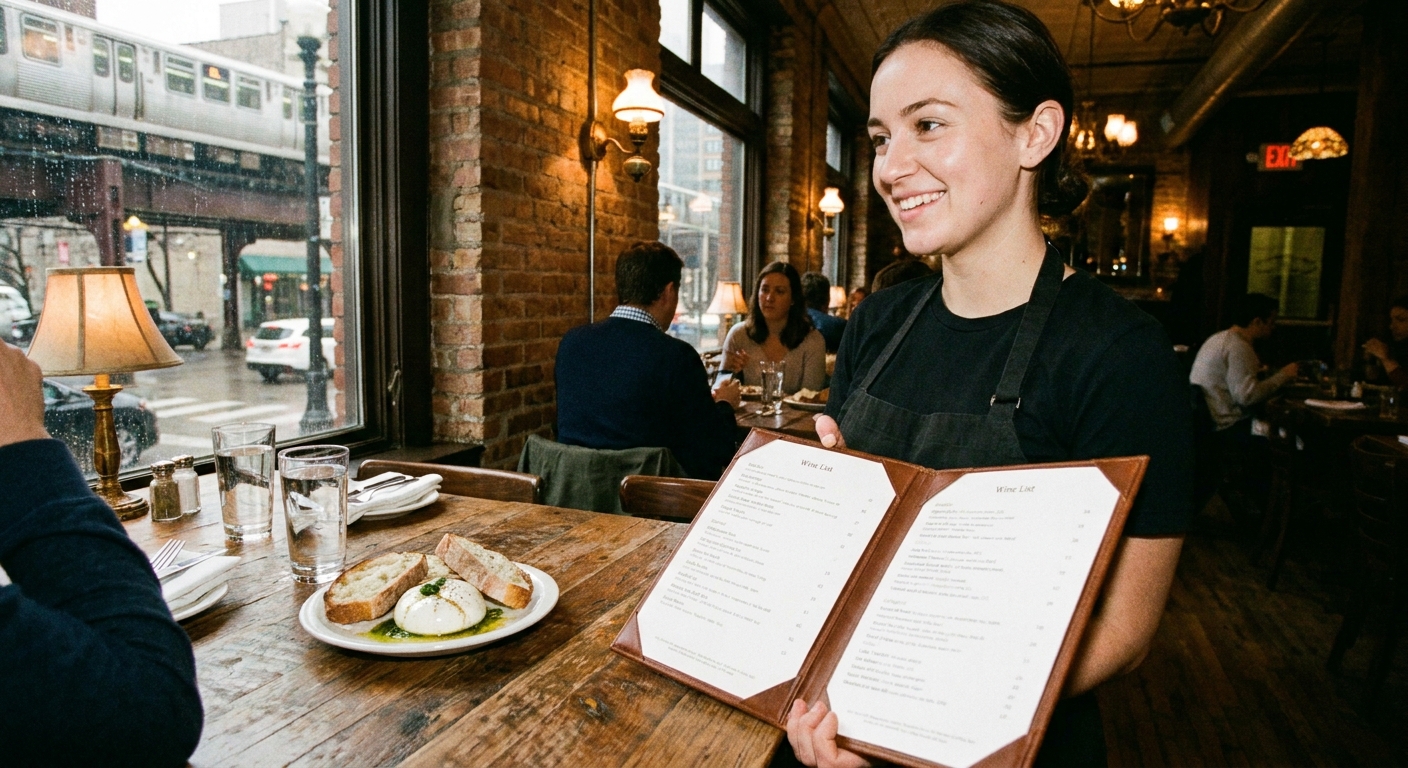
The big picture: how wine lists are organized
Most lists are grouped in one of three ways. Some do all three at once, which is how you end up flipping pages like you are looking for your gate at O’Hare.
- By type: Sparkling, white, rosé, red, dessert, fortified, and sometimes orange wine.
- By region: France, Italy, United States, Spain, and so on, often broken down further into smaller areas.
- By grape: Chardonnay, Sauvignon Blanc, Pinot Noir, Cabernet Sauvignon. For many people, this is one of the easiest formats to shop from, but not every restaurant uses it.
On top of that, most places separate the list into by the glass and by the bottle. If you only remember one thing: start with “what style do I want,” then check “glass or bottle,” then choose based on price and pairing.
Start with style, not expertise
If you freeze up when you see unfamiliar names, order by style. A good sommelier or wine manager will understand you instantly if you say one of these:
- “Crisp and light” (think: Albariño, Muscadet, Vermentino, dry Riesling, Gamay, Pinot Noir served slightly cool)
- “Rich and round” (think: oaked Chardonnay, Viognier, Grenache-based reds, Merlot)
- “Dry” (not sweet, often what people mean when they say “not fruity”)
- “A little fruity” (can still be dry, but with ripe fruit flavors)
- “Low tannin” (less grippy, less mouth-drying)
- “Bubbly” (sparkling options beyond Champagne)
Pro move (not actually pro): if you have a favorite wine at home, describe why you like it. “I like Sauvignon Blanc because it tastes citrusy and clean” is more useful than “I like Sauvignon Blanc” because Sauvignon Blanc can range from grassy to tropical depending on where it is grown and how it is made.
Decoding the by-the-glass section
The by-the-glass section is usually the most approachable. It is also where you can test drive a style before committing to a bottle. Here is what to look for:
What the line usually means
A typical entry might read: Producer, Wine Name, Grape, Region, Vintage, then price. Not every line includes every detail.
- Producer: who made it. Sometimes the most important clue for quality and style.
- Grape: Chardonnay, Tempranillo, etc. Sometimes it is implied by the region.
- Region: where it is from. Often a strong clue about taste, especially in classic regions, but producer choices and vintage can matter just as much.
- Vintage: the year the grapes were harvested. Not always listed for glass pours.
Pour sizes (so you know what you are buying)
A standard restaurant glass pour is often 5 to 6 ounces, but it varies. Some places offer 3-ounce tastes or half-pours, which is a great way to try something new without committing to a full glass.
Price cues without math anxiety
If you are ordering multiple glasses, ask yourself: am I trying to match the food or set a vibe? Either is valid. If you are splitting a bottle between two people and each of you would have two glasses, the bottle is usually the better value, but it depends on the restaurant’s pour size and by-the-glass pricing. Value is not just dollars. It is also getting something you actually enjoy.
The bottle list: how to read the passport pages
This is where wine lists get intimidating, because bottles are often organized by region and sub-region. Here is the translation key I wish every guest had in their pocket:
Region names can replace grape names
Many classic regions label by place, not grape. The list might not spell it out, but the restaurant staff should be able to.
- Burgundy usually means Pinot Noir (red) or Chardonnay (white).
- Champagne is sparkling wine from Champagne, France (often Chardonnay, Pinot Noir, and Pinot Meunier).
- Barolo is Nebbiolo from Piedmont, Italy.
- Rioja is typically Tempranillo-based from Spain.
You do not need to memorize this. You just need to recognize the trick: on many lists, the place name is the grape clue.
Common wine list terms in plain language
Some words are genuinely helpful. Others are marketing. Here are the ones you will see a lot:
- Dry: not sweet. A wine can smell fruity and still be dry.
- Off-dry: a touch of sweetness, often great with spicy food.
- Mineral: a stony, salty, or “wet rock” impression. It is about perception, not actual rocks in the glass.
- Tannins: the drying grip you feel, mostly in red wine. Rich, fatty foods can soften that grip, while spicy heat can make tannin feel sharper.
- Acid: the mouthwatering zing. High acid is a friend of fried food, rich sauces, and cheese.
- Oaked: can add flavors like vanilla, toast, coconut, or baking spice. Also changes texture.
- Unoaked: usually fresher, brighter, more fruit-forward.
- Reserve / Old Vines: not regulated everywhere. Sometimes meaningful, sometimes vibes. Ask if you are curious.
- Natural wine: a broad term. Often lower-intervention winemaking, sometimes cloudy, sometimes funky, sometimes totally clean.
How to choose by food pairing
Pairing is less about perfect matches and more about avoiding obvious clashes. I like to keep it to three simple strategies: match intensity, use acid like a squeeze of lemon, and respect spice.
Quick pairing cheat sheet
- Oysters, crudo, salads: crisp whites or sparkling (high acid, clean finish)
- Fried food: sparkling or high-acid whites (bubbles and acid cut through fat)
- Roast chicken, creamy pastas: medium-bodied whites or light reds
- Steak, lamb, mushrooms: structured reds (tannin is softened by richness, especially fat and protein)
- Spicy dishes: off-dry whites, lower-alcohol options, or juicy low-tannin reds
- Dessert: the wine should be as sweet or sweeter than the dessert
If you are gluten-free like me, wine is nearly always a safe harbor, but edge cases exist and sensitivity levels vary. Flavored wine products and ready-to-drink cocktails are where things get trickier. If you have celiac or a serious allergy concern, tell your server and ask the staff to double-check.
How to choose by region
If you want to explore without getting lost, pick a region and ask for the house style. It is a simple, confident way to order, and it signals you are open to suggestions.
Helpful regional shortcuts
- Loire Valley (France): often crisp, bright whites and chillable reds.
- Alsace (France): aromatic whites that can handle spice.
- Piedmont (Italy): elegant reds with structure, plus high-acid whites and bubbles.
- Tuscany (Italy): savory reds that love tomato and grilled meat.
- Oregon (USA): Pinot Noir and Chardonnay with freshness and finesse.
- Ribera del Duero or Rioja (Spain): Tempranillo-based reds, from polished to powerful.
Not every bottle will fit these notes, but they are reliable enough to get you started.
Price cues and what you are paying for
Restaurant pricing reflects more than the liquid: storage, breakage risk, glassware, trained staff, and the reality that wine helps keep the lights on. Still, you deserve to feel good about what you order.
How to spot value on a list
- Look for the middle of the list. Restaurants often price aggressively at the very low end and the very high end. The sweet spot is frequently in the middle.
- Consider lesser-hyped regions. Similar styles often cost less when they come from places with fewer headline reputations.
- Ask for a bottle with great acidity. High-acid wines tend to be food-friendly and satisfying across multiple dishes.
How to order confidently
If you feel awkward asking for help, you are not alone. But I promise: the best hospitality pros love a clear, normal request. Here are scripts that work at everything from a neighborhood bistro to a special-occasion dining room.
- If you want a glass: “Can you point me to a crisp, dry white by the glass around $15 to $18?”
- If you want a bottle: “We are getting the chicken and the pasta. Could you recommend a bottle that can handle both?”
- If you like lighter reds: “I like Pinot Noir styles. Anything in that lane, maybe a little more adventurous?”
- If you hate oak: “Do you have a white that is fresh and not too oaky?”
- If you are budget-aware: “We would love to stay under $70. What do you like in that range?”
- If you want to learn: “If you had one bottle here that is a great introduction to this region, what would it be?”
If the restaurant has a sommelier, you are not bothering them. That is literally the job. If it is a smaller place, your server may still be well-trained, or they can grab a manager. Either way, your clarity helps them help you.
When the list is a novel
Some lists are long. When you are staring down pages of tiny font, narrow it fast:
- Pick your lane: bubbles, crisp white, aromatic white, light red, bold red.
- Name one no: “No super oaky Chardonnay” or “no heavy, high-alcohol reds.”
- Set a ceiling: a price limit is information, not an apology.
Then ask for two options. Not ten. Two. Decision fatigue is real, especially when you are hungry.
Wine list etiquette that matters
- It is okay to ask to taste. If you order a bottle, the small pour is to confirm the wine is sound, not to see if it is your favorite thing ever. “Not sound” usually means a flaw like cork taint (wet cardboard smell), oxidation (flat, bruised-apple notes), or a wine that tastes tired and dull. If you hate it stylistically, you can politely ask for a different bottle, but the restaurant may not comp it.
- Say what you mean. “Smooth” can mean low tannin, or it can mean a little sweetness, or it can mean “not too intense.” Give one more detail and you will get a better recommendation.
- Trust your palate. If you like it, it is good. Full stop.
FAQ
Is the most expensive bottle always the best?
No. Price can reflect scarcity, prestige, age, import costs, or simply the restaurant’s cellar goals. The best bottle is the one that fits your meal and your taste.
What if I cannot pronounce anything?
Pointing is allowed. So is taking a quick photo of the page and asking, “Can you tell me about these two?” Nobody worth their salt is judging you for not nailing the vowels.
How do I avoid a sweet wine if I do not like sweet?
Say: “Dry, please.” If you are ordering Riesling, Chenin Blanc, or Moscato, ask whether it is dry or off-dry. Many are dry, but not all.
What is the safest wine for a mixed group with different tastes?
Bubbles are the classic crowd-pleaser. For still wine, a high-acid white or a lighter red with lower tannin tends to play well with a wide range of foods.
The best wine order is the one that makes the table feel taken care of, including you. Ask a simple question, give one preference, set your budget, and let hospitality do its thing.