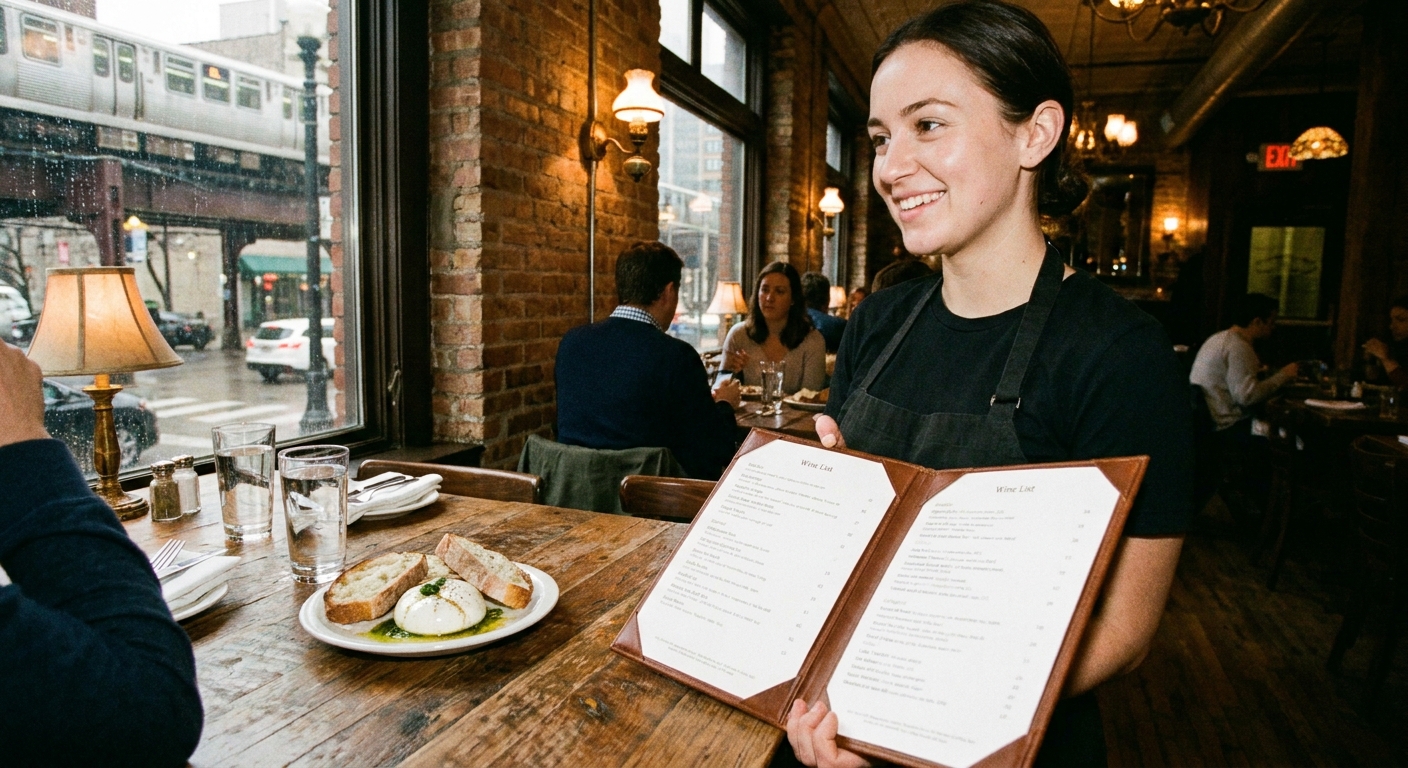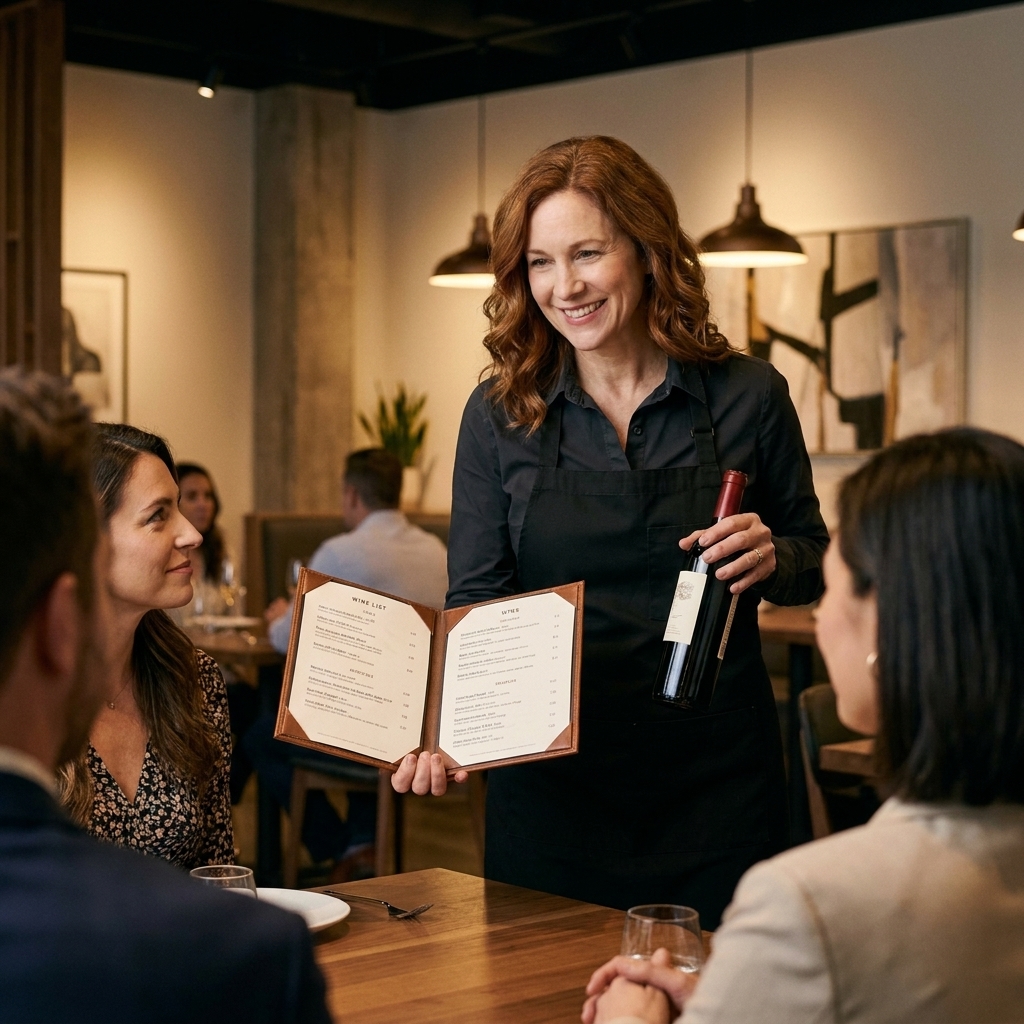
I've spent a lot of nights watching a table freeze in front of a wine list like it's a standardized test. The good news: you don't need sommelier vocabulary to order something reliably tasty. You just need a few safe “lanes” and a quick way to read the list for style, sweetness, body, and price.
This is the exact approach I use when I'm off the clock, hungry, and not trying to make wine my whole personality.
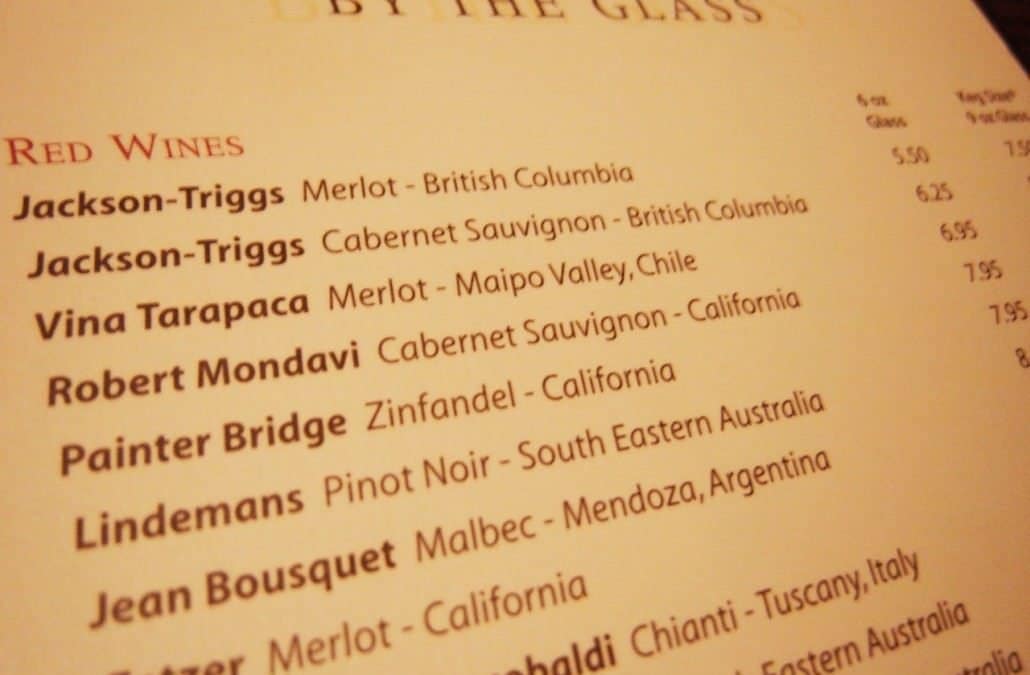
First, scan the list like a pro
Step 1: Find the section that fits your mood
Most wine lists are organized by sparkling, white, rosé, and red. Some are grouped by country or region. Either way, start by asking yourself a couple quick questions:
- Do I want refreshing? Start with sparkling, crisp whites, or dry rosé.
- Do I want cozy? Start with reds, or fuller-bodied whites.
- Do I want something that disappears easily? Look for mid-bodied, low-tannin reds or dry whites with moderate alcohol.
Step 2: Use grapes as a shortcut for body
If you only remember a few grapes, you can make a confident call in under a minute. Here's the “vibe map” I keep in my head:
- Crisp, lighter whites: Sauvignon Blanc, Pinot Grigio, Albariño, Muscadet, Assyrtiko
- Rounder, fuller whites: Chardonnay (especially oaked), Viognier, white blends
- Light to medium reds: Pinot Noir, Gamay, Barbera, Grenache (often medium, can run bigger and higher-alcohol depending on the bottle)
- Bigger or more structured reds: Cabernet Sauvignon, Syrah, Malbec, Bordeaux blends (often more structured)
Step 3: Spot sweetness without guessing
In restaurants, wines by the glass are often dry unless the list says otherwise, but it's not a rule. If you're sweetness-averse, look for clues that are actually useful:
- Words that usually mean dry: “brut” (sparkling), “extra brut,” “dry”
- Words that often signal sweetness: “off-dry,” “demi-sec,” “dolce,” “late harvest,” “moscato,” “riesling” (can be dry or sweet, so check notes)
If the list includes a description, treat it like a vibe, not a lab report. Notes like stone fruit and honeysuckle can read a little sweeter, while minerality, citrus, saline, and crisp usually read drier. When in doubt, look for an explicit dryness cue (brut, demi-sec, off-dry) or ask.
One quick heads-up: “secco” can mean dry in a lot of contexts, but sparkling labeling gets weird fast across countries and styles. I don't treat it as a slam-dunk dryness guarantee unless the menu is clear.
Step 4: Price like a normal person
A quick reality check: the safest bottle is often not the cheapest or the most expensive. I like to live in the middle third of the bottle list, or choose a by-the-glass option that's not the absolute bottom pour.
- By the glass: If there are 5 options, pick #2 or #3 unless you have a reason not to. The cheapest is often the house pour, and the middle tends to be better value.
- By the bottle: If you're unsure, pick something in the middle of the page price-wise and focus on a familiar grape or region.
Safe picks: white wine
When you want a white that's hard to dislike, you're usually looking for high acidity (refreshing), no obvious sweetness, and not too much oak.
Decision path for white
- If you like crisp and zippy: Order Sauvignon Blanc (Loire Valley or New Zealand) or Albariño (Spain).
- If you like soft and easy, not buttery: Order Pinot Grigio (Italy) or an unoaked Chardonnay if specified.
- If you want something food-friendly with a little texture: Order white Burgundy (Chardonnay) if it fits your budget, or a dry Chenin Blanc if you see it.
Quick oak cue for Chardonnay
If the list doesn't say oaked or unoaked, look at the tasting words. Vanilla, toast, butter usually means more oak. Lemon, green apple, chalk usually means leaner and less oaky.
My “safe and good” white orders
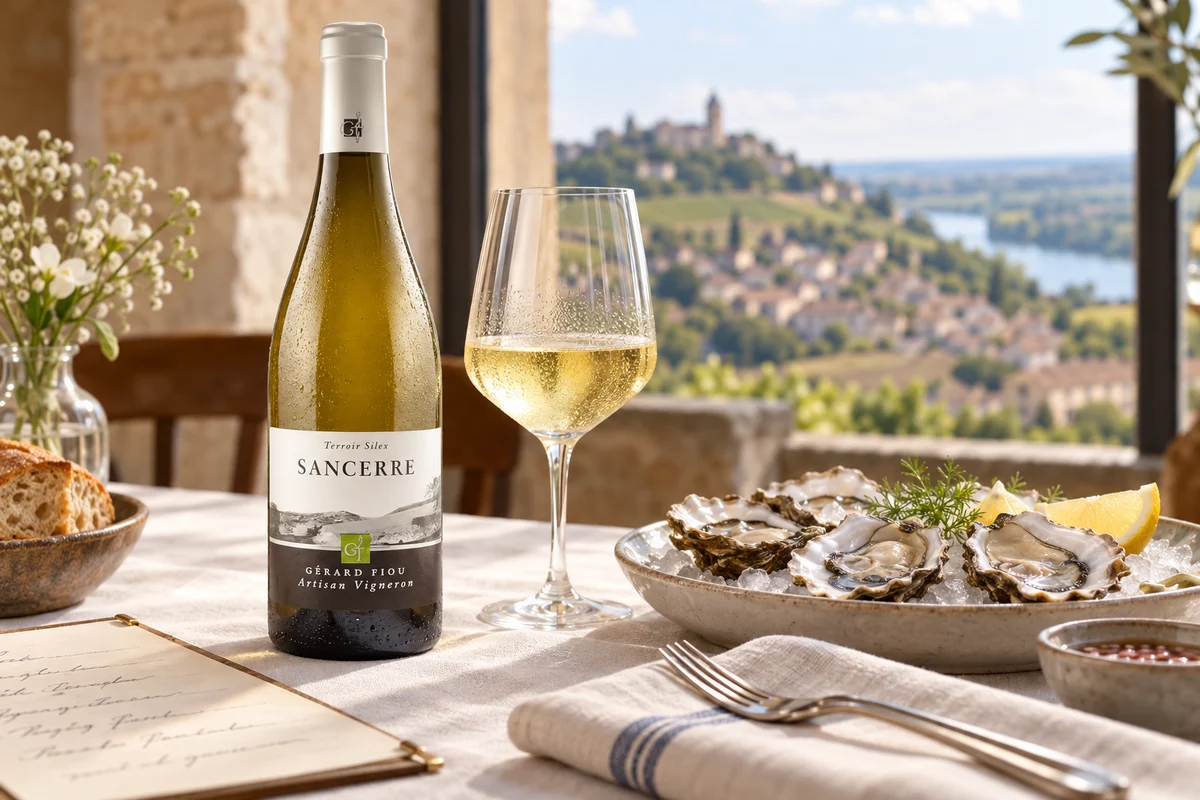
- Sancerre (a Sauvignon Blanc from the Loire): clean, bright, reliably restaurant-friendly.
- Albariño from Rías Baixas: citrus, salt, great with seafood, fries, and awkward small talk.
- Chablis (Chardonnay from Burgundy): often leaner and less oaky than many New World Chardonnays.
Safe picks: red wine
In a restaurant setting, “safe” for red usually means medium body, moderate tannins, and enough acidity to work with food. You want something that won't bully your meal.
Decision path for red
- If you like lighter reds (or you usually drink white): Order Pinot Noir (especially from Oregon, California coastal regions, or Burgundy if you're splurging).
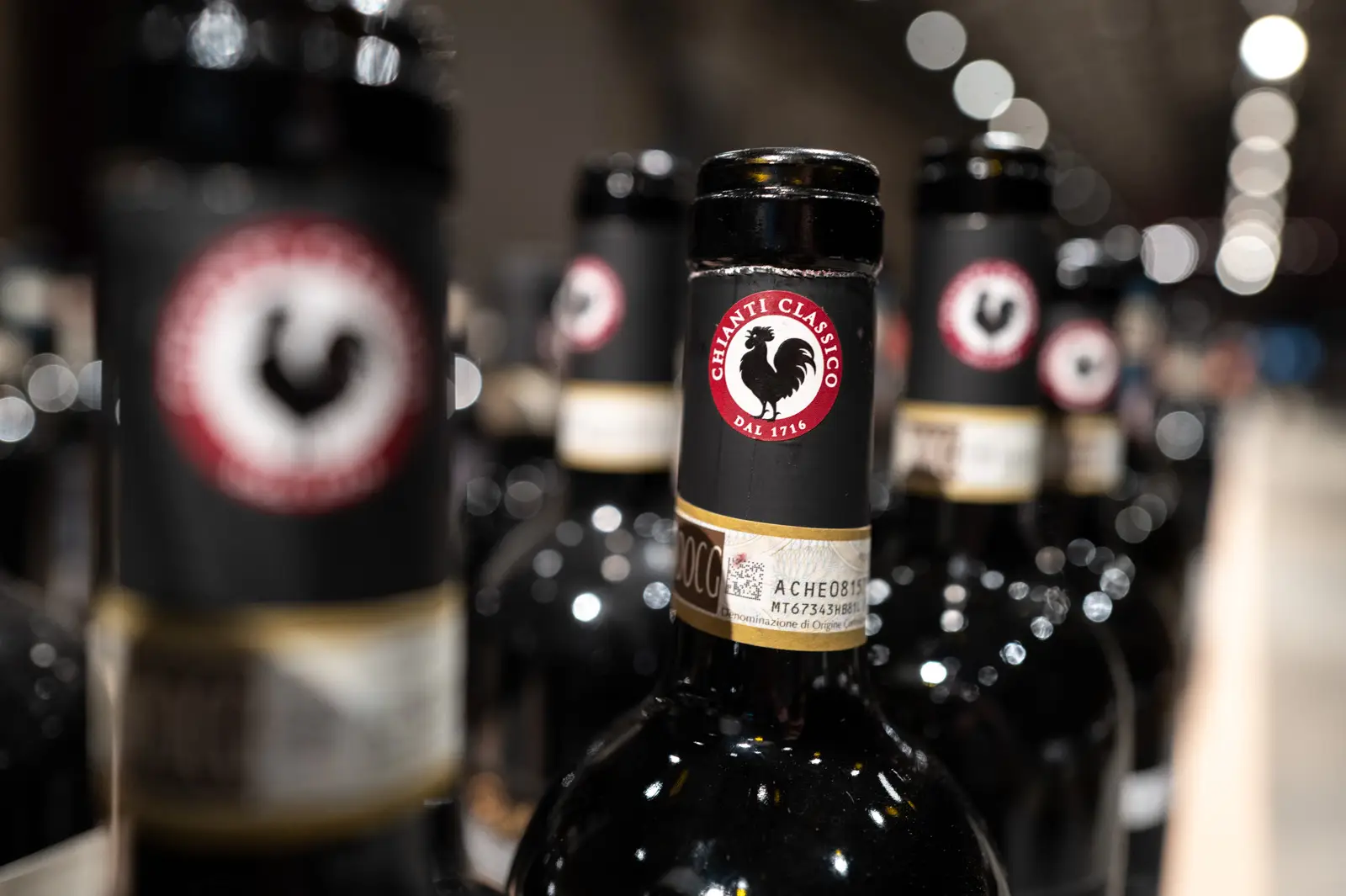
- If you want crowd-pleasing with pasta, pizza, or roast chicken: Order Sangiovese (Chianti Classico is a great tell) or Barbera.
- If you want something plush but not a tannin monster: Order Grenache or a GSM blend (Grenache, Syrah, Mourvèdre).
- If you want big and bold: Go Cabernet Sauvignon or Syrah, and aim for a producer you recognize or a region the restaurant clearly loves.
My “safe and good” red orders
- Pinot Noir: the universal translator of red wine, especially when you're ordering across a table.
- Chianti Classico: bright cherry, savory edges, built for food.
- Côtes du Rhône: a dependable red that usually overdelivers for the price.
One temperature trick
Lighter reds (Pinot Noir, Gamay, many Grenache blends) can be amazing slightly chilled. If the room is warm, asking for “a quick chill” isn't weird, it's smart.
Safe picks: sparkling wine
Sparkling is my favorite “I didn't want to think today” order. It's celebratory, palate-cleansing, and wildly flexible with food. The key is knowing what dryness level you want.
Decision path for sparkling
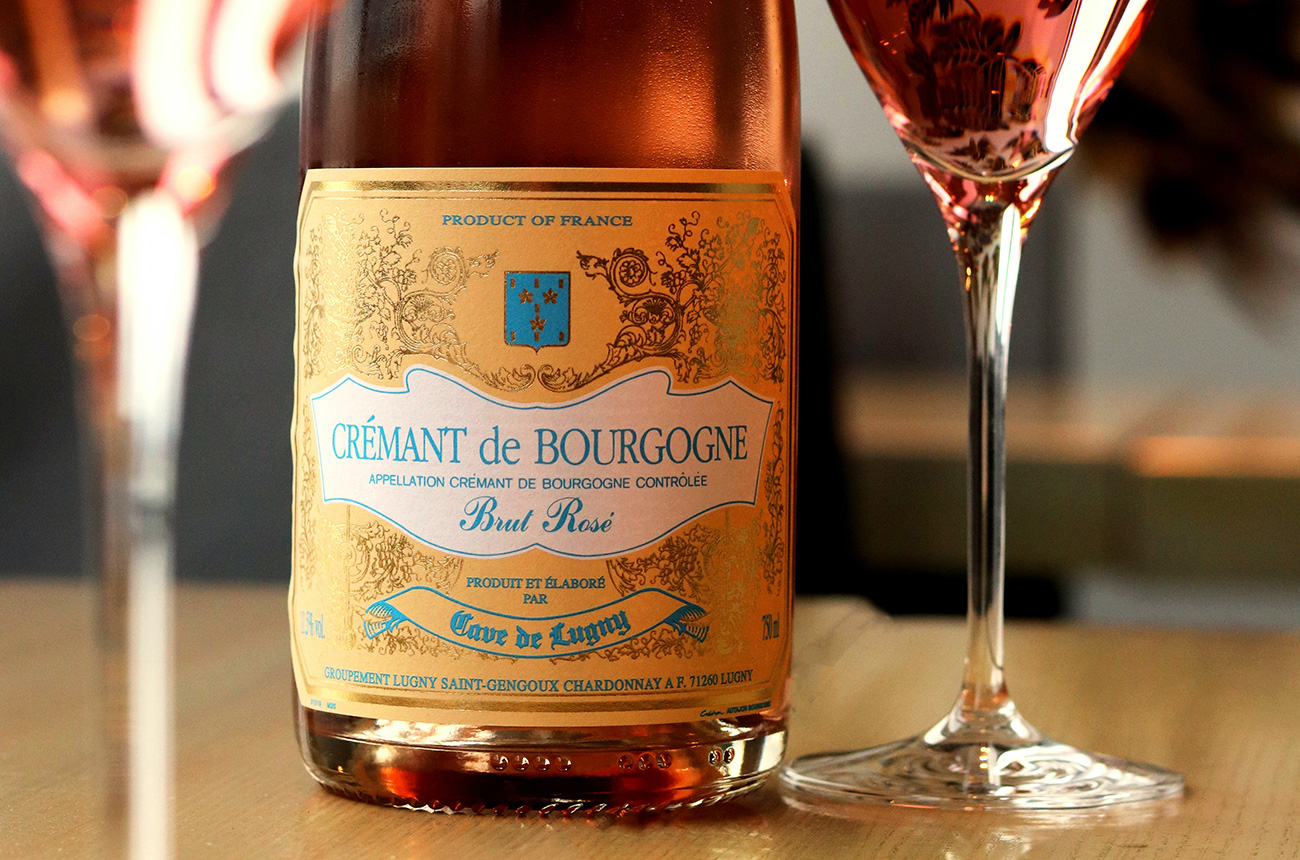
- If you want dry and classic: Order Brut Champagne or Brut Crémant.
- If you want dry but more affordable: Order Brut Prosecco or Cava Brut.
- If you want a little sweetness: Look for Extra Dry Prosecco (yes, it's usually sweeter than Brut) or Demi-Sec Champagne for dessert vibes.
My “safe and good” sparkling orders
- Crémant (France, outside Champagne): often elegant, often a better value.
- Cava Brut (Spain): crisp, great with salty snacks and fried things.
- Grower Champagne (if listed and within budget): if the restaurant bothers to list it, they usually care.
Safe picks: rosé
Rosé isn't automatically sweet. In restaurants, most are dry and built for food, especially if they lean French, Spanish, or Italian.
Decision path for rosé
- If you want crisp and dry: Choose Provence rosé or Spanish rosado.
- If you want a little more body: Look for rosé made from Grenache, Mourvèdre, or Tempranillo.
My “safe and good” rosé order
When the list is long and my patience is short: Provence. It's the diner equivalent of a clean white tee.
When the list is weird
Some places have a natural wine list full of grapes you've never seen. Others have a steakhouse list that's basically Cabernet in 40 fonts. Here's how to stay safe without being boring.
If you don't recognize any grapes
- Pick by structure words: “light-bodied,” “medium-bodied,” “fresh,” “high acid,” “crisp,” “juicy,” “low tannin.”
- Pick by a familiar region style: Loire whites, Northern Italian whites, Rioja, Côtes du Rhône, Beaujolais.
- Ask one targeted question: “I like Pinot Noir. What's the closest thing on your list in that direction?”
If the list is only by region
Use these training wheels:
- Burgundy: generally, whites are Chardonnay and reds are Pinot Noir (with a few exceptions).
- Loire Valley: great Sauvignon Blanc and Chenin Blanc.
- Rioja: usually Tempranillo-based reds, often smooth and food-friendly.
- Mosel: Riesling, can be dry to sweet, check notes.
- Napa Valley: Cabernet Sauvignon and bolder styles.
Nonalcoholic options
The best restaurant nights are inclusive ones. If you're skipping alcohol, you deserve something better than a sad soda water with a lime wedge that looks like it's worked a double.
Decision path for NA
- If you want “wine-ish” acidity with dinner: Ask for an NA sparkling wine (brut if available) or a verjus soda if the restaurant makes one.
- If you want a cocktail vibe without booze: Choose an NA cocktail built on tea, bitter aperitif alternatives, or amaro-style zero-proof spirits.
- If you want something that pairs with food like wine does: Look for sparkling tea or hopped seltzers. They bring bitterness and a little bite in a wine-adjacent way.
What I order when I want to blend in
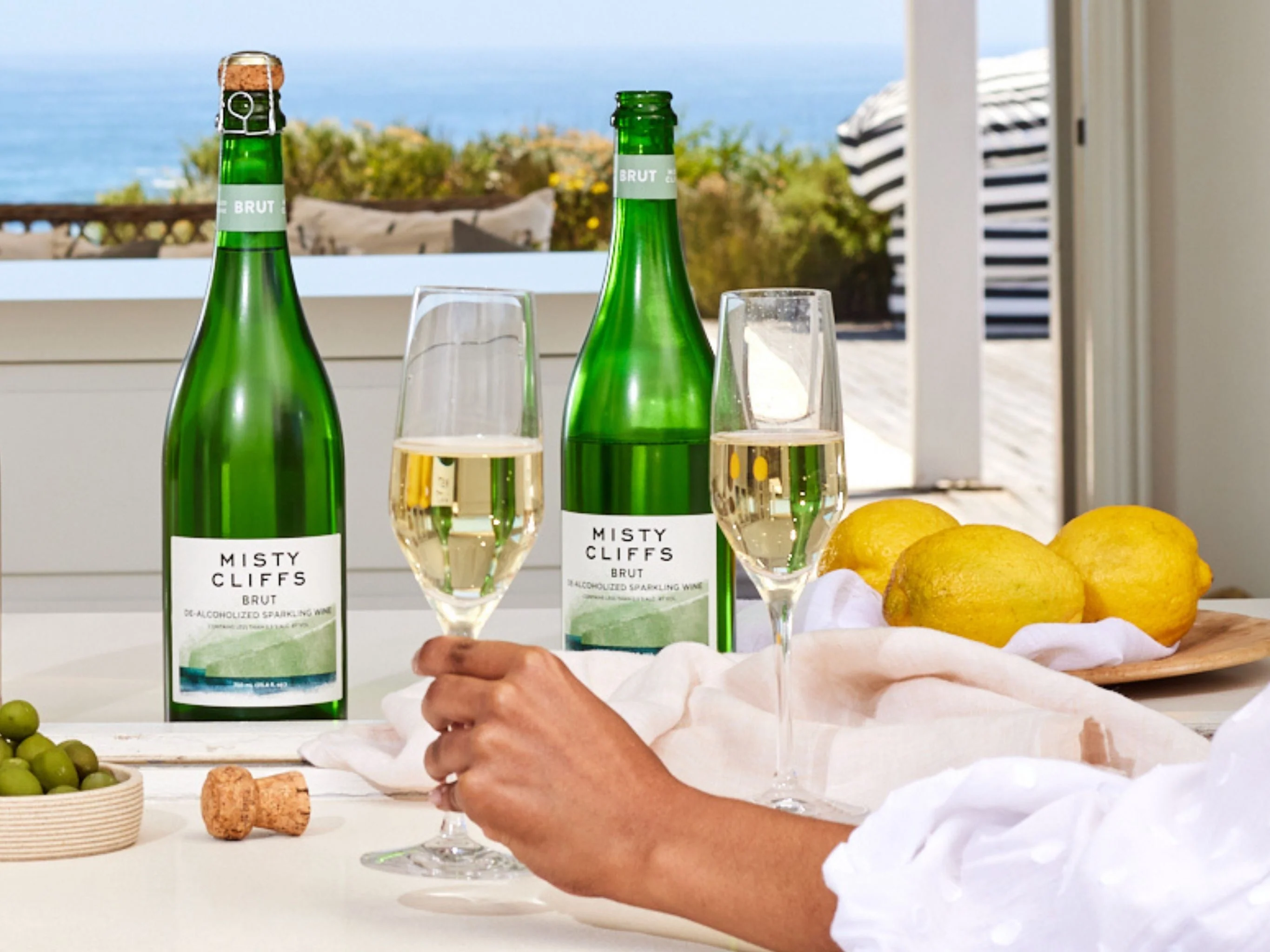
NA brut bubbles in a flute. It reads festive, it plays nicely with appetizers, and it keeps the night feeling like an occasion.
The easiest safe orders by food
If your brain is fried, match the wine to the plate and call it a night.
Go-to pairings that rarely disappoint
- Salads, oysters, shellfish: Sauvignon Blanc, Albariño, Muscadet, Brut sparkling
- Roast chicken, creamy pastas: Chardonnay (unoaked if you want crisp, oaked if you want plush), Pinot Noir
- Steak, burgers: Cabernet Sauvignon, Syrah, Malbec, Bordeaux blends
- Pizza, tomato sauces: Chianti Classico, Barbera, Côtes du Rhône
- Spicy food: Dry to off-dry Riesling (read the notes), sparkling wine, lighter reds served slightly cool
- Dessert: Demi-sec sparkling, late harvest wines, or ask what they pour by the glass
How to ask for help
The trick is to give the server or somm something actionable: a reference point, a budget, and a vibe. You don't need to apologize for not knowing.
Scripts that actually work
- “I want something dry, crisp, and under $X. What's your safest white?”
- “I usually like Pinot Noir. What do you have that's similar, maybe a touch more adventurous?”
- “We're ordering a mix of dishes. What's the most food-friendly bottle on your list?”
- “I'm avoiding alcohol tonight. What's your best nonalcoholic option that pairs with dinner?”
A good wine professional isn't impressed by your vocabulary. They're impressed when you tell the truth about what you like.
Quick cheat sheet
- White: Sauvignon Blanc (Loire), Albariño, Chablis
- Red: Pinot Noir, Chianti Classico, Côtes du Rhône
- Sparkling: Brut Crémant, Cava Brut, Brut Champagne
- Rosé: Provence
- NA: NA brut bubbles, sparkling tea, a bitter-forward NA cocktail
If you remember nothing else: choose brut when you want dry bubbles, choose Pinot Noir when you want an easy red, and choose Albariño when you want a white that plays well with almost everything.