“Gluten-free” can mean three different things depending on who’s talking: the menu, the server, or the kitchen. As someone who spent years running beverage programs and now has a severe gluten intolerance, I’ve learned to treat the words on the page as the start of a conversation, not the finish line.
This is how to tell when a dish is actually gluten-free, where gluten hides when you least expect it, and the most effective questions to ask without making the table feel like a deposition.
Quick note: this is general guidance, not medical advice. If you have celiac disease or a medically necessary gluten-free diet, talk with your clinician about your personal risk, and remember that restaurants can reduce cross-contact, but they cannot promise zero gluten.
Gluten-free label vs naturally gluten-free
There’s a big difference between an item designed to be gluten-free (ingredients and process) and an item that is only gluten-free on paper (ingredients without controls).
1) Labeled gluten-free
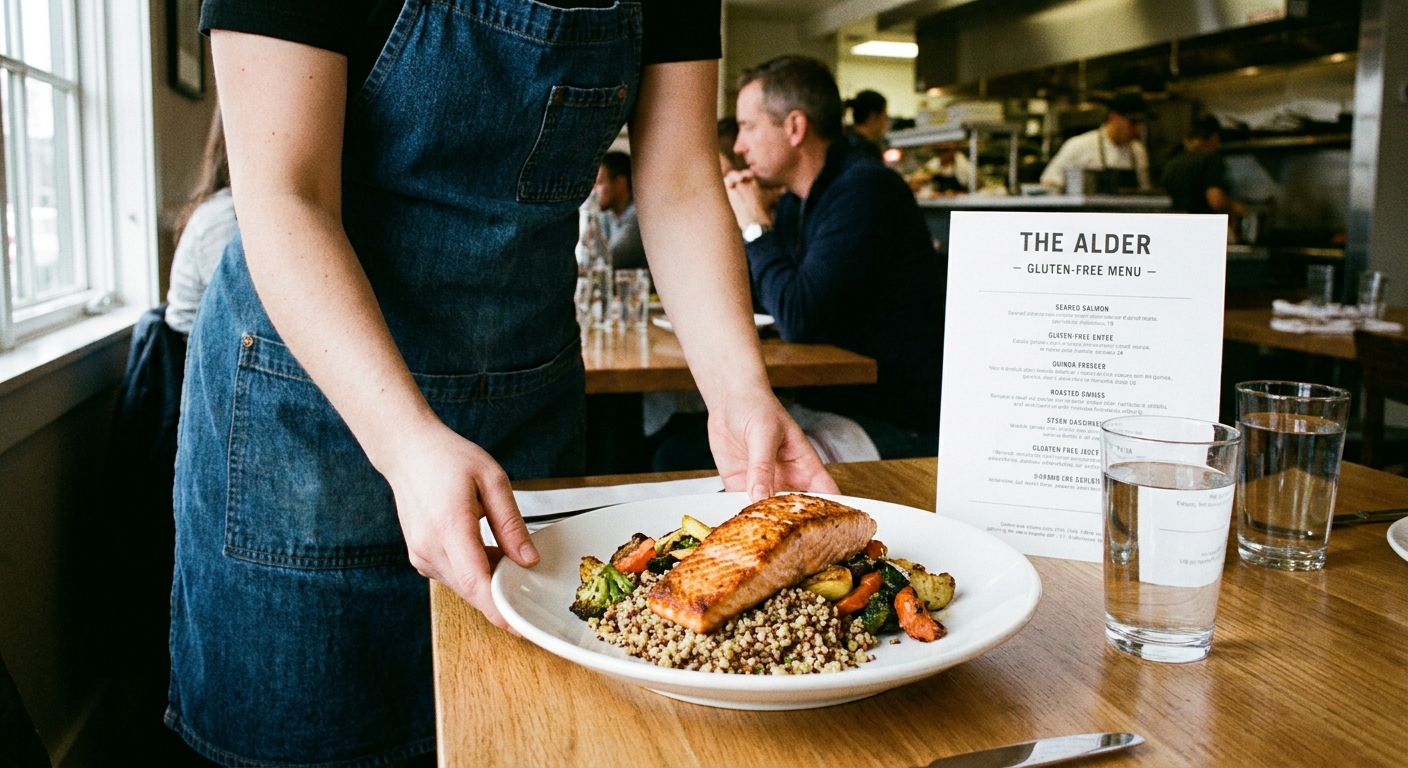
If a menu item is marked GF (or has a dedicated gluten-free symbol), that is a good sign. It usually means someone has at least thought about ingredients. But it does not automatically mean the kitchen has controlled for cross-contact.
In many restaurants, a symbol means “no gluten ingredients,” not “made on separate equipment.” What you want to learn is: are they using gluten-free ingredients and preparing them in a way that avoids contamination?
2) Naturally gluten-free
These are dishes that contain no obvious gluten ingredients at baseline: plain grilled fish, steamed rice, a baked potato, simple sautéed vegetables, a salad without croutons.
Here’s the catch: naturally gluten-free dishes are often the ones that get accidentally contaminated because staff assume they are “safe” and stop asking questions about shared pans, spoons, and fryers.
3) “Can be made gluten-free”
This is the most misunderstood category. Sometimes it means, “We can remove the bread.” Sometimes it means, “We can swap in gluten-free pasta that’s cooked in a separate pot.” Those are wildly different outcomes.
Where gluten hides on restaurant menus
Gluten is not just bread, pasta, and beer. In restaurants, the sneakiest gluten tends to show up in liquids, coatings, and the stuff that comes “automatically.”
Sauces and gravies
- Soy sauce is the classic trap. Regular soy sauce usually contains wheat. You need tamari (and you need it labeled gluten-free) or a gluten-free soy sauce, and you need the kitchen to actually use it.
- Roux-based sauces like many gravies, cream sauces, and some cheese sauces can start with flour.
- Pan sauces might be thickened with flour “just a touch.” That touch matters.
- Salad dressings can contain malt vinegar, soy sauce, or thickeners that are not always gluten-free. Malt comes from barley, so malt vinegar is a no for strict gluten-free. Distilled vinegar is generally gluten-free, but always confirm ingredients.
Marinades and glazes
Marinades often include soy sauce, beer, malt, or spice blends. The bigger risk with spice blends is not “anti-caking agents” (many are gluten-free). It is wheat-based carriers, unlabeled additives, or shared-facility cross-contact.
Also, a marinade is a cross-contact magnet if the same batch gets brushed onto multiple proteins with the same basting brush.
Fryers
A menu can swear up and down that the French fries are gluten-free, but the fryer tells the truth. If that fryer also cooks breaded chicken, onion rings, or tempura, your fries are sharing oil with gluten.
Ask for a dedicated gluten-free fryer. If the answer is “We fry everything in the same oil,” and you need strict gluten-free (celiac or severe sensitivity), treat the entire fried section of the menu as unsafe.
Grills, griddles, and toasters
The fryer gets all the attention, but shared hot surfaces are quietly messy. Burger buns get toasted on the same flat-top as proteins. Pancakes and French toast leave a trail. Some kitchens butter and scrape, then put your “plain” item right where the gluten has been all morning.
If you are ordering grilled or griddled food, ask if they can use a clean pan, clean section of the grill, or foil.
Pasta water and boiling pots
“Gluten-free pasta available” is only half the story. The question is whether it’s cooked in a separate pot with clean water and handled with clean utensils. Shared pasta water is a hard no for strict gluten-free.
Shared prep areas
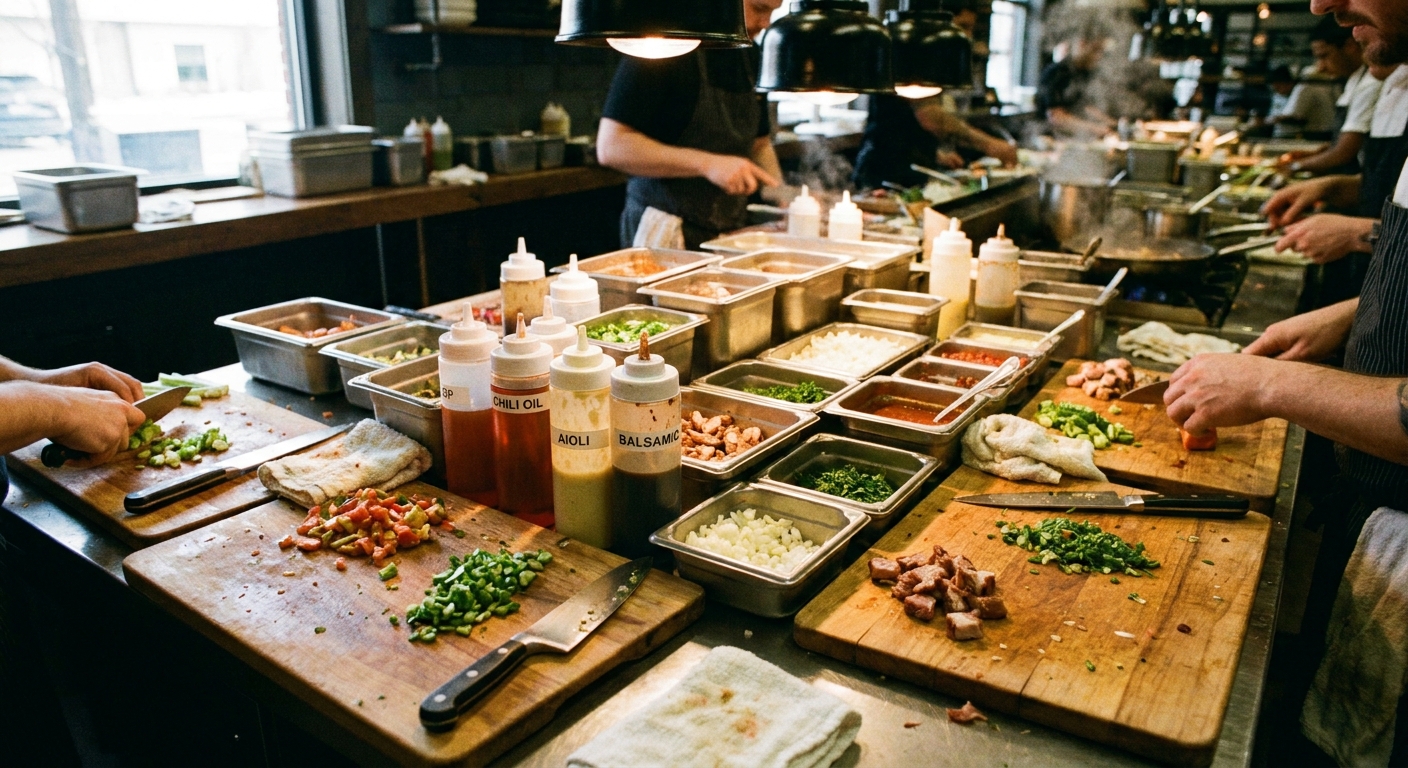
Cross-contact happens in the quiet moments: the same cutting board, the same prep glove, the same “clean” towel that was used to wipe flour dust.
This is especially common with:
- Pizza stations where flour is airborne
- Busy brunch lines where toast and pancakes are everywhere
- Bakeries and cafes where crumbs live in every corner
Common menu traps (even at good restaurants)
Some dishes look safe until you’ve worked in a kitchen or had to live like your immune system is a sniffer dog.
“Just order the salad”
Salads can be risky because they’re often assembled fast, with lots of hands in the mix. Watch for croutons, fried toppings, crispy shallots, imitation bacon bits, and dressings that may contain malt or wheat-based soy sauce. Also: salad tongs that grab croutons all night are not your friend.
Soups
Soup is frequently thickened with flour, finished with pasta, or built on a base that uses bouillon, soy sauce, or beer. Even when a soup is gluten-free, it might be ladled with the same spoon used for a neighboring soup that is not.
“Crispy” anything
That crisp might come from flour, breadcrumbs, tempura, or a dusting of something that sounds harmless like “seasoned starch.” If it is crispy, ask how it gets crispy.
Oats, granola, and oat milk
Oats are naturally gluten-free, but they are commonly contaminated during processing. Restaurants often buy whatever oat milk or granola is standard for the bar, which may not be certified gluten-free.
Imitation crab and some processed meats
Surimi (imitation crab) can contain wheat-based binders. Sausages, meatballs, and pre-formed patties may include breadcrumbs or fillers. Always ask if they’re made in-house and what the binder is.
Desserts that “seem” flourless
Flourless chocolate cake is sometimes truly gluten-free and sometimes made in a kitchen where flour is everywhere, then dusted with powdered sugar using a shared sifter. Ice cream can be contaminated by mix-ins or shared scoops.
The questions that get you real answers
You do not need to recite your medical history to order safely, but you do need to ask questions that help the staff check the right things. These are the questions that separate “I think so” from “Yes, and here’s how we handle it.”
Start with your goal
If you need strict gluten-free:
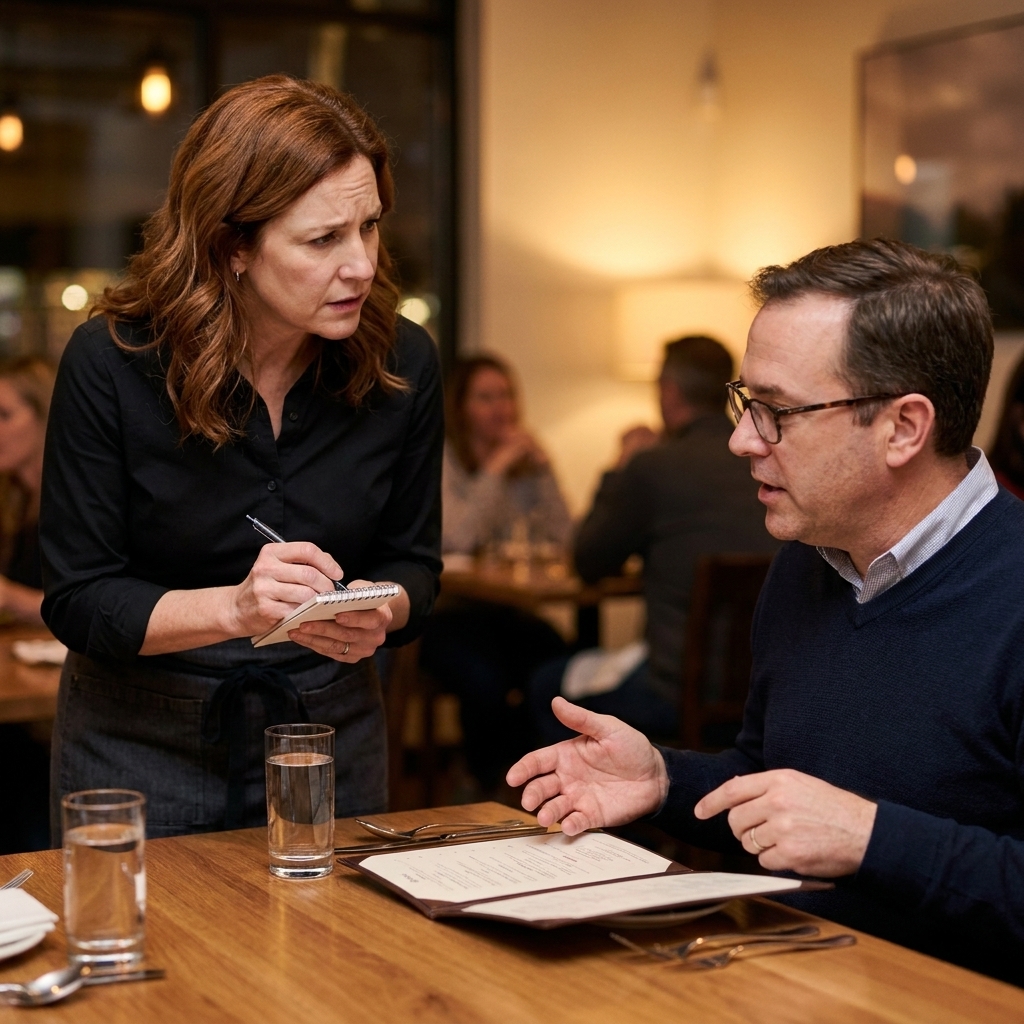
“I have celiac disease or a severe gluten sensitivity. Can the kitchen prevent cross-contact?”
If you are avoiding gluten by preference:
“I’m avoiding gluten. What’s the easiest item to do without wheat ingredients?”
This gives the server a clear prompt: you are not asking for a vibe, you are asking about process.
Ask about the biggest risk points
- “Is there a dedicated gluten-free fryer?”
- “Are gluten-free items prepared on a separate surface or with separate pans?”
- “Do you have gluten-free soy sauce or tamari that’s labeled gluten-free?”
- “Are the fries or chips fried in shared oil with breaded items?”
- “Is the sauce thickened with flour, or is it naturally reduced?”
- “If you offer gluten-free pasta, is it cooked in separate water with clean utensils?”
- “Are buns or bread toasted on the same grill or griddle as the protein?”
Ask one clarifying follow-up
If you get a hesitant answer, try:
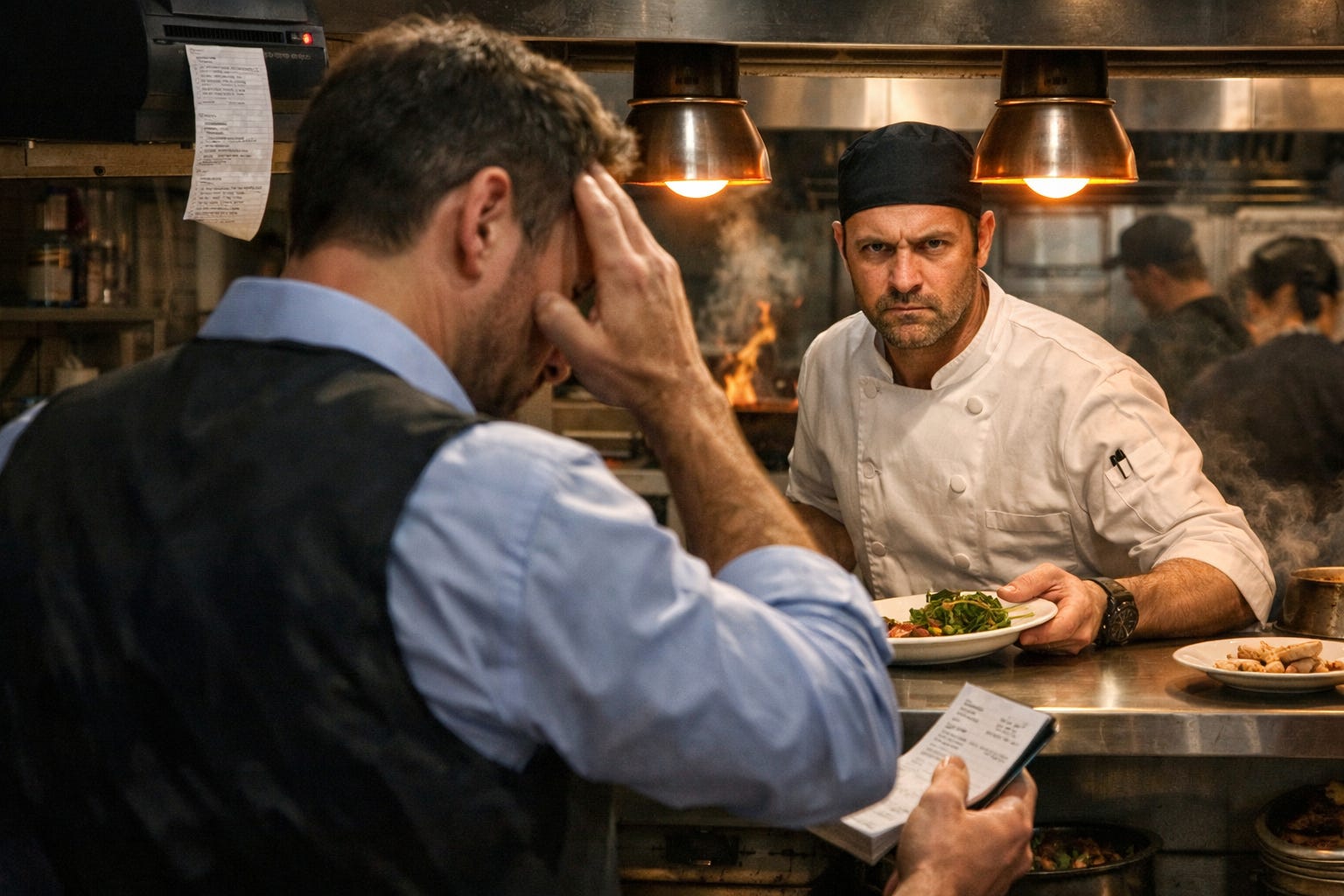
“Would you mind checking with the kitchen?”
In well-run restaurants, this is normal. In chaotic restaurants, the way they respond tells you a lot. A confident “Absolutely, I’ll be right back” is a green flag.
How to read between the lines on a menu
Look for specifics, not just symbols
A GF marker helps, but language helps more. Menus that say “gluten-free bun available” or “tamari vinaigrette” are often thinking about ingredients intentionally.
Notice how the kitchen is organized
You can often tell what you are dealing with by the restaurant’s concept.
- High-risk environments: pizza spots with flour in the air, sandwich shops, bakeries, ramen shops, breweries with kitchens.
- Lower-risk environments: places that grill proteins to order, rice-forward cuisines, or restaurants that routinely handle allergies and have a manager-led system.
There are exceptions. A ramen shop might have a dedicated protocol, and “rice-forward” still often means soy sauce. None of this is a guarantee. It is just a way to set your expectations before you order.
What “gluten-friendly” usually means
When a menu says “gluten-friendly” instead of “gluten-free,” assume they are signaling cross-contact risk. It may still work for someone avoiding gluten by preference, but it is not a promise for anyone with celiac disease or severe sensitivity.
If you see “gluten-friendly,” ask: “Is this prepared to avoid cross-contact, or is it just made without wheat ingredients?”
If you need strict gluten-free: safer ordering moves
Sometimes the smartest move is not the most exciting one. If you need strict gluten avoidance, these strategies tend to produce the best outcomes.
- Choose simple preparations: grilled, baked, steamed. The fewer steps, the fewer opportunities for contamination.
- Skip the sauce unless verified: sauce is where gluten loves to hide.
- Avoid fried foods unless there’s a dedicated fryer.
- Ask for no garnish if uncertain: crunchy toppings and finishing salts can be cross-contaminated.
- Pick a less hectic time: early dinner, late lunch. A calmer kitchen has more bandwidth for allergy protocol.
Mini checklist you can keep in your head
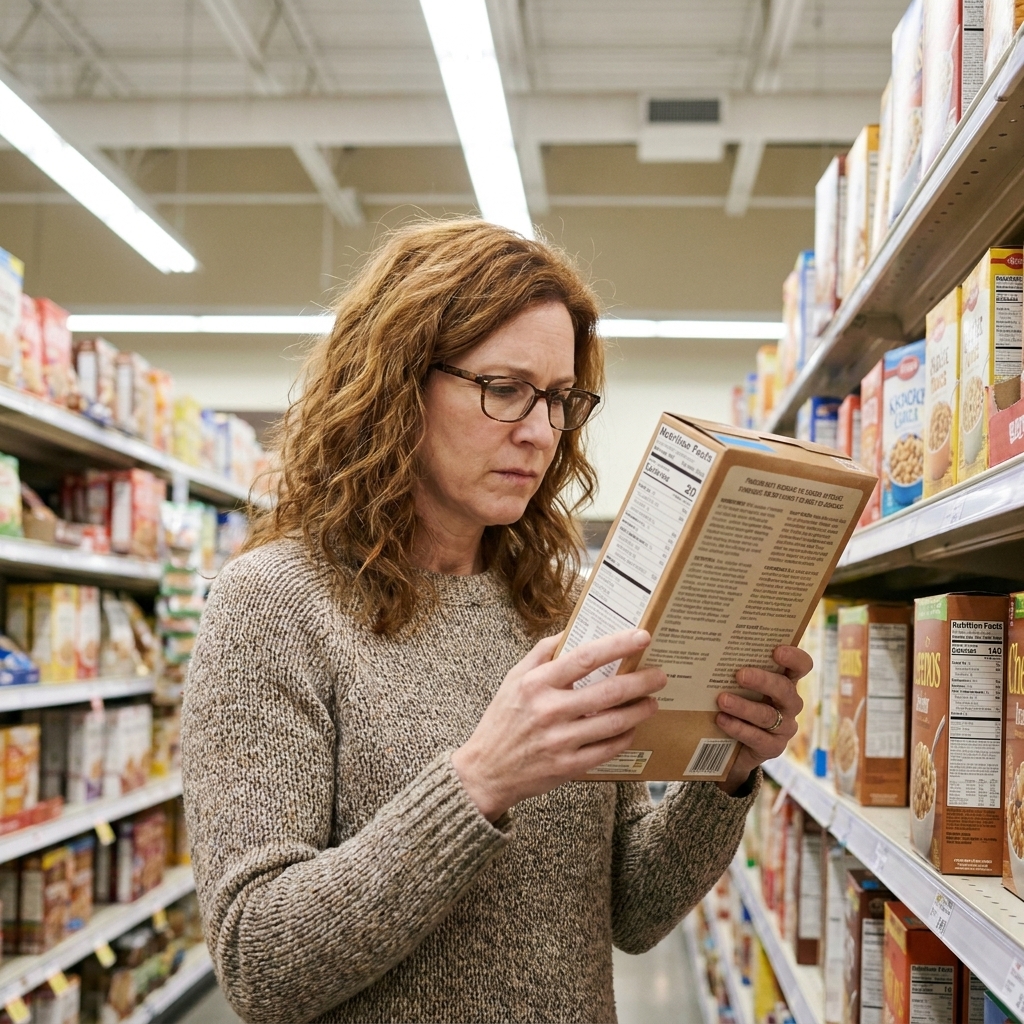
- Ingredients: any wheat, barley, rye, malt, or regular soy sauce?
- Cooking method: shared fryer? shared grill? shared pasta water?
- Surfaces and tools: separate pans, boards, utensils?
- Sauces and marinades: thickened? brushed from a shared container?
- Confidence: does the staff sound certain, or are they guessing?
FAQ
Is “gluten-free” the same as “no bread”?
No. Removing bread may eliminate the obvious gluten, but it does not address hidden gluten in sauces or cross-contact from shared prep surfaces and fryers.
Are corn tortillas always gluten-free?
Not always. Some corn tortillas include wheat flour for flexibility, and tortillas can be warmed on shared griddles. Ask if they are 100% corn and whether they can heat them on a clean surface.
Is distilled alcohol gluten-free?
In general, distillation removes gluten proteins, so most distilled spirits are considered gluten-free. The bigger issue at bars is added flavorings and cross-contact. For cocktails, watch for beer-based ingredients, malt, or house infusions made in contaminated containers.
What about “gluten removed” beer?
Many “gluten reduced” or “gluten removed” beers are made from barley and then processed to reduce gluten. Some may test below 20 ppm, but testing hydrolyzed gluten can be tricky and not everyone tolerates them. If you need strict gluten-free, choose beer made from gluten-free grains (like sorghum or rice) and clearly labeled gluten-free. If you have celiac disease, it’s worth discussing this category with your clinician.
How do I bring this up without feeling difficult?
Be direct and brief. “I can’t have gluten, including shared fryers. What’s the safest option?” is polite, clear, and gives the staff a path to help you.
One last bartender-to-guest truth: a restaurant that takes allergies seriously will never make you feel annoying for asking. The goal is not perfection on paper. It’s safety in practice.