I used to order coffee for restaurant programs the same way I built a wine list: with receipts. Not literal ones, but the paper trail that proves the story matches the sip. Coffee is one of those daily rituals where “just a cup” can quietly fund better farming and wages, or it can do the opposite. The tricky part is that coffee packaging is basically a wall of well-meaning buzzwords.
This is how I read labels and brand websites to figure out which coffees are actually doing the work. No shaming, no perfectionism, just clearer signals so your morning brew can align with your values.
Start with the basics: what “ethical” and “sustainable” should mean
In a perfect world, “ethical and sustainable” would cover three things at once:
- People: Farmers and workers are paid fairly, working conditions are safe, and communities have long-term stability.
- Planet: Farms protect soil health, biodiversity, and water. They reduce harmful chemicals and prepare for climate volatility.
- Proof: The brand can show how it buys coffee, from who, and at what terms, not just that it “cares.”
One label rarely guarantees all three, which is why you want to stack signals. Think of it like building a case.
Read the front label like a skeptic (in a healthy way)
Green flags on the bag
- Origin specificity: Country is a start, but region, cooperative, or farm name is better. A named producer can be a sign of traceability, but it isn't automatic proof of ethical pay.
- Harvest info: Crop year or harvest season suggests the brand pays attention to freshness and sourcing cycles.
- Roast date: Not just “best by.” Roast date shows they expect you to care and that they're moving coffee quickly.
- Certifications with logos: Real marks, not vague lines like “certified sustainable” without naming who certified it.
Yellow flags that deserve a second look
- “Ethically sourced” with no details: This can mean anything. Treat it as a claim, not a conclusion.
- “Direct trade” as a substitute for transparency: Direct trade isn't a regulated certification. Some roasters do it beautifully. Others use it as a vibe.
- “Shade-grown” or “bird-friendly” without verification: These can be meaningful, but you want to know the standard behind them.
Understand the major certifications (and what they do not cover)
Certifications can be useful, especially at grocery stores where you can't ask questions. But each one solves a different problem. Here's the quick breakdown.
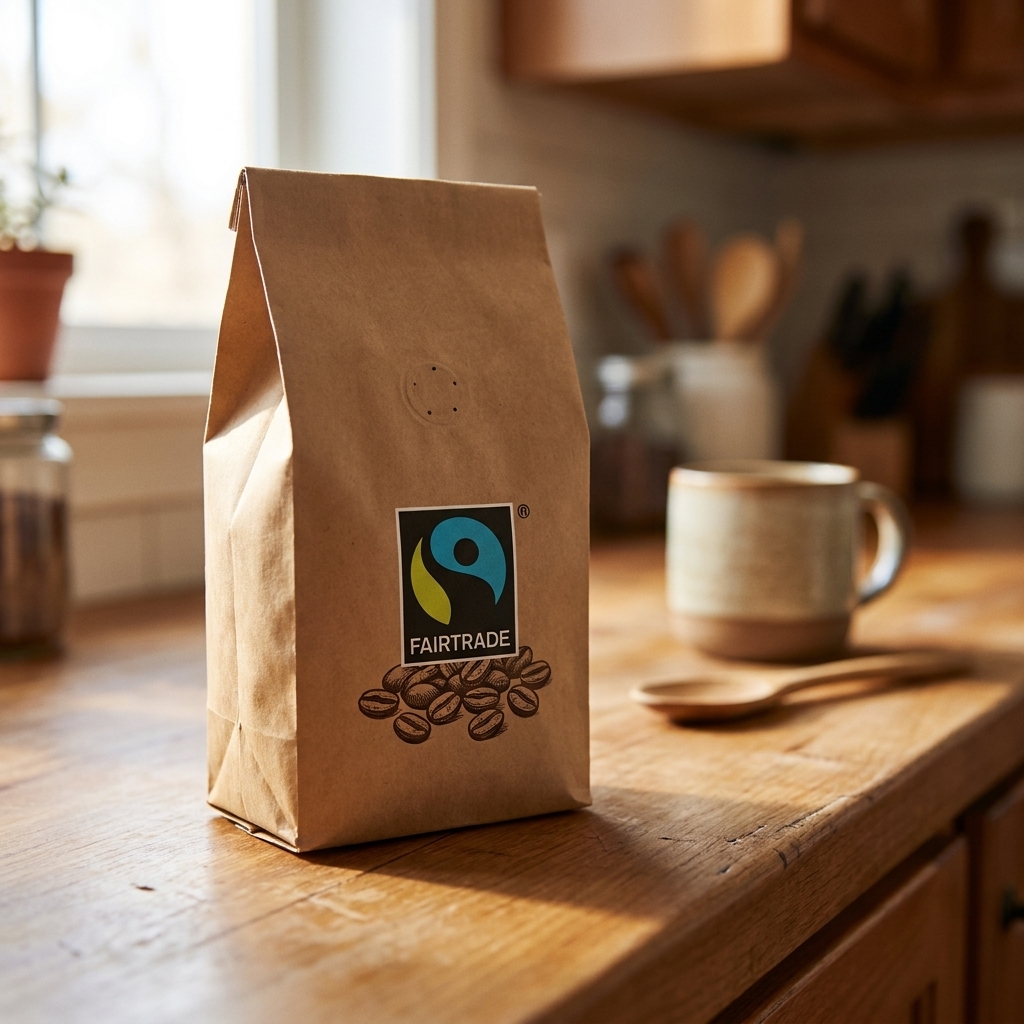
Fairtrade (Fairtrade International or Fair Trade Certified)
What it signals: Standards around labor, organization, and community investment. In many cases, there is a Fairtrade Minimum Price and a Fairtrade Premium, but those protections apply when the coffee is sold on Fairtrade terms and the contract qualifies. If market prices are higher, the market price can be the baseline instead.
What to watch: It's not a guarantee the coffee is top quality or that every actor in the chain is wildly well-paid. It's a floor when it applies, not a ceiling.
Rainforest Alliance
What it signals: A strong emphasis on environmental practices and farm management, plus labor standards and assurance requirements. It also includes economic elements like differentials and sustainability investments, but it's not primarily a price-floor model.
What to watch: It isn't strictly a “living income” guarantee, and outcomes can depend on how standards are implemented and verified in practice.
Note: If you see legacy UTZ labeling, it's now part of Rainforest Alliance.
Organic (USDA Organic or equivalent)
What it signals: Restrictions on synthetic pesticides and fertilizers, plus rules about soil and inputs.
What to watch: Organic doesn't automatically equal fair pay. Also, some small farms use organic practices but can't afford certification, especially in remote regions.
Bird Friendly (Smithsonian Migratory Bird Center)
What it signals: Strong shade-grown and habitat standards, and it requires organic certification as a baseline.
What to watch: Availability can be limited. When you find it, it's one of the more rigorous ecological signals.
B Corp (company-level certification)
What it signals: The business has been assessed for social and environmental performance and governance. It can indicate values and accountability beyond a single product line.
What to watch: It doesn't automatically tell you farm-level pricing. Pair it with sourcing transparency.
When a brand says “direct trade,” ask these questions
In restaurant land, the best partnerships are the ones you can explain simply. If a roaster truly buys “direct,” they should be able to answer a few straightforward questions on their website or via customer service.
Look for pricing transparency
- Do they publish what they paid per pound or per kilo for green coffee?
- Do they compare it to the commodity “C price” and explain why it's higher?
- Do they separate FOB (free on board) pricing from farmgate pricing and explain where the money goes?
Quick definitions: farmgate is what the producer receives at the farm level. FOB is the export price at origin after milling, logistics, and export prep, and it can include several actors and costs before coffee ships.
If they share numbers, that's a strong signal. If they only share feelings, keep digging.
Look for relationship transparency
- How long have they bought from the producer or cooperative?
- Do they pre-finance harvests or offer multi-year contracts?
- Do they name the importer or export partner if one is involved?
Using an importer isn't inherently bad. Many ethical supply chains include specialized partners. The key is honesty about who does what.
Know the sourcing paperwork that matters
If you're trying to separate marketing from receipts, look for the kinds of artifacts serious buyers tend to publish. Even a short version is helpful.
- Lot IDs or traceability codes: A way to track a specific coffee through the supply chain.
- Importer transparency reports: Many importers publish annual reports with price ranges, partner lists, and sourcing practices.
- Price language that tells the truth: “Price paid” should clarify what it represents. Is it farmgate, FOB, or a blended figure? If it's FOB, does the brand explain what that typically covers?
- Third-party verification: Audits, certification reports, or partner attestations that back up claims.
Also worth knowing: specialty coffee often comes with better traceability because it's sold as distinct lots with quality incentives. But specialty isn't a halo. It's still on the buyer to prove the terms are fair, not just that the tasting notes are fancy.
Learn the language of sustainability beyond certifications
Some of the most important sustainability work shows up in farming practices, not just stamps.
Terms that can be meaningful (with context)
- Agroforestry: Coffee grown among trees and other crops. Often supports biodiversity and climate resilience.
- Regenerative agriculture: A broad umbrella, but ideally means improved soil health, reduced chemical inputs, and better carbon and water cycles. Ask what practices they mean specifically.
- Water stewardship: Particularly relevant for washed coffees, where processing can impact local water systems if not managed responsibly.
- Climate-resilient varietals: Some producers are planting varieties that withstand heat, disease, or changing rainfall patterns.
Be cautious with “carbon neutral” claims
Carbon accounting is complicated, and some “neutral” claims rely heavily on offsets. A more grounded claim is when brands talk about actual reductions: renewable energy at the roastery, lighter packaging, ocean freight when feasible, and smarter logistics.
Packaging and shipping matter, but don't let them distract you
I love a compostable vibe as much as anyone, but I've also seen brands obsess over packaging while staying vague about how farmers are paid. And while life cycle assessments vary by origin and method, in many studies the biggest share of coffee's footprint is tied to production at origin, with transport, roasting, and brewing also contributing. The point is: packaging matters, but it shouldn't be the only sustainability story you hear.
What to look for
- Packaging: Bags with lower-plastic materials, recyclable programs, or clearly explained compostability. If it says compostable, it should specify whether it's industrial compost only. Also, many “compostable” coffee bags still aren't accepted in most municipal systems, so a brand should be honest about real-world disposal.
- Shipping: Brands that mention ocean freight and consolidated shipments are usually thinking about emissions.
- Roastery operations: Renewable energy, efficient roasters, and waste reduction are legitimate sustainability wins.
How to shop ethically in real life (grocery store, cafe, online)
At the grocery store
- Pick the bag with the most specific origin information you can find.
- Prioritize at least one meaningful certification if transparency is otherwise limited.
- Choose a roast date over a “best by” date when possible.
- If two options are equal, choose the one that discloses the producer or cooperative name.
At a cafe
- Ask, “Who is this coffee from?” A good shop can tell you the producer or cooperative, not just the roaster.
- Ask if the shop rotates seasonally and whether they can share sourcing notes from the roaster.
- Notice whether the cafe treats coffee as craft and agriculture, not just a caffeine commodity. The culture often reflects the sourcing.
Buying online
- Look for a sourcing page with receipts: partner names, regions, pricing philosophy, and how relationships work.
- Look for impact reports or annual transparency updates, even short ones.
- If you subscribe, choose roasters that make it easy to swap origins as seasons change. That flexibility often maps to responsible buying cycles.
A quick “ethical coffee” checklist
- Traceability: Farm, cooperative, or region clearly named.
- Proof: Certification logos and/or published sourcing details.
- Pricing signals: Mentions of paying above commodity price, premiums, or long-term contracts, plus clarity on whether numbers are farmgate or FOB.
- Freshness: Roast date is visible.
- Real sustainability language: Specific practices, not just broad claims.
If a brand can tell you where the coffee is from, how it was grown, and how it was bought, you're usually in better hands than a bag that only tells you it's “responsible.”
FAQ
Is “single-origin” automatically more ethical?
No. Single-origin can make traceability easier, but ethics depend on purchasing practices, pricing, and labor conditions. Blends can be ethically sourced too, as long as the roaster is transparent about components and sourcing standards.
Is organic coffee always better for the environment?
Organic standards reduce synthetic inputs, which can be a major win. But environmental impact also depends on shade cover, water management, and farm biodiversity. Some non-certified farms use low-input or organic methods but can't afford certification.
What is the most trustworthy certification?
There's no single “best” one for every value. For wages and community premiums, Fairtrade is a common starting point. For ecological habitat, Bird Friendly is notably rigorous. Rainforest Alliance leans strongly environmental, with economic and labor standards that are not the same as a price-floor system. The strongest overall indicator is certification plus brand transparency.
What about coffee labeled “sustainably grown” with no logo?
Treat it as marketing until the brand shows specifics: who verified it, what standards are used, and what practices are required. If you can't find details online in a couple minutes, that's useful information too.