“Farm-to-table” used to mean something specific: a restaurant buying from nearby farms and producers, adjusting menus with the seasons, and paying enough to keep that supply chain alive. Now it can also mean a chalkboard font and a vague promise.
I have spent a decade building beverage programs where the sourcing story mattered, not because it sounded good, but because it shaped costs, consistency, labor, and trust. And as someone who has to ask allergy questions every single time I dine out, I have noticed a pattern: the places that take ingredients seriously often take guests seriously too. Not always, but often enough that it is part of my personal gut check.
Here are seven signs a restaurant might be greenwashing its menu, plus what to look for instead. Think of it like a calm, confident gut check you can use from the host stand to the dessert course.
What “farm-to-table” should mean
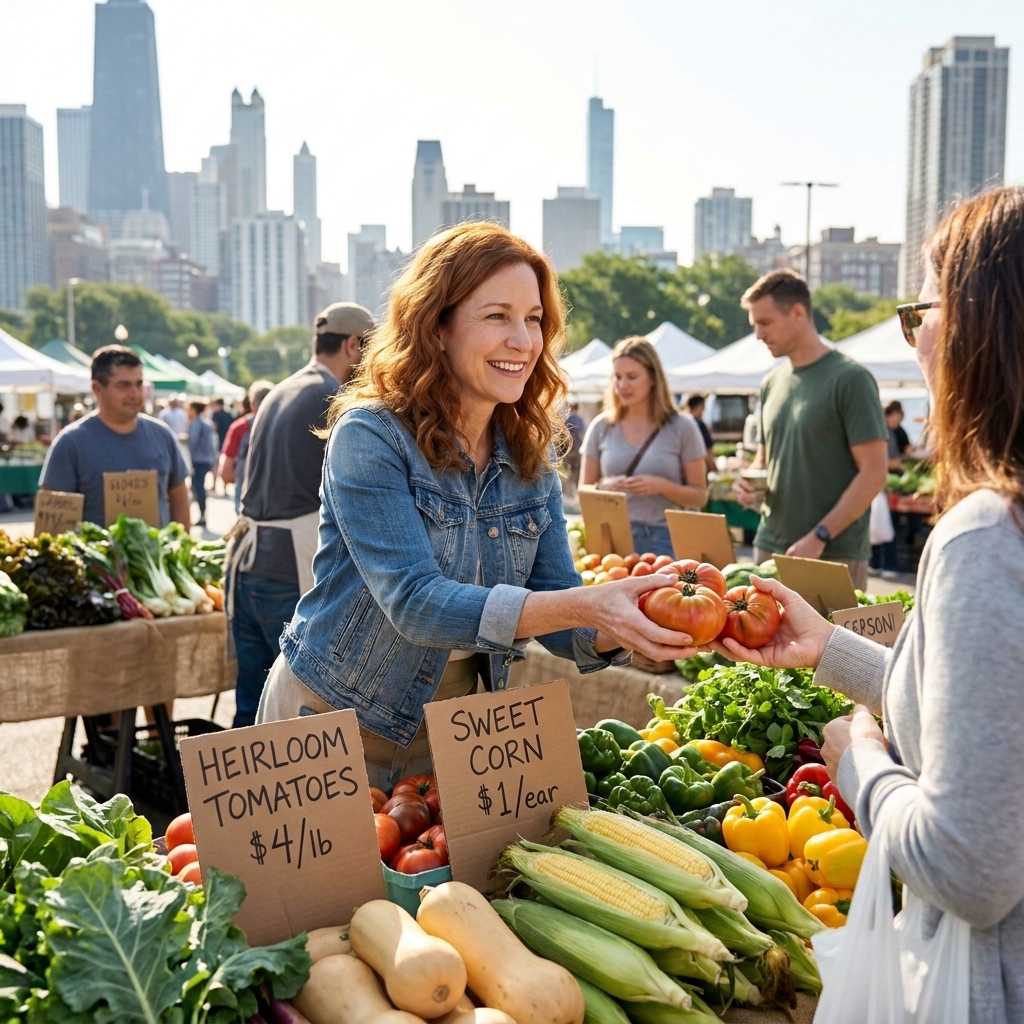
There is no single, nationwide legal definition in the U.S. for “farm-to-table” on a menu. That is part of the problem. (There are still rules around deceptive marketing, and some states and certifiers publish guidance, but there is no universal standard you can point to and enforce at every restaurant.)
In practice, authentic local sourcing usually shows up in a few concrete ways:
- Specificity: farms, ranches, fisheries, and makers are named, not hinted at.
- Seasonality: menus change, sometimes constantly.
- Operational reality: servers can answer basic questions without panicking, and chefs can explain sourcing without turning it into a seminar.
- Consistency: the restaurant is honest when something is unavailable.
With that baseline, let’s get into the tells.
1) Too many adjectives
If you see a wall of buzzwords like “local,” “sustainable,” “responsibly sourced,” “farm fresh,” “natural,” and “artisan” with no further detail, treat it like a perfume sample: pleasant, but not proof.
What to look for instead
- Farm or producer names: “Mint Creek lamb,” “Slagel Family Farm chicken,” “Jones Dairy bacon.”
- Place specificity: a region, a farm town, a lake, a co-op.
- A short sourcing note that reads like operations, not poetry.
Quick question to ask: “Which farm is the steak from right now?” If the answer is “a local farm” and it stops there, that is your data.
2) “Seasonal” in the wrong season
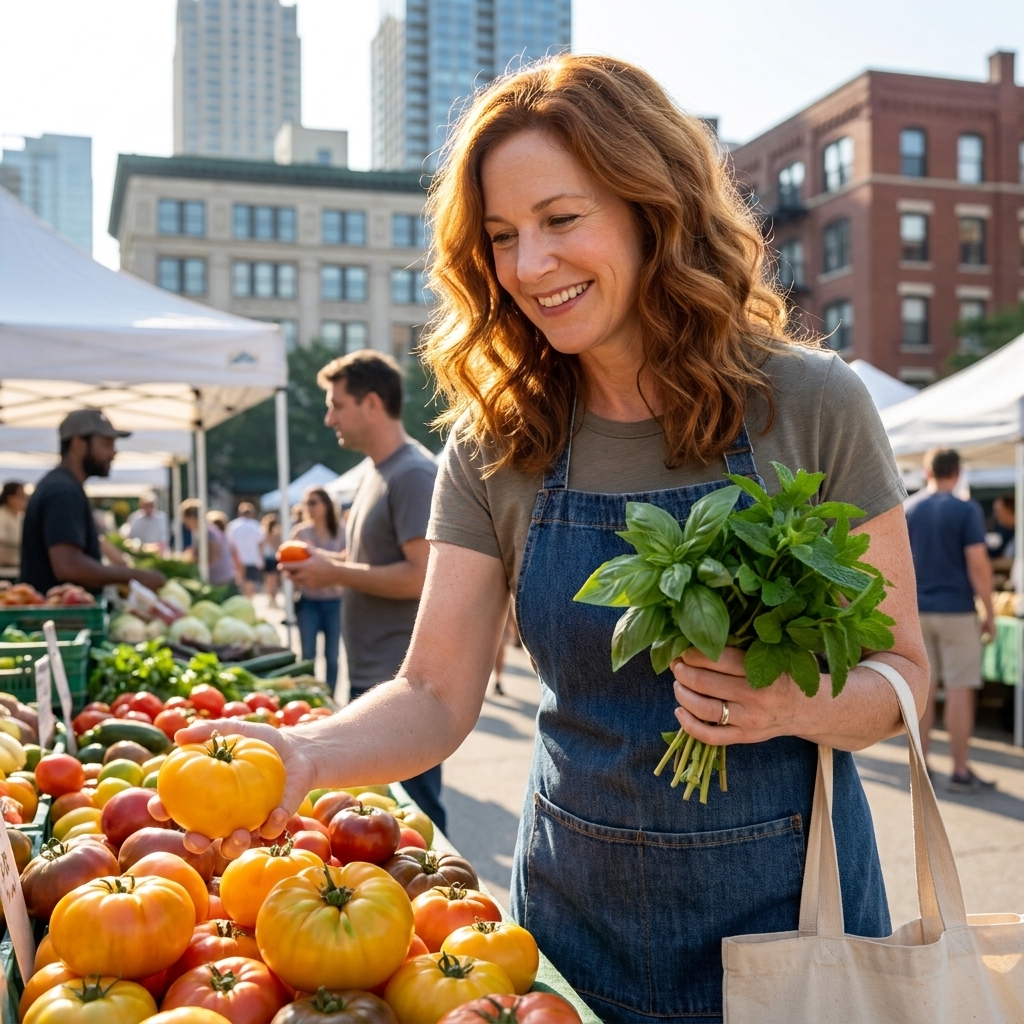
I am in Chicago. If a restaurant is pushing “local heirloom tomatoes” in February like it is nothing, that should raise a question. Greenhouses exist, yes, and some producers do winter growing beautifully, but a truly local program will explain that clearly.
Common tells
- Summer berries in winter with no mention of greenhouse or preserved fruit.
- Stone fruit and tomatoes year-round, labeled “farm fresh.”
- A menu that never changes but insists it is “seasonal.”
What to look for instead
In cold-weather cities, authentic local sourcing often leans into storage crops (squash, potatoes, carrots), preserves (pickles, jams, ferments), and greenhouse greens with transparent language.
3) Staff cannot answer basics
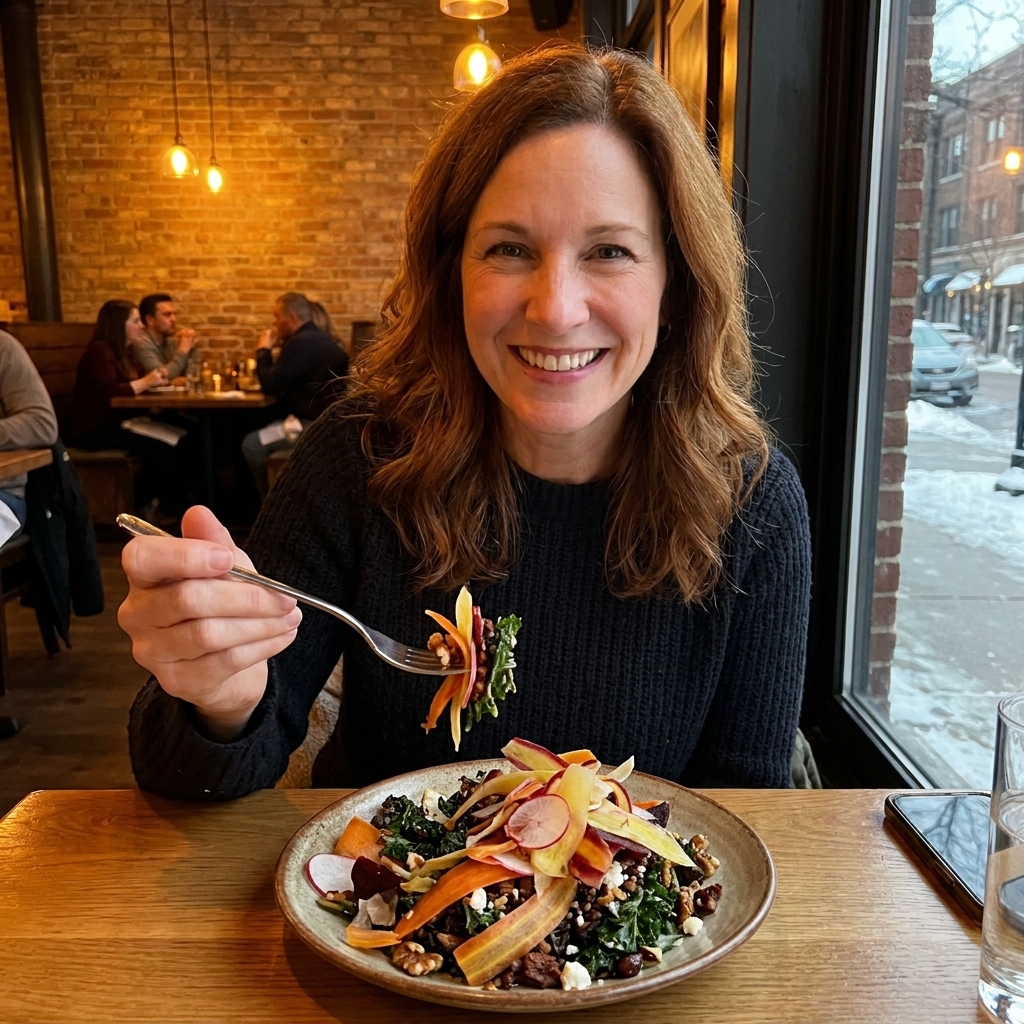
I never blame a server for not knowing the name of every farm. Training gets cut. Pre-shift gets rushed. And sometimes management keeps staff in the dark. But if a restaurant is building its identity on farm-to-table, staff should be able to answer a few baseline questions without having to disappear for several minutes.
Ask one of these, politely
- “Is the fish wild or farmed?”
- “Do you know where the greens are coming from this week?”
- “Which bakery makes the bread?”
Greenwashing pattern: the answer is vague, defensive, or overly scripted, and nobody offers to find out.
Good sign: “I’m not sure, but I can check with the kitchen,” followed by a real answer that includes a name or place.
4) The details only live online
Some restaurants keep a beautiful “Our Partners” page that never gets updated, like an old profile bio. Meanwhile, the menu is silent, and the nightly specials read like they came from a broadline distributor order guide.
How to pressure-test it
- Look for dates on partner pages: “Updated Spring 2026” is a stronger sign than a timeless scroll.
- See whether partners match the menu. If the site lists a local dairy but the dessert menu is generic “vanilla ice cream,” something is off.
- Notice whether the restaurant mentions partners in the dining room, not just online.
Authentic places do not need to shout, but they also do not hide the details.
Fair note: sometimes the menu does not list farms for legitimate reasons, like supply volatility, multiple farms rotating through the same item, tiny menu real estate, or even safety concerns (some businesses avoid naming partners publicly to reduce harassment). The difference is whether the restaurant can explain their sourcing clearly when asked.
5) One local item does all the work
This is the classic move: one local item becomes the moral shield for the whole menu. A restaurant can buy microgreens from a nearby grower and still run everything else through the same national supply chain.
What this looks like
- “Locally sourced” applies to one garnish, while proteins and staples are unnamed.
- A single farm is mentioned everywhere, but only in ways that are cheap to source: herbs, lettuces, bread.
- The “farm-to-table” claim feels disconnected from the expensive center-of-plate items.
What to look for instead
Real commitment shows up in the hard categories: meat, dairy, grains, and year-round purchasing agreements, not just the pretty stuff.
6) Ingredient and allergy fog
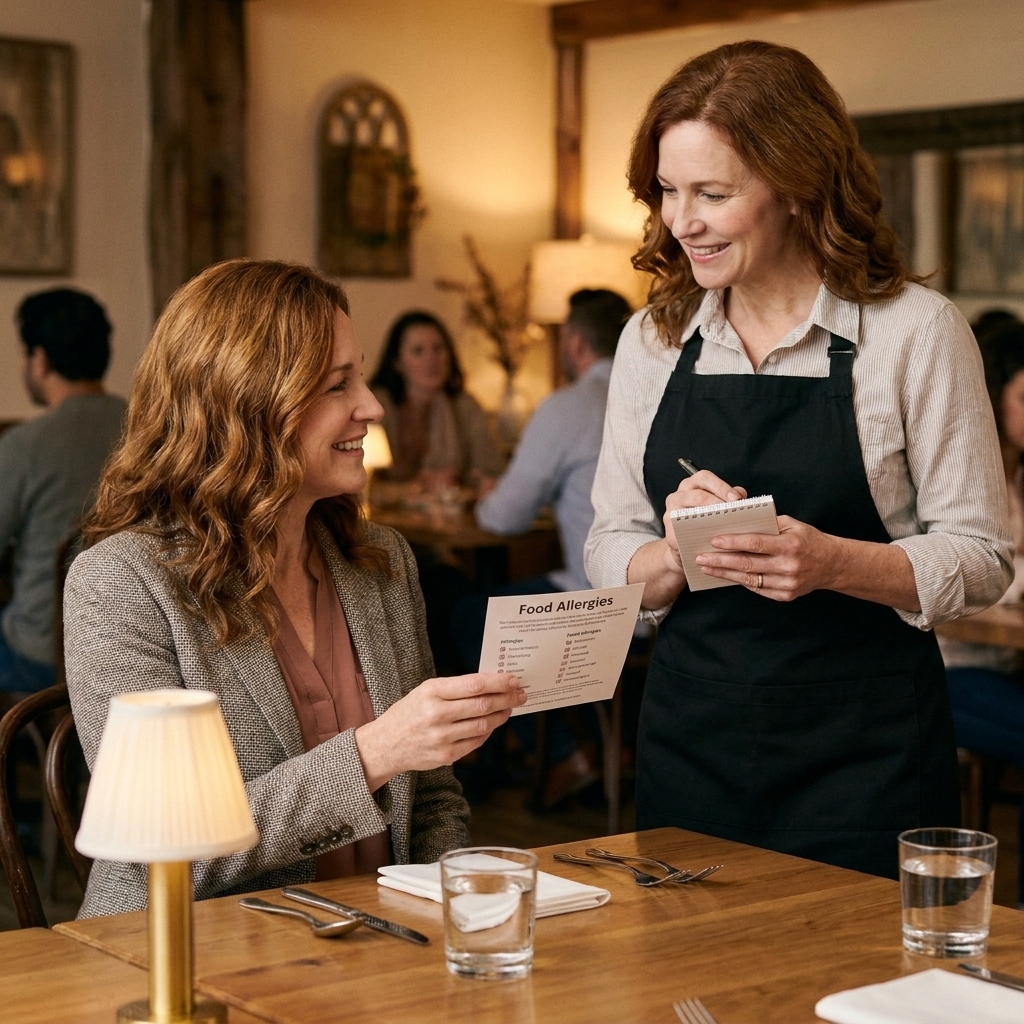
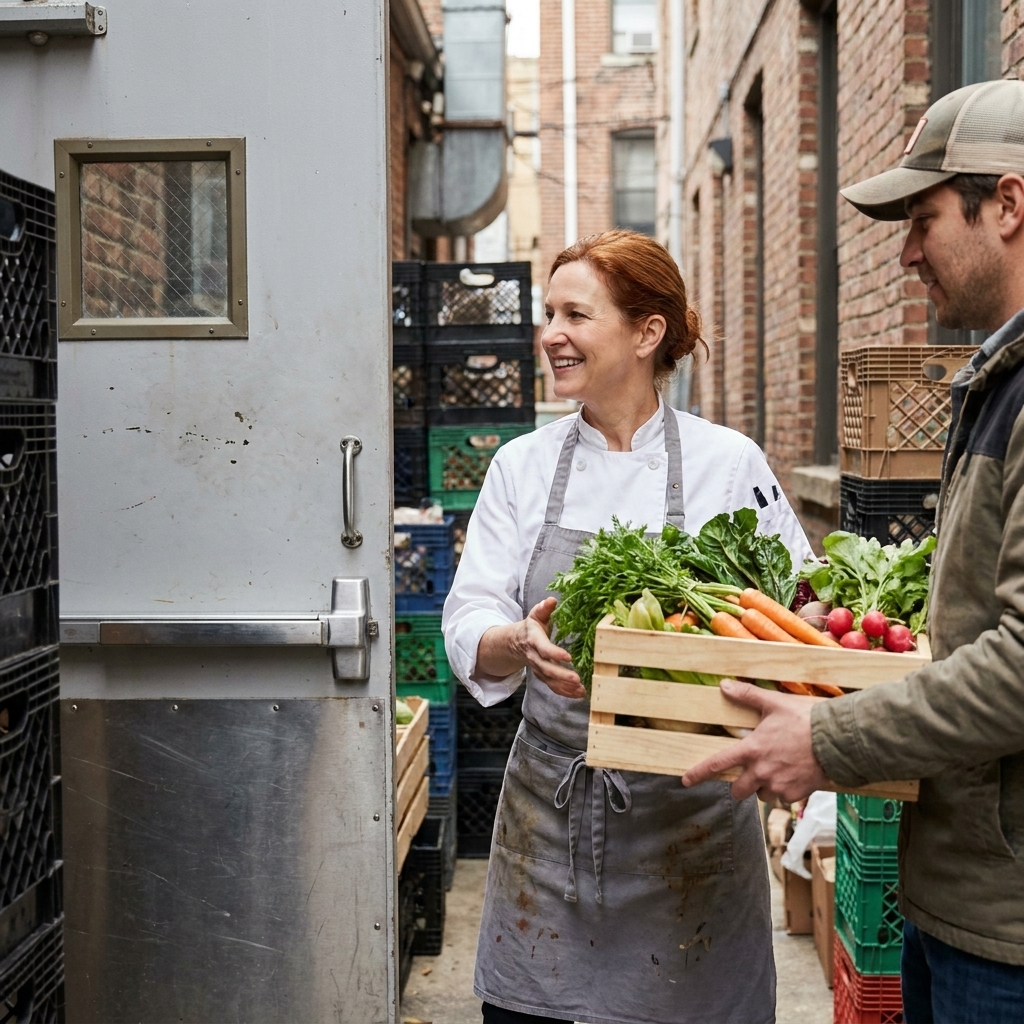
This one is personal. I have a medical need to avoid gluten, and I learned quickly that restaurants who actually track what comes in the door can usually tell you what is in the sauce.
Greenwashed menus often use a fog of “house-made” and “chef’s blend” language without the operational discipline to back it up.
Red flags for me
- Staff cannot confirm whether a dish contains soy sauce, malt vinegar, or shared fryer exposure.
- No one knows what is in the spice mix or sausage.
- The kitchen refuses reasonable modifications while claiming everything is “fresh” and “from scratch.”
What to look for instead
Truly ingredient-driven restaurants tend to have better systems: labeled prep, clear vendor specs, and managers who can speak to cross-contact (when an allergen is transferred by shared surfaces, oil, tools, or prep space) without minimizing risk.
7) Sustainability ignores labor
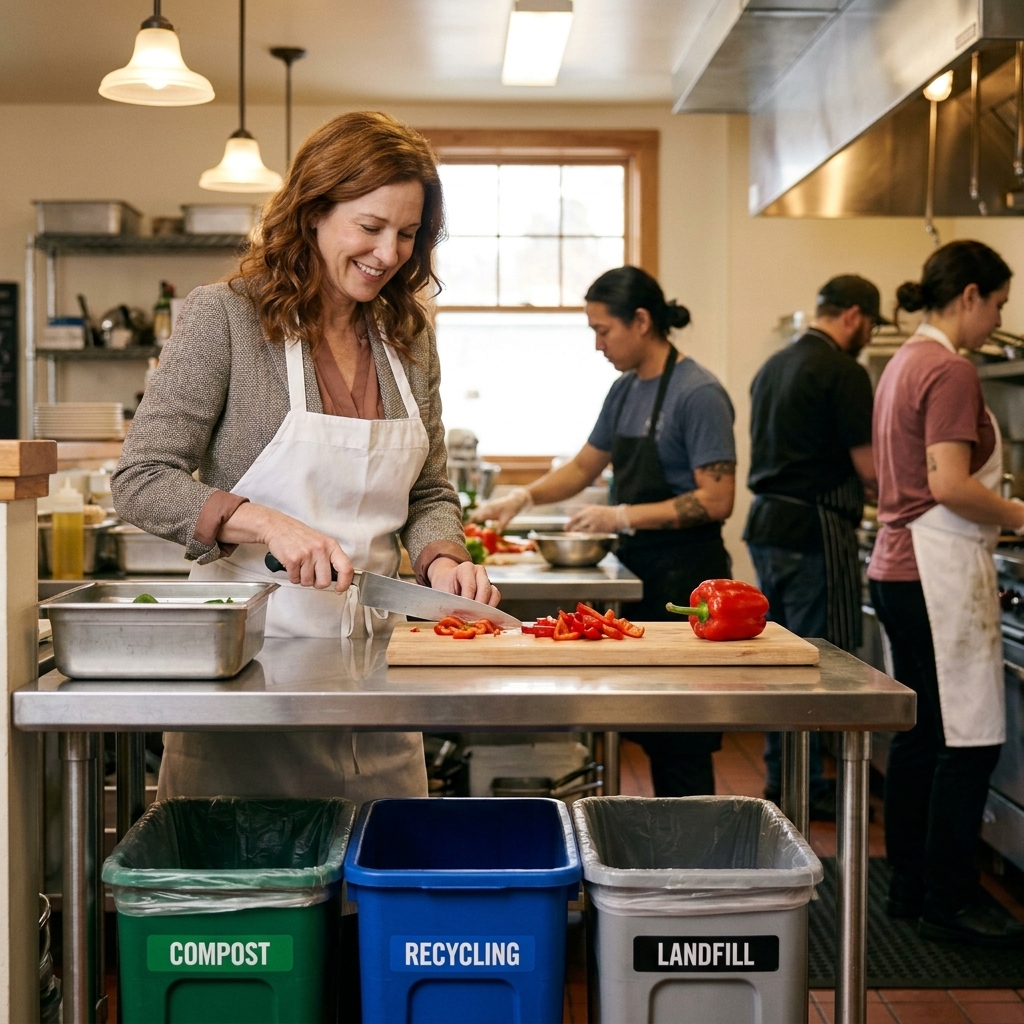
I am going to say the quiet part out loud: if a restaurant is bragging about ethical sourcing while treating staff like they are disposable, it is still a kind of greenwashing. “Sustainable” is not just compost and a cute farm name. It is whether the people growing, transporting, cooking, and serving the food can stay in the industry without burning out.
Signs the values are performative
- Big sustainability claims paired with constant staff turnover.
- Suspiciously low prices for “local, organic” proteins.
- A management vibe that treats questions as an attack.
What to look for instead
Restaurants doing it right are usually honest about cost and constraints. They might run a smaller menu, sell out of items, or charge more. That can be annoying as a guest, but it is often the price of keeping the promise real.
A quick table checklist
- Names: Are farms and producers actually named?
- Seasonality: Does the menu make sense for the month and region?
- Staff fluency: Can someone answer basic sourcing questions?
- Consistency: Does the story show up on the menu, not just online?
- Depth: Is local sourcing more than herbs and garnish?
- Ingredient transparency: Can they speak clearly about what is in the dish?
- Values: Does “sustainability” extend beyond marketing?
How to ask politely
You do not have to interrogate anyone. A warm, curious tone goes far, and most hospitality folks love a guest who cares.
- Start with: “I’m excited about the farm-to-table angle. Who are you buying from right now?”
- If they are unsure: “No worries. Would you mind checking?”
- If it gets vague: “Got it. Is anything on the menu especially local today?”
- If they say “local,” you can add: “What does local mean for you all, distance-wise?”
And if you get a great answer, tip well. Those relationships take work to maintain, and the dining room is part of that ecosystem.
FAQ
Is it always bad if farms are not listed on the menu?
Not always. Some small places source locally but do not have the menu space or print budget to update constantly. Others are juggling multiple farms for the same ingredient. The difference is whether they can tell you where ingredients are coming from when you ask, and whether the answer stays consistent over time.
What’s the difference between “local” and “sustainable”?
Local is about distance. Sustainable is about impact. Local can be sustainable, but it is not automatic. Likewise, some sustainably produced items are not local, like certain coffee, chocolate, or seafood programs with rigorous standards.
Do I have to avoid restaurants that use big distributors?
No. Most restaurants use a mix. The point is honesty. A chef can buy staples from a distributor and still build real farm relationships for produce, dairy, and proteins. Greenwashing happens when the marketing implies something the purchasing does not support.
Are there certifications that help?
Sometimes. Labels and programs like certified organic, MSC or ASC seafood, and animal welfare certifications can be meaningful signals, especially when a restaurant can explain why they chose them. They are not perfect, and they do not automatically mean “local,” but they are more concrete than vibes alone.
The bottom line
Farm-to-table is not a vibe. It is a set of choices, relationships, and constraints you can usually feel in a dining room if you know what to look for. The good news is that the telltale signs are not hidden in the fine print. They show up in the seasonality, the specificity, and the way a staff member answers a simple question with pride instead of panic.
If you find a place that walks the walk, become a regular. Those restaurants are holding up more than dinner. They are holding up an entire local food web.