The first time I got burned by an NA beer, it was at a busy Chicago bar where the bartender was doing everything right: waters topped off, snacks landing fast, and a neat little nonalcoholic list on the back of the menu. I ordered the “0.5% lager” thinking I was making the safest choice for my night and my stomach.
I was wrong. Because here is the frustrating truth: taking the alcohol out of a barley-based beer does not take the gluten out. If you are gluten-free for celiac disease, non-celiac gluten sensitivity, or a newly discovered intolerance like mine, “NA” is not a gluten-free promise. It is just an alcohol statement.
Is nonalcoholic beer gluten-free?
Usually, no. Most nonalcoholic beer on the market is brewed like conventional beer, meaning it starts with gluten-containing grains such as barley and wheat. Many brands then remove or reduce alcohol through dealcoholization, fermentation control, or blending. None of those steps are designed to remove gluten.
So if the beer began life as a standard barley beer, it is not reliably gluten-free after the alcohol is removed, and it can still contain enough gluten to be unsafe for people who need to avoid it.
There are exceptions, but they require one of these situations:
- It is brewed from naturally gluten-free grains (like sorghum, millet, buckwheat, rice, or corn) and produced with gluten-free controls.
- It is labeled “gluten-free” under applicable labeling rules where you live, typically supported by testing and strict production practices.
Alcohol and gluten are different problems
I have had guests assume “no alcohol” equals “easy on the body,” and I get it. We associate alcohol with inflammation, heartburn, bad sleep, and rough mornings. But gluten is a protein, not a buzz.
Think of it this way:
- Alcohol content is measured in ABV (like 0.0% or 0.5%).
- Gluten content is typically discussed in parts per million (ppm) in the context of gluten-free standards (often 20 ppm in the U.S. and EU).
A beer can be 0.0% ABV and still contain gluten if it is made from barley. And a drink can contain alcohol and still be gluten-free if it is made from gluten-free ingredients and produced without cross-contact.
Why NA beer still has gluten
Most “nonalcoholic beer” you see at bars is one of these:
Dealcoholized conventional beer
This starts as regular beer brewed from barley or wheat. Then the alcohol is removed, often through vacuum distillation, reverse osmosis, or similar processes. Those processes target alcohol and aroma compounds, not gluten proteins.
Limited or arrested fermentation beer
The brewer controls fermentation so less alcohol is produced. The grain bill can still be barley-heavy, so gluten is still present.
Blended NA products
Some beverages are blends of beer and other ingredients. If the beer base contains barley, gluten remains part of the equation unless the final product is truly gluten-free and labeled as such.
The takeaway: “Dealcoholized” is not code for gluten-free.
What “nonalcoholic” means on a label
One quick clarification that helps in the real world: in many places, “nonalcoholic” does not always mean zero. You will commonly see NA beers labeled 0.5% ABV (or “less than 0.5%”), and some are labeled 0.0%.
That matters for alcohol, but it does not tell you anything about gluten. You still have to check the grains and the labeling.
How to tell if an NA beer is gluten-free
In restaurants, the menu language is often maddeningly minimal. You will see “NA beer,” “0.5% IPA,” or a brand name with no other details. Here is how I separate a truly gluten-free option from a conventional NA beer in real time, without turning dinner into an interrogation.
Step 1: Ask the quickest useful question
“Is it brewed from barley or wheat?”
If the answer is yes, it is not gluten-free for most gluten-free drinkers. That is your cleanest decision point.
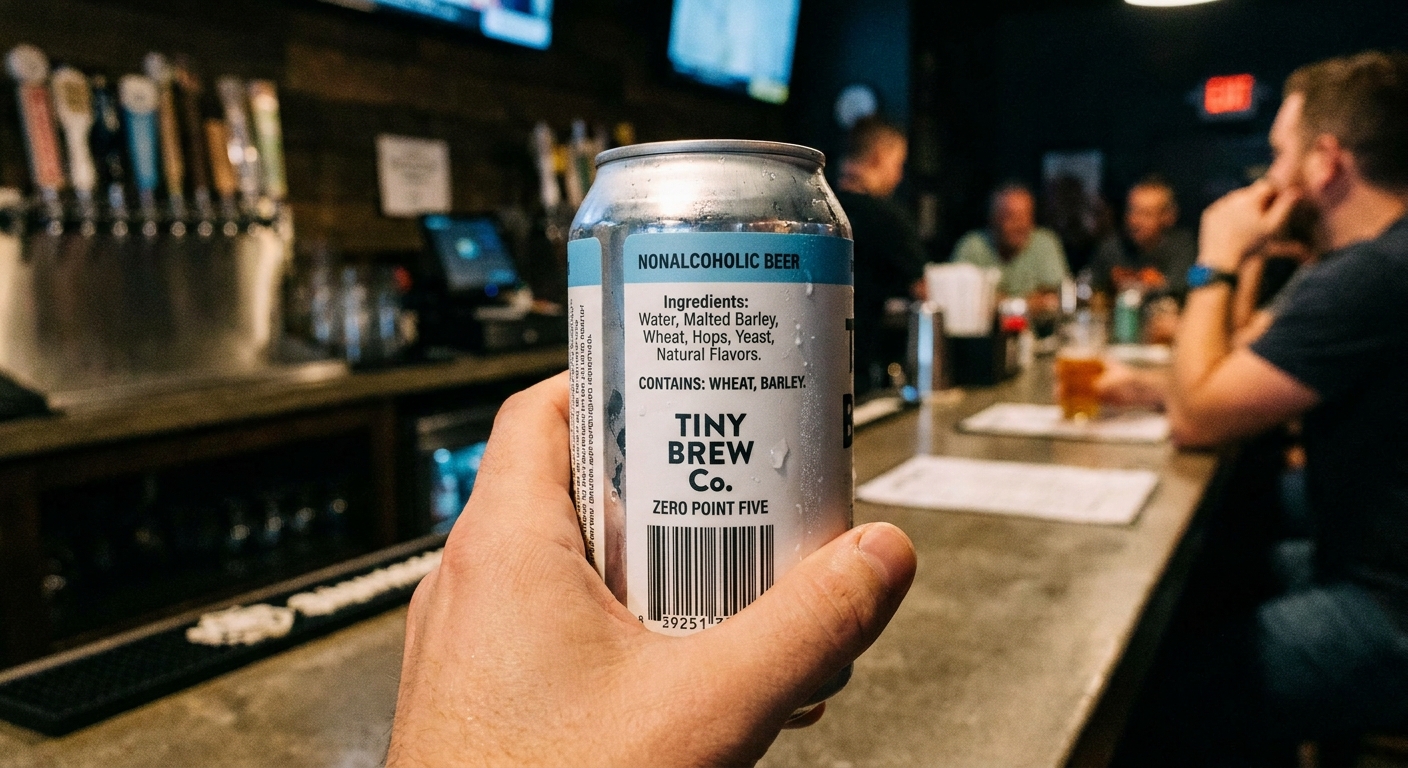
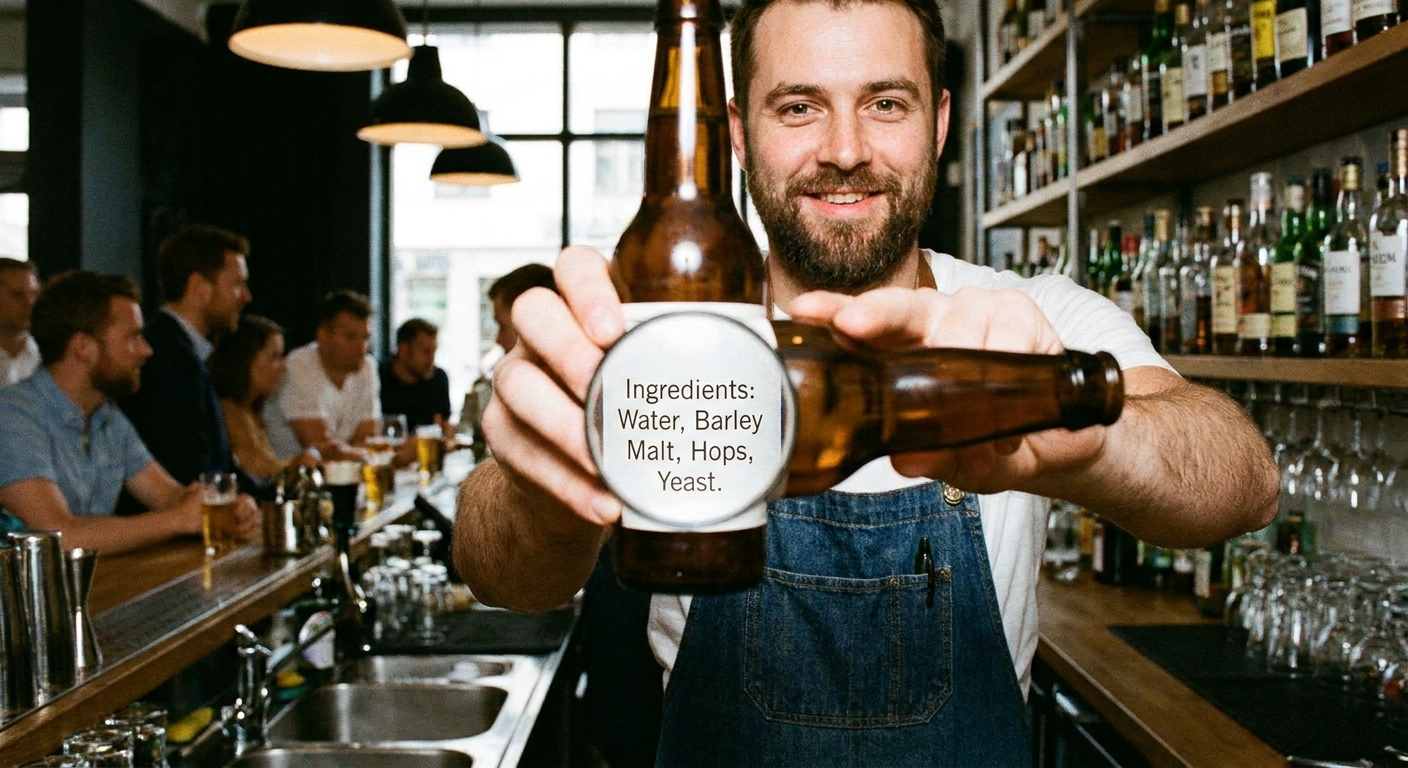
Step 2: Ask for the can or bottle
In a well-run bar, this is normal. You are not being high maintenance. You are trying to avoid getting sick.
What you are looking for on packaging:
- An explicit “gluten-free” statement.
- An allergen or ingredient line that shows no barley, wheat, rye.
- Any note that it is a malt beverage or contains barley malt, which is a red flag for gluten.
What about “gluten-removed” NA beer?
You may run into beers that started with barley but use enzymes intended to break down gluten. These are often marketed as “gluten-removed” or described with phrases like “crafted to remove gluten.”
Here is the tricky part: enzyme-treated beers can test lower on certain methods, but the science and the real-world reactions do not line up neatly for everyone. Some clinicians and celiac organizations advise people with celiac disease to avoid barley-based beers even if they test low, because what is left behind may still trigger symptoms or immune response in some individuals.
If you are strictly gluten-free for medical reasons, the simplest and safest bar rule is: choose NA beer that is brewed gluten-free and labeled gluten-free, not barley beer that has been treated after the fact.
Restaurant red flags
After years behind the stick and now years living with a sensitivity I cannot “cheat,” I pay attention to the little tells.
- The menu lists only “NA beer” with no brand: assume it is a standard barley NA unless proven otherwise.
- The staff calls it “near beer” and shrugs: that usually means they do not know the grain base.
- They say “it’s 0.0 so you’re good”: they are thinking alcohol, not allergens.
- They offer it on draft: draft lines are commonly used for conventional beer at some point, which is a cross-contact concern even if the NA option itself is gluten-free. If you are highly sensitive, packaged is usually the safer bet.
Better gluten-free NA options
I am not going to pretend every bar has a gluten-free NA beer ready to go. But more places do now, especially those that already stock gluten-free beer or take allergy notes seriously.
When you are scanning a menu, these are the words that usually point you in the right direction:
- “Gluten-free” stated plainly next to the item.
- “Sorghum,” “millet,” “buckwheat,” “rice” mentioned as the base grain.
- “NA cider” or “sparkling cider” (often gluten-free by ingredients, but still confirm if you are highly sensitive due to shared facilities).
- Spirit-free cocktails or NA wine-style drinks that can be easier to verify than an NA “beer” with a barley base.
If your goal is “beer vibes,” a gluten-free NA beer can absolutely exist, but you typically need the brand or packaging confirmation.
Quick script for ordering
If you freeze up in the moment, try one of these. They are fast, clear, and kind to an overwhelmed server.
- “I’m gluten-free. Can you tell me if that NA beer is brewed with barley or wheat?”
- “Do you mind bringing the can so I can check the ingredients?”
- “Do you have an NA option that’s labeled gluten-free?”
In my experience, the best hospitality pros appreciate the clarity. Vague questions like “Is it safe?” force them to guess. Specific questions let them do their job.
FAQ
Is 0.5% beer gluten-free?
No. 0.5% refers to alcohol by volume, not gluten. Many 0.5% beers are made from barley and contain gluten.
Is 0.0% beer gluten-free?
Not automatically. A beer can be 0.0% and still be made from barley or wheat. Look for a gluten-free label or a gluten-free grain base.
Does removing alcohol remove gluten?
No. Dealcoholization processes are not designed to remove gluten proteins from barley beer.
If a menu says “NA IPA,” what should I assume?
Assume it is brewed from barley unless the menu specifies “gluten-free” or you can verify by checking the can or bottle.
Can I trust a bartender’s verbal assurance?
Trust their effort, but verify the facts. The safest route is seeing packaging that clearly indicates ingredients and gluten-free status.
Bottom line
Nonalcoholic beer is usually not gluten-free, because it is usually still a barley beer, just with the alcohol removed. When a menu only gives you “NA” or “0.5%,” the only reliable way to separate a gluten-free NA beer from a dealcoholized conventional one is to confirm the grain base and look for a true gluten-free label.
You deserve a night out where “taking care of yourself” does not come with a surprise stomachache. Ask the clear question. Check the can. Order the thing that lets you actually enjoy your seat at the bar.