Dating is basically a sequence of tiny negotiations dressed up as flirting: Where should we go? What are you drinking? Should we split fries? For most people, food is the easy part. If you live with a serious allergy or a medical dietary restriction, it can feel like the whole night is set up around a tripwire you are trying not to hit.
I get it. I spent years as a beverage director reading tables like a spreadsheet, then developed non-celiac gluten sensitivity that turned “let’s grab a bite” into a logistics exercise. Here is the good news: bringing it up early is not “being high maintenance.” It is basic communication. And it is one of the fastest ways to learn whether someone is capable of care.

First things first: allergy, intolerance, preference
Words matter because restaurants and partners make decisions based on the stakes you communicate. If you say “I’m kind of gluten-free,” you are going to get “kind of careful” food.
- Food allergy: An immune response that can be serious or life-threatening. Cross-contact matters. Epinephrine auto-injectors and emergency plans are part of the reality for many people.
- Intolerance or medical restriction: Not an allergy, but can still be severe and disruptive (celiac disease, lactose intolerance, IBS triggers, non-celiac gluten sensitivity). Cross-contact can still be a problem depending on the condition.
- Dietary preference: Ethical or lifestyle choices (vegetarian, vegan, sober, low sugar). Deserves respect, but it is communicated differently than a safety issue.
If you have an allergy or a medical restriction, you do not need to soften the language to seem “chill.” Clear is kind.
When to bring it up
If it affects the plan, say it early
If someone suggests dinner, tapas, a bakery meet-cute, or “let’s share a bunch of plates,” that is your cue. You do not owe a TED Talk. You do owe yourself a safe night.
A simple rule
Before the first meal together is ideal. Before the first reservation is even better. The goal is not to “confess.” The goal is to set both of you up to have a good time.
What about waiting until you are seated?
You can, but it raises the pressure for everyone, including the server and kitchen. From the restaurant side, last-minute disclosures can limit safe options because prep is already underway. From the dating side, it turns a fun moment into an urgent one.
Scripts you can steal
I am a big believer in scripts because they let you sound calm even when you are doing mental math about soy sauce, shared fryers, and the phrase “may contain.” Use these as-is or adjust to your voice.
When someone suggests a restaurant
Text: “I’m in. Quick heads-up: I have a serious [allergy/restriction], so I’m careful about where I eat. Want to pick a spot that can accommodate it? I can send a couple options.”
Light but clear
Text: “I’m excited to see you. One logistical thing: I can’t do [ingredient]. It’s not a vibe, it’s a health thing. Drinks are easy though.”
Anaphylaxis-level serious
In person: “Before we order, I want to flag that I have a severe allergy to [ingredient]. I carry an epinephrine auto-injector, and I avoid cross-contact. I know it’s not the sexiest topic, but it keeps me safe.”
If you do not want details yet
Text: “I’ve got a medical dietary restriction and I’m careful about certain restaurants. I’m happy to explain more when we meet, but can we choose somewhere that’s easy to navigate?”
If someone treats your safety like an inconvenience, you just learned something useful before you got attached.
Picking spots that are safe
The best first dates with restrictions are the ones where you can focus on the person, not the ingredient list. You want maximum enjoyment with minimal risk.
Low-stress first dates
- Coffee or tea (ask about alternative milks, flavored syrups, and shared equipment like steam wands and blenders).
- Wine bar with snacks you can skip or control. Bonus points for places that list ingredients.
- Cocktail bar where you can order a simple drink and avoid mystery garnishes.
- Walk + packaged treat you bring or choose from a safe brand (sounds unromantic, feels surprisingly cozy).
- Early dinner at a place known for allergy protocols so the kitchen is not slammed.
Proceed with caution
- Shared plates by default. Shared utensils and sauces make cross-contact much more likely.
- Tasting menus unless the restaurant has a real accommodation culture and you communicate well ahead.
- Food halls where surfaces, fryers, and tongs are communal.
- “Everything is fried” menus if you have celiac disease, non-celiac gluten sensitivity, or wheat allergy.
Talking to the restaurant
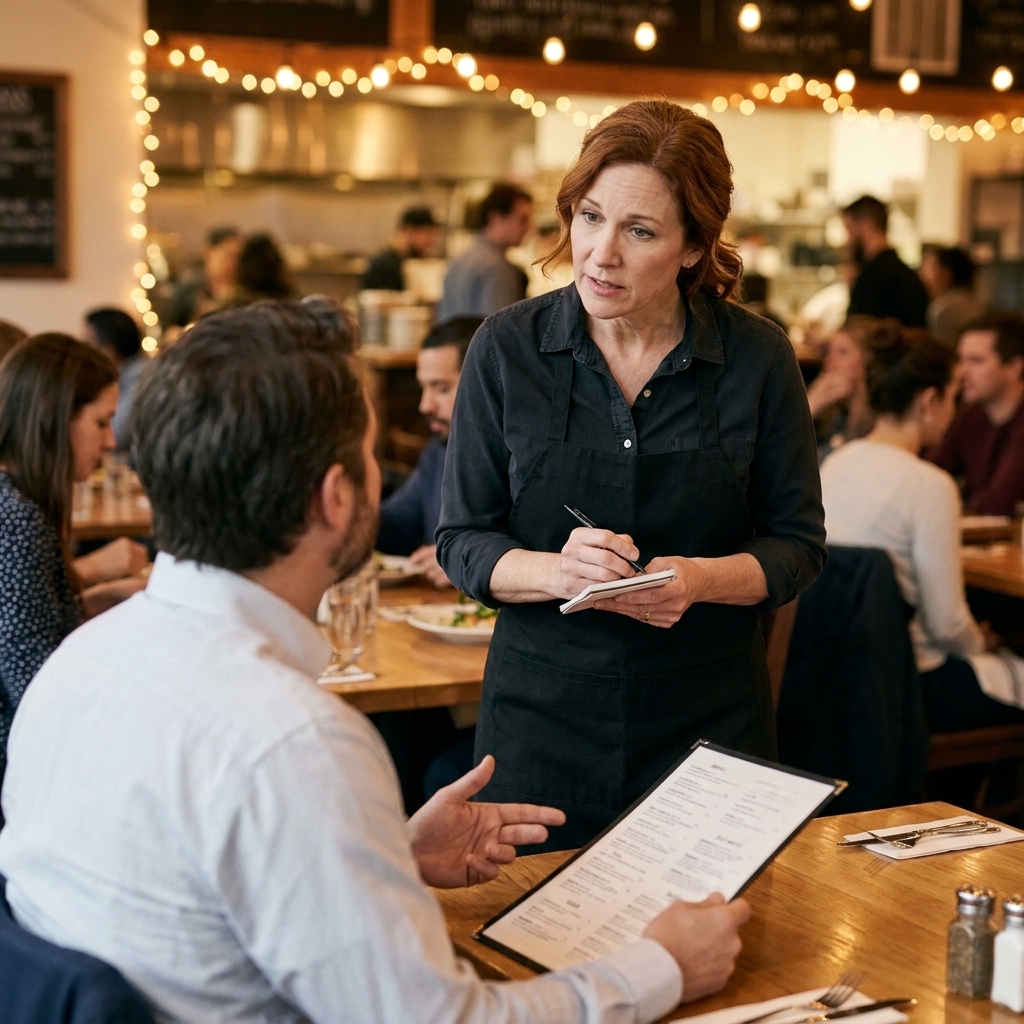
One of the most underrated dating skills when you have restrictions is handling the logistics with confidence. It signals self-respect and takes pressure off the other person.
Use the server as your teammate
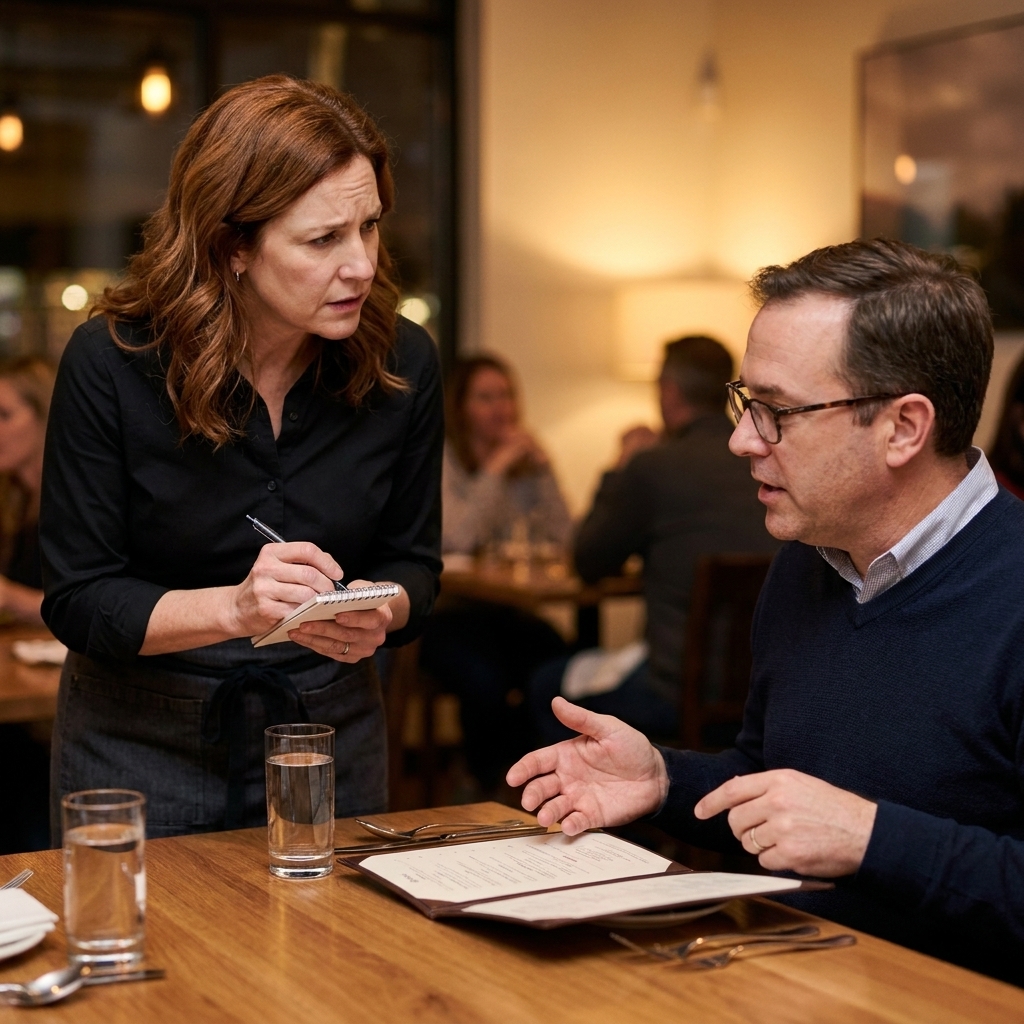
When you sit down, lead with clarity and keep it factual:
- “I have a severe allergy to [ingredient]. Can you tell me what is safe and what risks cross-contact?”
- “Is there a shared fryer?”
- “Can the kitchen use clean utensils and a clean surface for my dish?”
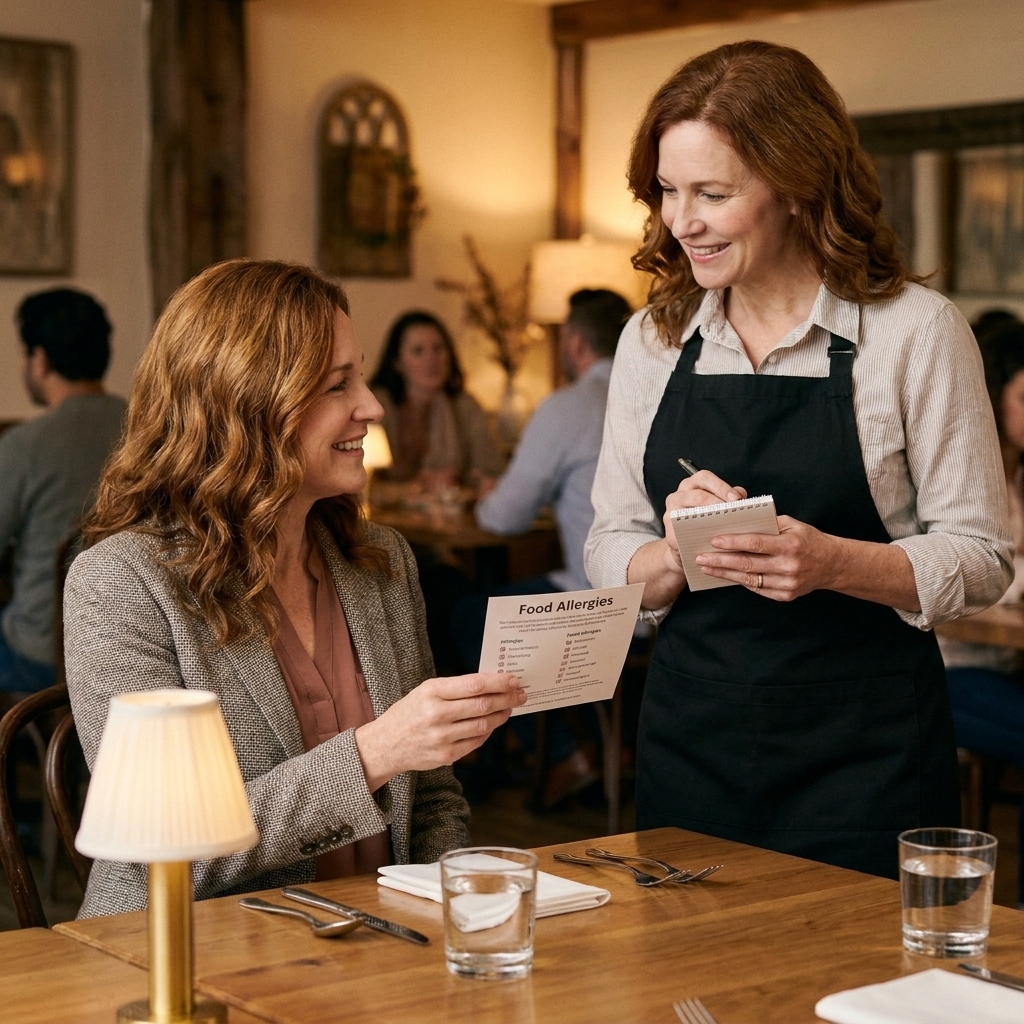
If it is helpful, you can also use an allergy card (printed or on your phone) that lists your allergen and what “safe” means for you. It is especially useful in loud bars or when there is a language barrier.
What you are listening for
- Confident process: “We have an allergy protocol” or “I’ll alert the chef and mark the ticket.”
- Specific answers: They know whether the fries share oil, whether sauces contain soy, or whether nuts are used on the line.
- Respectful caution: Sometimes “we cannot guarantee” is honest, not dismissive. You want honesty.
Green-flag behavior from your date
- They do not tease you for asking questions.
- They let you talk to the server without jumping in or minimizing it.
- They treat accommodations as normal, not dramatic.
Drinks, kissing, and other misses
Food allergies do not stop at the plate. A few overlooked realities can keep you safer and less anxious.
Cocktails and cross-contact
- Nut allergies: Ask about orgeat, nut-based liqueurs, and bar snacks living on the garnish station.
- Gluten concerns: Many distilled spirits are considered gluten-free by distillation, but flavored and infused products can be tricky, and some people with celiac choose to avoid certain grain-based spirits anyway. When in doubt, keep it simple and ask what is in the bottle.
- Dairy and egg: Clarified cocktails, foam, and “creamy” ingredients can show up where you least expect them.
Kissing after certain foods
If you have a severe allergy, it is okay to say the quiet part out loud. You can be flirty and direct at the same time:
“This is going to sound random, but because of my allergy, I can’t kiss you if you’ve had [ingredient] tonight unless you brush your teeth or rinse really well.”
Sober-curious dates count too
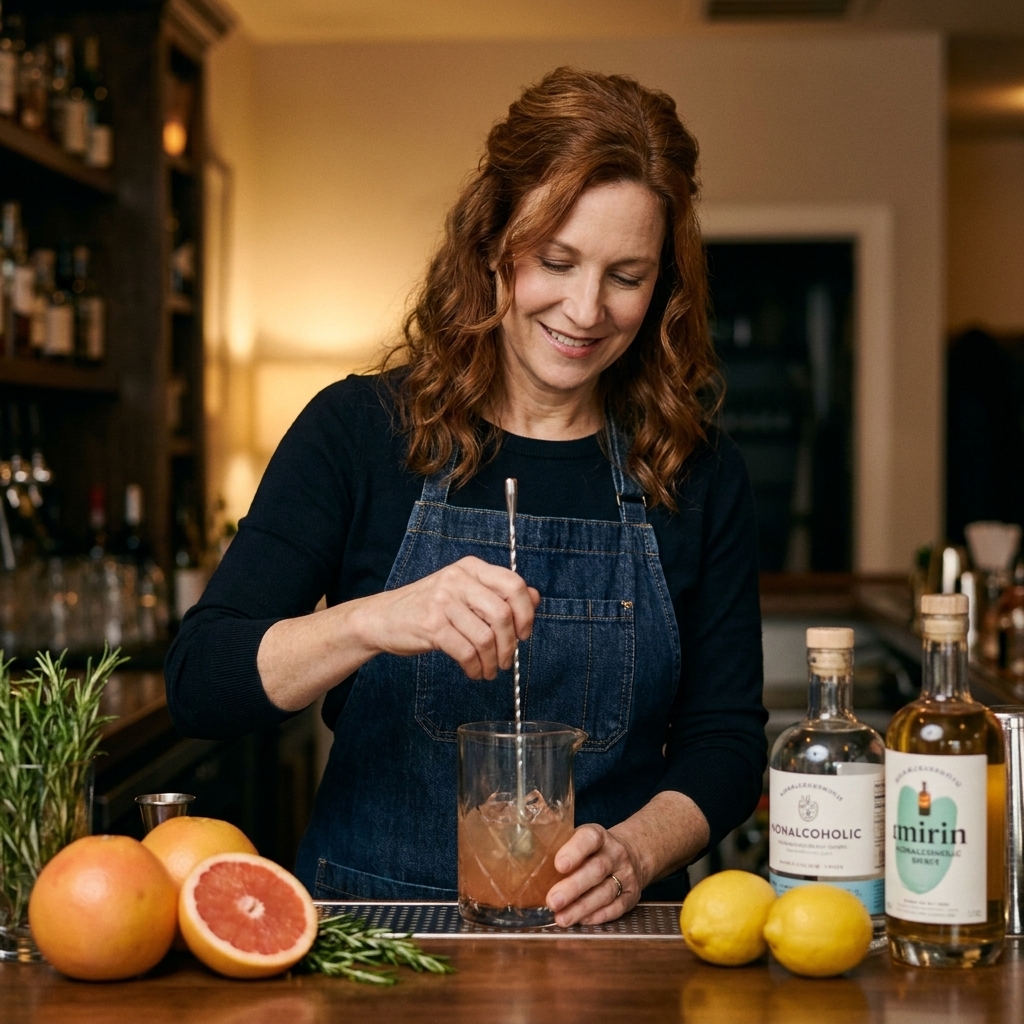
If you are choosing non-alcoholic drinks for health, recovery, or just because you want to feel good tomorrow, that is also a “restriction” worth mentioning early. The right person will not make you justify it.
Red flags and green flags
Red flags
- “A little won’t hurt, right?” or any attempt to test you.
- They get annoyed when you ask the server questions.
- They frame your restriction as an inconvenience they are generously tolerating.
- They push surprise food on you after you explained your situation.
Green flags
- They ask one or two thoughtful questions, then follow your lead.
- They suggest spots with menus you can preview.
- They remember what you said next time without turning it into a big production.
- They care about the people serving you too, meaning they are patient and respectful during the accommodation process.
When it gets awkward
Even with planning, you can land at a place that is not safe. Awkward is survivable. Getting sick is not a character-building exercise.
If the restaurant cannot accommodate you
- Keep it calm: “Thank you for checking. I’m going to play it safe.”
- Pivot fast: Suggest a nearby alternative, or switch to drinks at a place you trust.
- Do not negotiate with your body: Hunger is temporary. A reaction can ruin your week.
If your date downplays it
Try one clear boundary line:
“I know it seems intense, but this is non-negotiable for me. I’m happy to keep the night fun, I just need it to be safe.”
Second and third dates
Once you have decided you actually like this person, you can give them more context. Not because they are entitled to it, but because partnership is built on sharing the real stuff.
- Explain the why: “If I get glutened, I’m sick for days.” Or “Some people can be triggered by airborne exposure in certain environments, so I’m careful around cooking and powders.”
- Share your protocol: What you avoid, what “safe” looks like, what you carry.
- Offer ways they can help: Choosing restaurants with clear allergen menus, avoiding a trigger food on date nights, or being cool about last-minute pivots.
This is also where you find out if they can hold care consistently, not just on their best behavior first date.
Safety essentials
This is not medical advice, just lived reality plus a lot of years watching dining rooms. If you have a diagnosed allergy, follow your clinician’s guidance.
- Your medication (including epinephrine auto-injectors if prescribed) and a plan for how to use it. Many clinicians recommend carrying two, since a second dose can be needed.
- Know the next step: If you use epinephrine, seek emergency care and follow local guidance. Do not “wait it out” in a rideshare.
- A note on your phone with emergency contacts and your allergy list.
- Back-up snacks so you do not feel pressured to eat unsafe food.
- A willingness to leave if the situation feels off. Polite exits are a life skill.
FAQ
Is it “too much” to bring this up early?
No. If the date involves food or drink, it is responsible. You are not asking for special treatment. You are sharing relevant information so both of you can relax.
What if I’m worried they’ll think I’m picky?
Say “allergy” or “medical restriction” and name the ingredient. Being vague is what reads as picky. Being specific reads as adult.
Should I put it in my dating profile?
If it is severe and impacts most plans, it can save time. A simple line works: “Food allergy note: I can’t do peanuts, but I’m great at picking spots.” If you prefer privacy, keep it for early messaging once a plan is forming.
Can I trust a “gluten-free” label?
Use labels as a starting point, not the whole plan. If you have celiac disease, non-celiac gluten sensitivity, or a wheat allergy, still ask about shared fryers, shared prep surfaces, and how the kitchen prevents cross-contact.
What if my partner eats my allergen regularly?
Talk about practical boundaries: brushing teeth before kissing, washing hands, not bringing certain foods into your home, or keeping separate prep areas. The right solution is the one that keeps you safe without turning your relationship into a constant negotiation.
The point
Dating with dietary restrictions forces a kind of honesty most people get to postpone. It is vulnerable to say, “This is what my body needs.” But it is also a shortcut to the good stuff: someone who listens, adapts, and treats your wellbeing like it matters.
You deserve dinners that feel like romance, not risk assessment. And if that means talking about sesame oil on date two? Welcome to modern love. We contain multitudes, and sometimes those multitudes include an epinephrine auto-injector.