I have poured a lot of cider in dining rooms where the guest ordering it was thinking about anything but sugar. They wanted something crisp, typically gluten-free, and not too boozy. Then the glass hits the table and surprise: it drinks like adult apple juice.
Hard cider can be bone-dry or dessert-sweet, and the sugar swing is big enough that two ciders with the same ABV can taste like totally different beverages. If you are the kind of diner who already knows you want cider but wants a quick sugar read from the menu, here is how to decode it with the words in front of you.
First, what “sugar” means in cider
On a label or spec sheet, the sugar you are trying to infer is usually residual sugar, meaning the natural apple sugars left unfermented after yeast has done its job. If fermentation goes to completion, you get a drier cider. If the producer stops fermentation early, back-sweetens, or concentrates apple juice (including via freeze concentration) before or during production, the end result can taste significantly sweeter.
Two quick realities that matter when you are reading a menu:
- ABV is not a reliable sweetness meter. A cider can be 6 to 7 percent and still be quite sweet if sugar remains.
- Carbonation and acidity can “hide” sugar. A sparkling, high-acid cider can taste less sweet than its grams suggest, while a still, low-acid cider can read sweeter even with similar sugar.
One more reality worth keeping in mind if you are ordering for dietary reasons: most ciders are made from apples and are typically gluten-free, but cross-contamination can happen, and some flavored or malt-adjacent products blur the line. If you are highly sensitive, ask the staff or check the producer.
Typical sugar ranges by style
Most menus do not list grams of sugar. When they do not, you are estimating based on style and wording. Think of the numbers below as typical ballparks, not precise cutoffs. Apples, yeast, and technique can push residual sugar around a lot, and even the same brand can shift slightly between batches or seasonal releases.
For the pour math, a 12 oz serving is about 355 mL.
Dry cider
What it tastes like: crisp, wine-like, often more tart than sweet.
Common residual sugar: often roughly 0 to 10 g/L. In a 12 oz pour, that is roughly 0 to 4 g of sugar.
Menu tells: “dry,” “bone dry,” “brut,” “crisp,” “tart,” “bright acidity,” “wine-like,” “tannin,” “structured.” Terms like “farmhouse” or “Basque-style” can lean dry, but they are not guarantees on their own.
Off-dry (sometimes called semi-dry)
What it tastes like: a hint of apple sweetness, balanced by acid. This is the zone a lot of diners mean when they say “not too sweet.”
Common residual sugar: often roughly 10 to 25 g/L, or about 4 to 9 g per 12 oz.
Menu tells: “off-dry,” “semi-dry,” “balanced,” “rounded,” “fresh apple,” “subtle sweetness,” “easy-drinking.”
Sweet cider
What it tastes like: obviously sweet, juicy, “apple-forward.” Lower bitterness and softer acid can make it feel even sweeter.
Common residual sugar: often roughly 25 to 60 g/L, or about 9 to 21 g per 12 oz.
Menu tells: “sweet,” “semi-sweet,” “juicy,” “lush,” “honeyed,” “candied,” “dessert-like,” “for fans of sweeter drinks.”
Fruit-forward and flavored ciders
What it tastes like: depends on whether the producer ferments the fruit dry or builds a sweeter, cocktail-adjacent profile.
Common residual sugar: all over the map, but many land in the 15 to 60+ g/L neighborhood depending on brand and whether it is back-sweetened.
Menu tells: “blackberry,” “mango,” “pineapple,” “peach,” “blood orange,” “pie spice,” “vanilla,” “caramel,” “hard tea,” “cider cocktail.” These are not automatically sugar bombs, but they often skew sweeter.
A wrinkle here: some ciders are sweetened with juice concentrate, and some use non-sugar sweeteners (like stevia or erythritol) to taste sweet with fewer grams of sugar. Menus do not always disclose that. If you are tracking sugar specifically, the brand and product name matter.
Ice cider
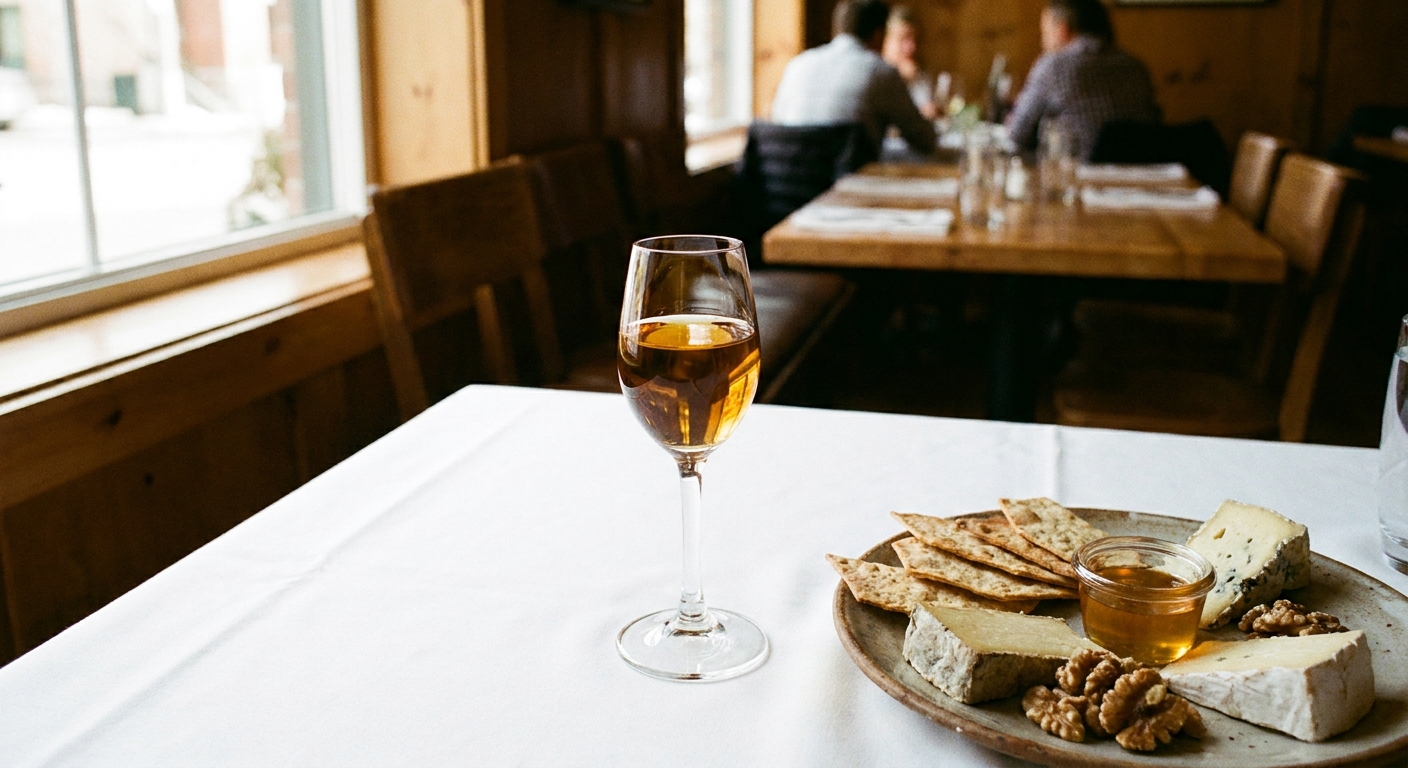
What it tastes like: intense apple concentrate, like a dessert wine. Often served in smaller pours for a reason.
Common residual sugar: frequently around 120 to 220+ g/L, depending on producer and region. In a 2 oz pour (about 60 mL), that is roughly 7 to 13+ g of sugar, and it climbs quickly with larger pours.
Menu tells: “ice cider,” “cryo,” “late harvest,” “dessert cider,” “after-dinner,” “pair with cheese,” “2 oz pour.”
Menu words that signal more sugar
Restaurant menus are basically tiny marketing documents, so cider descriptions lean poetic. Still, certain words tend to track with sweetness or perceived sweetness.
Higher-sugar signals
- Sweet, semi-sweet: straightforward, but “semi-sweet” can still drink very sweet.
- Juicy, jammy, lush: suggests fruit sweetness, often from residual sugar or back-sweetening.
- Honey, caramel, vanilla: these read as sweet cues even when they are “notes,” and many products that taste this way do have sugar to match.
- Pie spice, baked apple: dessert framing usually means a sweeter pour.
- Crowd-pleaser, easy-drinking: sometimes code for a softer, lower-acid cider that can taste sweeter.
Words that suggest drier cider
- Dry, brut, bone dry: your strongest odds of landing in the low-sugar lane.
- Tart, crisp, bright, zesty: acidity-forward language often signals less perceived sweetness.
- Wine-like: especially when the menu compares it to sparkling wine.
- Tannin, bitter, structured: tannin adds grip, which can make a cider read drier.
One caution I learned the fun way: tannin can make something feel dry even when residual sugar is not ultra-low. If a cider is described as both “structured” and “juicy,” it can land in a surprisingly in-between place.
What “semi-dry” and “semi-sweet” mean
These terms are not regulated the way some wine terms are, so they are not precision tools. But in practice:
- Semi-dry often means off-dry, with enough sugar to round edges but not enough to scream sweet.
- Semi-sweet is commonly sweet, especially in mainstream, widely distributed brands.
If you are sugar-conscious, the safest move is to order anything explicitly called dry or brut. If the menu only offers “semi-dry,” ask one sentence: “Is it closer to champagne-dry or apple-juice sweet?” A good server or bartender will know exactly what you mean, even if they do not know grams.
Quickest way to estimate from a menu
When I am scanning a beverage list fast, I look for three things, in this order:
1) Serving size
If it is listed as 2 oz to 4 oz, treat it like dessert. That points strongly to ice cider or something similarly sweet and concentrated.
2) Dryness language
If you see dry or brut, you are more likely in the lower-sugar lane. If the description leans juicy or lush, expect more.
If you see terms like traditional or farmhouse, take them as weak signals unless they are paired with something concrete like “dry,” “brut,” or a sparkling-wine comparison. “Traditional” on a menu can be production info, or it can be pure marketing.
3) Fruit additions and dessert framing
Fruit can be done dry, but lots of fruit-forward ciders are built to taste sweet. Dessert references are a strong hint.
Dry does not always mean low-carb
Sugar is not the same thing as total carbohydrates, but it is a big driver. A very dry cider can still have carbs from alcohol itself, yet residual sugar is usually what makes a cider feel like a sugar hit. If your goal is “less sugar,” ordering dry is the cleanest heuristic you have without a spec sheet.
If you are managing blood sugar, metabolic concerns, or a specific nutrition plan, it is also worth remembering: restaurants rarely have nutrition facts for alcohol. When it matters medically, choose the driest option available, or ask for the producer and product name so you can look it up later.
Questions I ask as a diner
- “Is it dry or sweet?” Basic, effective.
- “Does it finish tart?” Staff often describe dryness as the finish.
- “Does this one drink like apple juice or more like sparkling wine?” Fast way to get to perceived sugar.
- “Is it back-sweetened or does it finish dry?” Many cider folks will know, especially at cider-forward bars.
- “If I like prosecco, which cider fits?” A good shortcut to a drier, sparkling profile.
FAQ
Is hard cider high in sugar?
It can be. A dry cider might have only a few grams of sugar in a 12 oz pour, while a sweet cider can have multiple times that. Ice cider is a dessert category and can be dramatically higher, even in small pours.
Is “dry cider” basically sugar-free?
Not always sugar-free, but generally low in residual sugar. “Bone dry” or “brut” are the strongest cues for minimal sweetness.
Do flavored ciders have more sugar?
Often, yes, especially when the flavor profile is described as juicy, candy-like, or dessert-like. But some producers ferment fruit additions fully and keep the finish dry, and some use non-sugar sweeteners. The menu wording and the brand matter.
What is the lowest-sugar way to order cider at a restaurant?
Pick something explicitly labeled dry or brut, ideally described as crisp or tart. If the list is vague, ask the server which cider is driest.