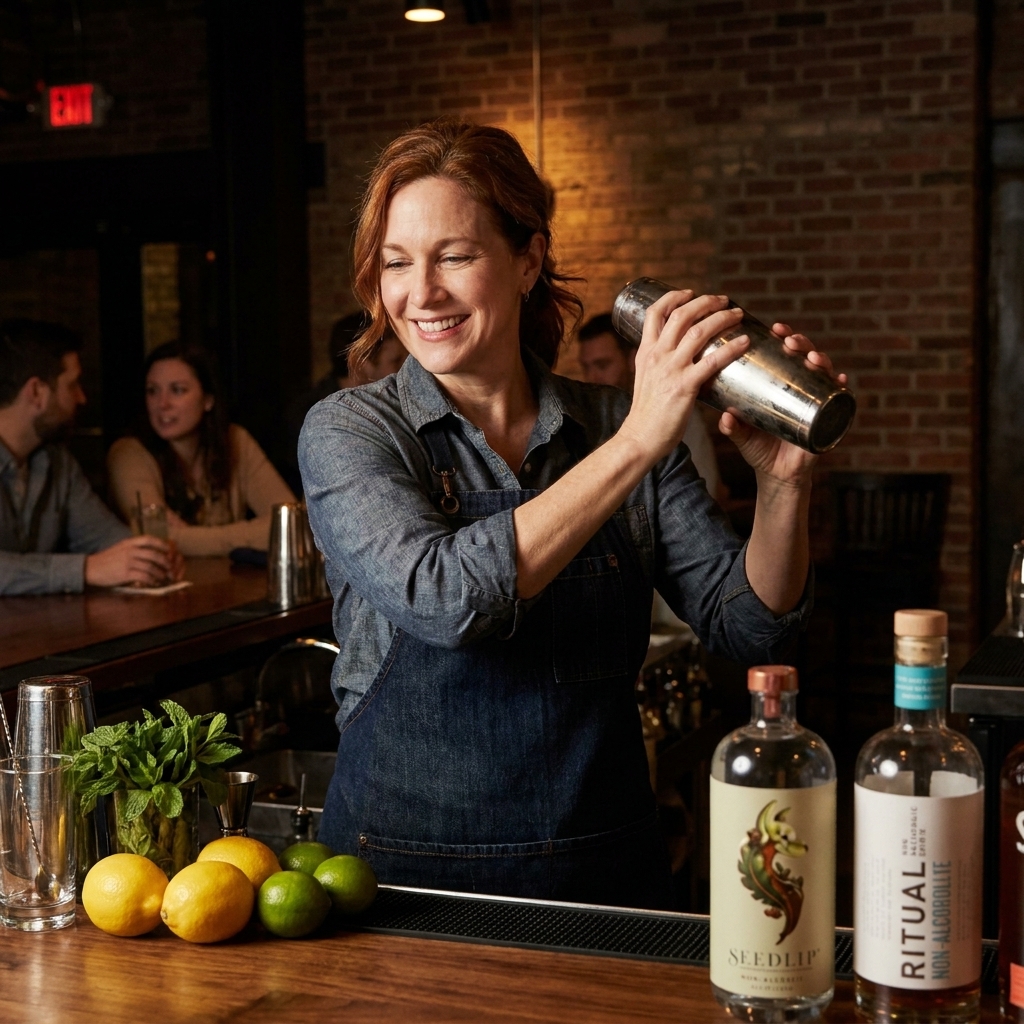
Minimalism gets misunderstood in bar land. People think it means deprivation, like you are only allowed one bottle and a single sad rocks glass. In reality, a minimalist home bar is about less friction: fewer pieces, better pieces, and a setup that makes you want to actually use it on a Tuesday.
I have built back bars the size of small apartments and I have also mixed a proper drink on a studio kitchenette. The difference is never the number of tools. It is whether what you own is right for how you drink, how you host, and how much space you are willing to give the ritual.
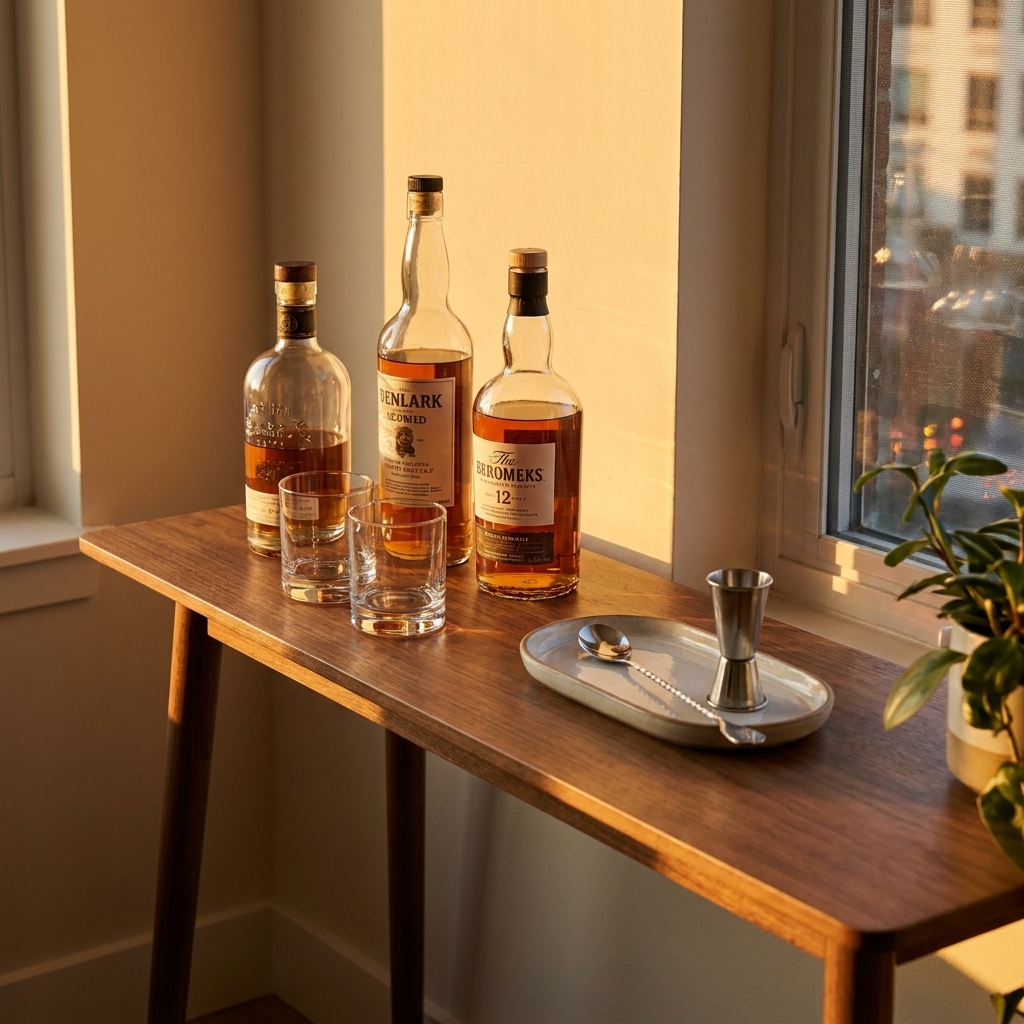
The minimalist rule: pick your lane, then buy one level up
If you try to be a tiki bar, a wine bar, and a whiskey den all at once, you end up with clutter and dust. Start with the drinks you genuinely make or pour most.
- Cocktail-forward: focus on a shaker, jigger, mixing glass, and a tight glassware lineup.
- Wine-forward: spend more on a great opener and versatile stems.
- Spirits, neat or on the rocks: invest in a single excellent all-purpose tumbler and a solid ice solution.
- Zero-proof and soda-forward: prioritize a jigger, citrus tools, and glassware that feels celebratory.
Then buy one level higher in quality than you think you need. In restaurants, the cheapest tools are the ones that fail mid-service. At home, they are the ones that quietly annoy you until you stop making drinks.
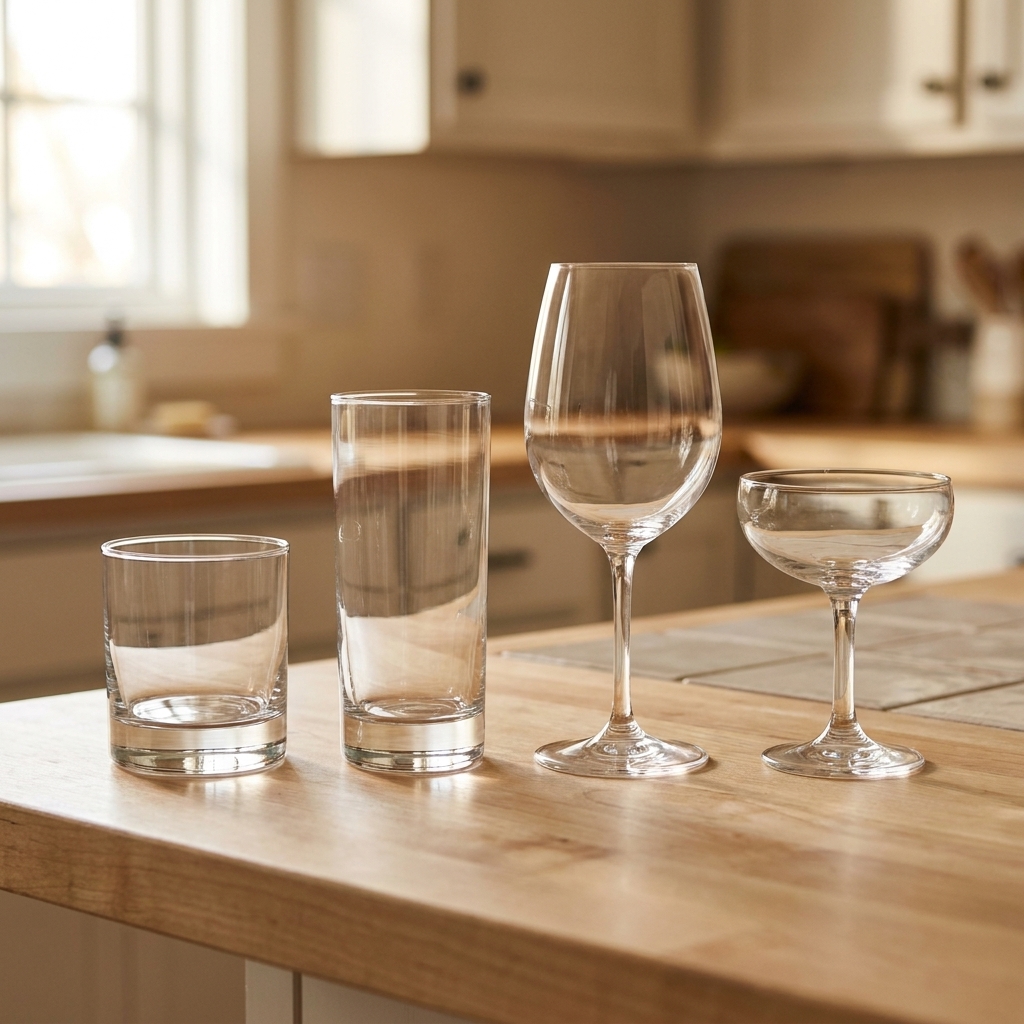
Essential glassware (yes, you can keep it to four shapes)
Glassware is where minimalist bars either look intentional or look like a breakup. A few well-chosen shapes cover almost everything without turning your cabinet into a glass Jenga situation.
1) Double old fashioned (DOF) or double rocks (the workhorse)
If you buy one glass, make it a double old fashioned (DOF), often called a double rocks. Names and sizes vary, but you are looking for the bigger, sturdier tumbler that handles spirits neat, cocktails on ice, short zero-proof drinks, and even a little dessert moment if you are feeling fancy.
- How many: 4 is ideal, 2 if you are truly tight on space.
- Look for: a comfortable weight, a stable base, and a rim that does not feel sharp.
2) Highball or Collins glass (for tall, bubbly drinks)
This is your spritz, your G&T, your paloma, your sparkling water with bitters and a lime wedge. If you are sober-curious, a good highball is basically a permission slip to make a non-alcoholic drink feel like a real drink.
- How many: 4 or 2, depending on hosting style.
- Look for: stackable if possible, or at least slim enough to store in a tight row.
3) Wine glass that can do red and white (one great set, not three okay sets)
The best minimalist move is a single versatile wine stem that works for everything. A medium bowl, not too tiny and not so huge it feels like a fishbowl. It should also be something you will actually wash without resentment.
- How many: 4 is the sweet spot.
- Look for: a thinner lip, a stable stem, and a bowl that is not overly specialized.
4) Coupe glass (for “up” cocktails, plus a little celebration)
Daiquiris, sidecars, and a lot of zero-proof sours feel right in a coupe. Plenty of bars serve martinis and manhattans in a martini glass or a Nick & Nora, but a coupe is a versatile minimalist choice and it is easier to live with at home.
- How many: 2 if you are minimal-minimal, 4 if you host.
- Look for: a bowl that is not too shallow, so you are not sloshing down the hallway.
Optional but worth it: a single small tasting glass
If you love spirits neat, a small tasting glass can be a game-changer for aroma. This is optional and only makes sense if you regularly drink amaro, whiskey, mezcal, or even NA spirits and want the nose to do some work.
Tools that earn their drawer space
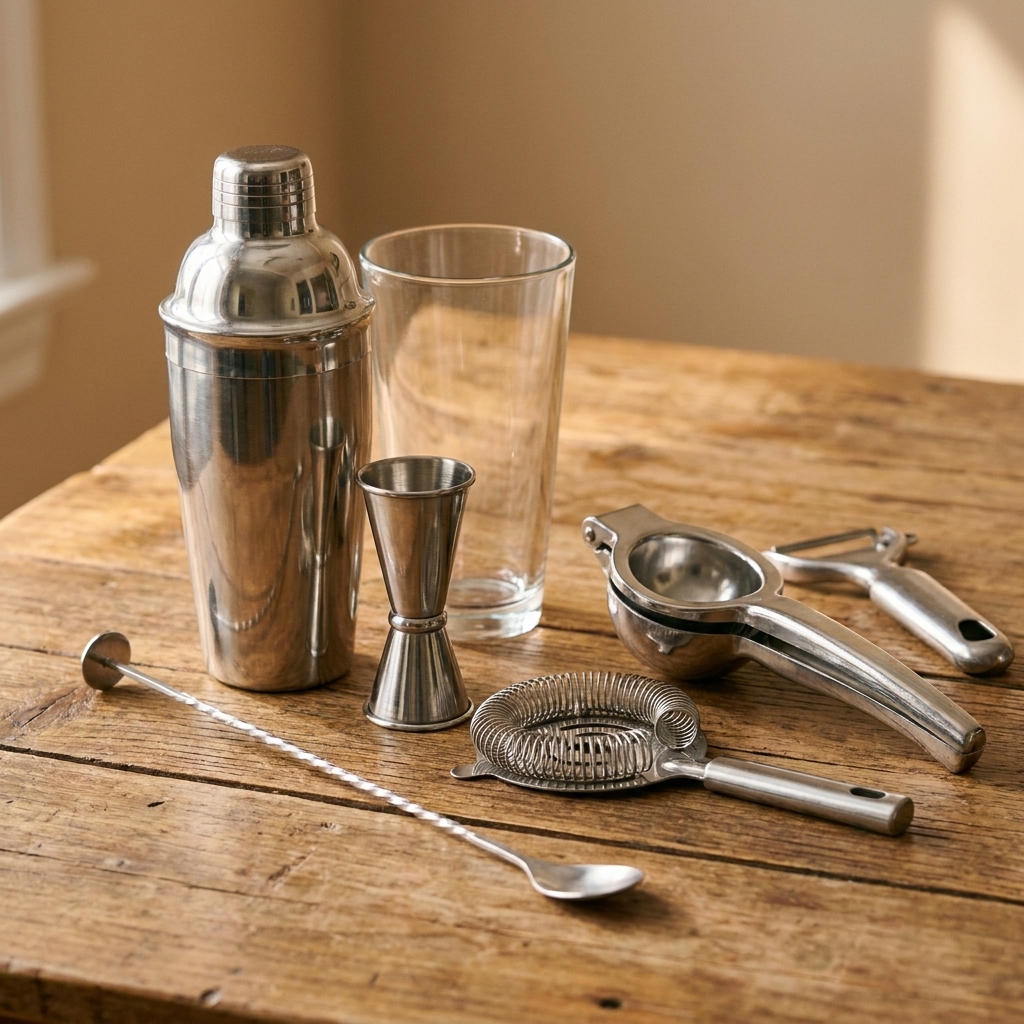
Here is the lineup I would build for a friend who wants a clean, functional bar and does not want to collect gadgets like they are Pokémon.
1) Jigger (non-negotiable)
Eyeballing is fun until it is not. A jigger keeps your drinks consistent and your bottles lasting longer. It also helps if you are batching for a party and do not want a surprise “oops” pour.
- Go for: a Japanese-style double jigger with clear internal markings.
2) Shaker tin set (or a cobbler shaker if you value simplicity)
For most homes, a two-tin Boston shaker is the most efficient. It chills fast, cleans easily, and stores neatly. If you want fewer pieces and less technique, a cobbler shaker is fine, just know they can stick.
3) Mixing glass (or a large sturdy glass you already own)
Stirred drinks want gentle dilution and a silky texture. A mixing glass is nice, but you can also use a heavy, wide glass container if you are starting out.
4) Bar spoon
Long handle, controlled stirring, and it reaches the bottom of tall glasses for layered drinks or quick NA spritz builds.
5) Hawthorne strainer
This is the one strainer that covers the most ground for shaken drinks. If you also make sours often, add a small fine strainer, but it is optional.
6) Citrus: a handheld press and a microplane
Fresh citrus is the fastest upgrade you can make, and it matters just as much in zero-proof drinks as it does in cocktails. A press is quicker and less messy than a reamer. A microplane gives you aromatic zest without extra tools.
7) Peeler (Y-peeler preferred)
Citrus peels are your minimalist garnish strategy. A single clean orange twist can make a two-ingredient drink feel finished.
8) Small knife and cutting board you actually like using
The bar world loves specialty knives. Your home bar needs a sharp paring knife and a small board that fits your counter. If it is annoying to pull out, you will skip garnishes, and the whole setup feels less special.
9) Ice solution (the most underrated “tool”)
Great ice makes decent spirits taste better and good spirits taste great. For minimalism, skip the countertop ice machine unless you truly entertain constantly.
- Do this instead: a large cube tray (around 2-inch cubes) for rocks drinks, and a standard tray for shaking and highballs.
- Pro move: keep a dedicated freezer container so your ice does not taste like last night’s leftovers.
Minimalist upgrades that make the whole setup look intentional
These are not “necessary,” but they create that quiet, put-together feeling that makes a home bar look like part of your home, not a pile of party supplies.
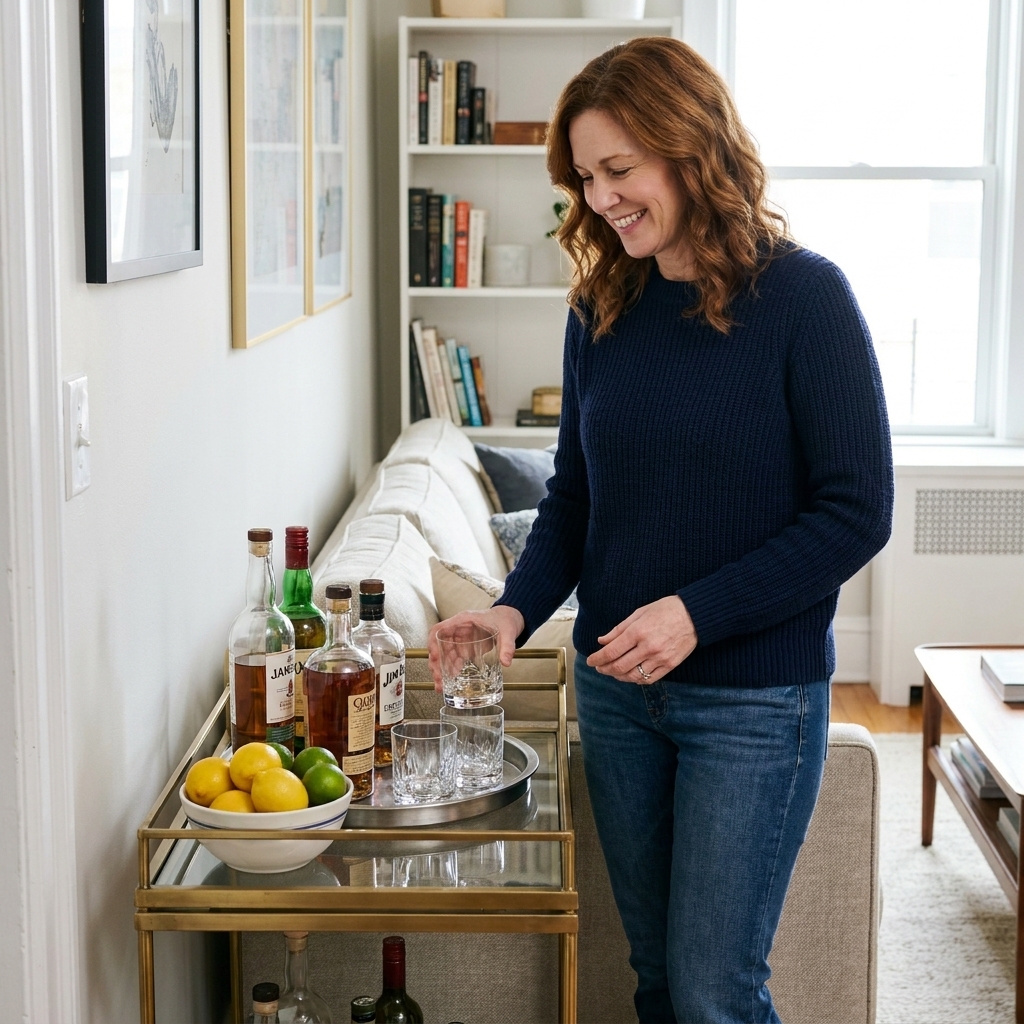
A tray that corrals the chaos
A tray is the difference between a collection of bottles and a bar moment. It also makes cleanup easier: pick up the tray, wipe the surface, done.
One great bar towel
In restaurants, towels are everything. At home, one absorbent towel keeps your station clean and your glassware from sliding around. If you only have paper towels, you will use paper towels, and the vibe suffers.
A small bin for NA and cocktail extras
Bitters, saline, fancy cherries, NA aperitifs, tea bags for quick syrups. Put them in a single small container so you are not scattering tiny bottles across your kitchen like breadcrumbs.
What not to buy (unless you truly love it)
- Electric wine openers: more storage, more charging, more drama.
- Novelty gadgets: if it only does one thing, it should do that thing unbelievably well.
- Specialty glasses for every drink: your cabinet is not a cocktail museum.
- Premade sour mix: you will get better results with citrus and simple syrup in less time than it takes to find room for a bottle you do not love.
Space-saving setup ideas
You do not need a cart, but you do need a system. The goal is to keep your bar setup visible enough to use and contained enough to feel calm.
- One shelf, one tray: bottles and bitters on the tray, glassware on the shelf above.
- Drawer bar: tools in a single organizer, garnishes in the fridge, bottles in a cabinet. If it takes more than two minutes to set up, simplify.
- Counter corner station: keep only daily drivers out, stash backups elsewhere.
- Vertical storage: stackable highballs, nesting jiggers, slim trays.
A minimalist starter checklist
If you want the cleanest, simplest build, start here and stop here until you feel a real gap.
Glassware
- 4 double old fashioned (DOF) or double rocks glasses
- 4 highball or Collins glasses
- 4 versatile wine glasses
- 2 to 4 coupes
Tools
- Jigger
- Boston shaker tins
- Hawthorne strainer
- Bar spoon
- Citrus press
- Y-peeler
- Microplane
- Ice trays (large cube and standard)
Care and longevity: keep it simple, keep it clean
Minimalism is maintenance-friendly by design. A few habits make your setup feel good for years.
- Rinse tools right away: especially anything that touched citrus or sugar.
- Store glassware with breathing room: crowded shelves chip rims.
- Check for chips: if a rim is nicked, retire the glass. Your mouth does not need that surprise.
- Replace one thing at a time: if a glass breaks, upgrade that category instead of buying a random mixed set.
- Mind allergens when hosting: if you are serving snacks, keep a dedicated small board or plate for gluten-free or nut-free options. Cross-contact is real even in a home kitchen.
FAQ
How many glasses do I really need?
If you live solo or with a partner, you can absolutely start with two of each in your core categories. If you host even occasionally, four is the sweet spot where you are not constantly washing mid-hang.
Do I need both coupes and martini glasses?
No. Coupes are easier to store, less spill-prone, and more versatile. If you love the classic V-shaped martini glass, make it your personal indulgence, but it is not essential.
Can I build a minimalist bar that works for zero-proof drinks too?
Yes, and honestly, a minimalist setup can be better for NA drinks because it nudges you toward fresh citrus, good ice, and glassware that feels special. If you use bitters, keep a bottle around, but note that most classic bitters contain alcohol. For strictly alcohol-free drinking, look for NA bitters or skip them and lean on citrus zest, teas, and saline instead.
What is the one thing worth spending extra on?
A jigger and ice are the two places where small upgrades pay back immediately. Consistency and dilution are the backbone of nearly every drink, alcoholic or not.
The quiet flex of a minimalist bar
The best home bars are not the ones with the most stuff. They are the ones that signal care. A few great glasses, a handful of tools that feel good in your hands, and enough open space to breathe. That is hospitality at home, and it is a lot more charming than clutter.